Industry News
Curation by industry experts
Hot Articles
Popular Tags
What smart building systems do hospitals need first?
For project managers and engineering leads, choosing the right Smart Building Systems for hospitals starts with the systems that protect safety, uptime, and compliance. From HVAC controls and energy monitoring to access security and cold-chain environment management, the first investments should reduce operational risk while supporting resilient, data-driven care facilities. This guide outlines where to begin and how to prioritize for long-term performance.
When hospital teams ask what smart building systems they need first, the answer is usually not “everything connected at once.” The right starting point is the group of systems that directly affects patient safety, clinical continuity, regulatory compliance, and critical asset uptime. In practice, that means hospitals should prioritize smart HVAC controls, building management integration, power and energy monitoring, access control, life-safety alarms, and environmental monitoring for pharmacies, labs, and cold storage.
For project managers, the real issue is prioritization. Budgets are limited, commissioning windows are tight, and stakeholders from clinical operations, infection control, facilities, IT, and procurement often have different priorities. A successful smart hospital roadmap begins with systems that solve immediate operational risks and create a foundation for future digital integration.
Start with systems that protect care delivery, not just efficiency
Many building owners first associate smart buildings with energy savings. In hospitals, efficiency matters, but it is rarely the best first filter for investment. Hospitals operate 24/7, support vulnerable populations, and depend on tightly controlled indoor environments. A failure in air pressure control, backup power visibility, medicine storage temperature, or secure access can have consequences far beyond utility cost.
That is why the first layer of Smart Building Systems for hospitals should focus on mission-critical performance. Ask a simple question: if this system underperforms for one hour, does it threaten patient safety, clinical workflow, compliance, or revenue continuity? If the answer is yes, it belongs near the top of the list.
In most facilities, the first-priority smart systems include HVAC automation, central building management, electrical power monitoring, fire and life-safety integration, access control, and environmental monitoring for regulated storage and treatment spaces. These systems give engineering teams visibility, alarms, trend data, and faster response when conditions move outside acceptable thresholds.
HVAC controls are often the first and most important smart upgrade
For hospitals, HVAC is not only about comfort. It is central to infection control, pressurization, filtration, humidity stability, temperature compliance, and operating room performance. Smart HVAC controls are usually the most valuable early investment because they affect nearly every department and create measurable risk reduction from day one.
Priority areas include operating theaters, isolation rooms, intensive care units, pharmacies, sterile processing, imaging departments, laboratories, and inpatient wards with strict thermal and ventilation requirements. Smart controls should provide real-time monitoring of temperature, humidity, airflow, pressure relationships, and equipment status. Alarms should be actionable, not excessive, and escalation paths should be clearly assigned.
Project managers should also evaluate whether air-handling units, chillers, pumps, valves, and terminal devices can be integrated into a unified logic structure. In older campuses, hospitals often have partial automation, but not coordinated control. That gap limits visibility and makes root-cause diagnosis slow. A better strategy is to create a control hierarchy that supports resilience, redundancy, and operational transparency.
For engineering leads, this is also where lifecycle value becomes clear. Smart HVAC systems help stabilize room conditions, reduce manual intervention, support compliance records, and improve maintenance planning. In high-acuity facilities, they can also help avoid shutdowns, canceled procedures, or failed inspections that cost far more than the controls upgrade itself.
A Building Management System should be the integration backbone
Once HVAC becomes smarter, hospitals need a platform to unify data and operations. A Building Management System, or BMS, is often the backbone that allows facilities teams to move from isolated equipment monitoring to coordinated building intelligence. Without that layer, hospitals may own many smart devices but still operate in silos.
The BMS should not be judged only by dashboard appearance. Project managers should assess interoperability, alarm management, historical trending, cybersecurity architecture, user permissions, reporting functions, and the ability to connect future systems without expensive rework. Open protocol support is especially important in hospital environments where expansion, retrofit, and phased upgrades are common.
A strong BMS creates practical value in several ways. It gives facility teams one place to monitor critical conditions, compare performance across buildings, investigate incidents, and document compliance-related data. It also reduces dependence on tribal knowledge, which is a major operational risk in large hospital campuses with rotating staff and outsourced service partners.
In some procurement cycles, teams are tempted to buy advanced analytics before building core integration. That sequence often underdelivers. Analytics perform best when the hospital first has reliable sensor inputs, standardized naming, stable controls logic, and a clear alarm strategy. Foundation first, optimization second.
Power quality and energy monitoring come before broad energy optimization
Hospitals cannot treat energy infrastructure as a secondary utility concern. Power continuity supports life safety systems, operating rooms, imaging equipment, data centers, refrigeration, elevators, and nurse call systems. Before launching broad sustainability programs, hospitals need smart electrical monitoring that shows where risk exists in real time.
That means submetering key loads, monitoring switchgear status, tracking generator readiness, and observing power quality events that may damage sensitive equipment or interrupt clinical operations. A hospital may already have backup power, but without smart monitoring it may lack the visibility needed to respond quickly to abnormal conditions.
From a project standpoint, power monitoring is valuable because it supports both resilience and budgeting. Engineering teams can identify load patterns, verify redundancy performance, and plan capacity upgrades based on real data rather than assumptions. This is especially useful in campuses adding imaging suites, surgical expansion, data-heavy diagnostics, or modular treatment space.
Energy dashboards and decarbonization targets matter, but first priority should remain uptime and power reliability. Once those foundations are in place, the same monitoring architecture can support demand control, benchmarking, and capital planning. That staged approach is more credible to stakeholders than promoting savings without first securing continuity.
Environmental monitoring is essential for pharmacies, labs, and cold-chain spaces
One of the most overlooked first investments in Smart Building Systems for hospitals is environmental monitoring beyond patient rooms. Pharmacies, blood banks, vaccine storage, pathology labs, and other regulated spaces require precise temperature and sometimes humidity control, along with documented alarm response and audit trails.
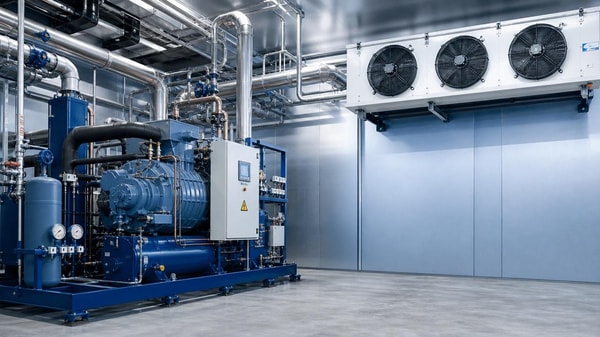
For hospitals handling biologics, specialty medicine, tissue samples, or temperature-sensitive supplies, a smart monitoring layer is not optional. It reduces spoilage risk, supports compliance, and gives operations teams confidence that critical inventory remains within range during normal operation, power events, maintenance work, or equipment failure.
Project managers should look for systems with calibrated sensors, local and remote alarms, automated record retention, role-based alerts, and integration with the BMS where appropriate. If a freezer or storage room goes out of range at 2 a.m., the issue should trigger the right workflow immediately rather than waiting for morning rounds.
This is also an area where thermal infrastructure strategy matters. Hospitals that are planning broader modernization often benchmark room controls, refrigeration resilience, and storage integrity against more specialized sectors. Even when product-specific selection is still under evaluation, teams may review industry resources such as 无 to compare approaches to monitored thermal environments and resilient storage planning.
Access control and security should be prioritized around risk zones
Not every hospital needs a complex enterprise security rollout as its first smart building step, but most need stronger digital access control in the right places. Hospitals contain high-risk zones such as maternity wards, pharmacies, IT rooms, laboratories, controlled storage, staff-only corridors, loading areas, and plant rooms. Smart access systems help protect people, assets, and compliance.
For project managers, the key is to avoid treating access control as a generic badge system. In hospitals, access design must reflect workflow, emergency override logic, visitor management, shift changes, and lockdown scenarios. Integration with CCTV, intercoms, and incident logs can improve response speed and reduce security gaps.
Access data also supports accountability. Engineering and compliance teams can trace who entered a restricted room during a temperature excursion, maintenance event, or security incident. That visibility is useful in both investigations and process improvement. It also helps reduce reliance on physical keys, which are hard to manage in large healthcare campuses.
The first phase does not need to cover every door. It should begin with areas where unauthorized access can disrupt care, create safety risks, or expose the hospital to regulatory and reputational consequences.
Fire, life-safety, and vertical transportation need smart visibility too
Hospitals already invest heavily in fire protection and emergency systems, but smarter monitoring can significantly improve response coordination. Fire alarms, smoke control, emergency communication, and status reporting should be integrated in a way that gives operations teams immediate, accurate visibility without creating confusion during critical events.
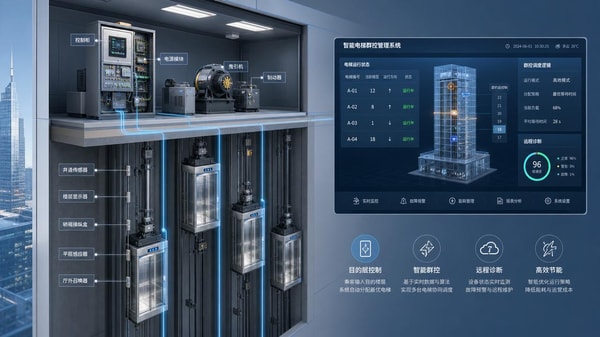
Similarly, elevators and vertical transportation are operationally important in hospitals because they directly affect patient movement, bed logistics, sterile supply flows, and emergency access. Smart monitoring for elevator performance, fault alerts, and traffic patterns can improve uptime and service planning, especially in high-rise medical campuses.
These systems may not always be phase-one investments if the existing infrastructure is sound. However, if a hospital has recurring transport delays, aging lifts, poor fault visibility, or frequent compliance interventions, smart monitoring here can deliver practical operational value quickly. The right priority depends on where disruption risk is greatest.
How project managers should prioritize: a simple decision framework
Hospitals do not need a perfect digital master plan before acting, but they do need a rational framework. A practical way to prioritize smart systems is to score each candidate across five dimensions: patient safety impact, compliance impact, operational uptime impact, integration readiness, and measurable payback.
Systems with high safety and uptime impact should come first, even if direct energy savings are modest. Next, prioritize systems that produce useful data and can integrate with the BMS. After that, target optimization layers such as analytics, occupant apps, advanced demand response, and broader energy orchestration.
Here is a common sequence that works well in many hospital projects. First, stabilize HVAC controls and room-condition monitoring. Second, establish or modernize the BMS backbone. Third, add power and energy visibility for critical systems. Fourth, implement environmental monitoring for regulated storage and labs. Fifth, expand access control and selected life-safety integrations. Then move into analytics, predictive maintenance, and campus-wide optimization.
This order helps stakeholders see progress while reducing implementation risk. It also aligns with capital planning logic: first secure mission-critical operations, then improve efficiency and strategic intelligence.
Common mistakes hospitals make when deploying smart systems
The most common mistake is buying disconnected technologies from multiple vendors without a clear integration strategy. That creates more screens, more alarms, and more maintenance complexity, not more intelligence. Smart building investments only deliver value when data is reliable, workflows are defined, and teams know who owns response.
Another mistake is overemphasizing flashy software while underfunding sensors, controls logic, network readiness, and commissioning. If the field layer is weak, dashboards simply present bad or incomplete information more elegantly. Hospitals should invest in the physical and control infrastructure that makes digital visibility trustworthy.
A third issue is ignoring clinical stakeholder input. Engineering teams may focus on technical performance, while clinical users care about room readiness, stable environments, and minimal disruption. Both views matter. Smart systems should be designed around care delivery realities, not just engineering specifications.
Some organizations also underestimate cybersecurity and governance. Hospitals cannot connect more building systems without clear policies for access rights, patching responsibility, vendor connectivity, and incident response. A secure smart building strategy protects both operational technology and the broader healthcare environment.
What success looks like in the first 12 to 24 months
In the early stages, success should not be measured only by a single ROI percentage. For hospitals, a strong first outcome includes fewer unresolved alarms, better control of critical room conditions, faster issue detection, less unplanned downtime, improved compliance documentation, and clearer visibility into asset performance.
Project managers should define baseline metrics before implementation. These may include temperature excursion frequency, response times to critical alarms, work order volume tied to comfort or pressure issues, equipment downtime, energy intensity in critical zones, and incident rates linked to access or environmental failures.
It is also useful to measure organizational maturity. Has the hospital reduced manual logging? Are alarm workflows standardized? Can teams trace issues through historical data? Is there a clearer path for future expansion? Those operational gains often justify the first phases of Smart Building Systems for hospitals long before the full digital transformation story is complete.
Where external benchmarking is part of the procurement process, some teams also compare system readiness and infrastructure performance references through technical sources such as 无. The point is not to copy another facility’s stack, but to validate whether the hospital is building on a scalable and resilient foundation.
Conclusion: build the smart hospital foundation around risk, resilience, and control
If a hospital is deciding what smart building systems it needs first, the best answer is clear: start with the systems that keep the facility safe, compliant, and continuously operational. In most cases, that means HVAC controls, a strong BMS backbone, power monitoring, environmental monitoring for critical storage and labs, and risk-based access control.
For project managers and engineering leads, this approach creates a practical roadmap. It reduces operational risk, improves visibility, supports regulatory performance, and prepares the campus for future analytics and optimization. Rather than chasing every smart feature at once, hospitals should first invest where system intelligence directly protects care delivery.
That is the real priority behind effective Smart Building Systems for hospitals: not technology for its own sake, but connected infrastructure that helps critical healthcare environments stay stable, responsive, and resilient.
Recommended News
 Destination DispatchSmart elevators price gaps explained by control featuresSmart Elevators price varies most by control features—not just speed or finishes. Learn how dispatch, AI, integration, and cybersecurity affect cost, performance, and long-term value.Dr. Victor GearMay 03, 2026
 Reefer TechIndustrial refrigeration wholesale pricing without hidden tradeoffsIndustrial Refrigeration wholesale pricing is not just about the lowest quote. Compare energy efficiency, compliance, uptime, and lifecycle value to avoid hidden tradeoffs and buy with confidence.Dr. Elena FrostMay 03, 2026
 AHU SystemsASHRAE standards guidelines that change HVAC project decisionsASHRAE Standards guidelines shape HVAC choices on ventilation, energy efficiency, comfort, and commissioning. Discover which standards most influence project risk, compliance, and lifecycle value.Dr. Julian VoltMay 03, 2026
 VRF ControlEnergy-efficient HVAC comparison beyond the rated numbersEnergy-Efficient HVAC comparison beyond nameplate ratings: compare part-load performance, climate fit, controls, maintenance, and lifecycle cost to choose smarter, lower-risk systems.Dr. Julian VoltMay 03, 2026