Industry News
Curation by industry experts
Hot Articles
Popular Tags
Where pharmaceutical cold chain solutions often fail
Pharmaceutical Cold Chain solutions often fail not because the technology is absent, but because qualification gaps, fragmented monitoring, and weak spatial-control design undermine performance at critical points. For technical evaluators, the real risk lies in hidden failure modes across storage, transport, and handoff environments. This article examines where these systems break down and what infrastructure-level benchmarks matter most.
The market is shifting from equipment ownership to end-to-end proof of control
A major change in the pharmaceutical logistics environment is that buyers no longer evaluate Pharmaceutical Cold Chain solutions as isolated refrigerators, insulated shippers, reefer trucks, or data loggers. The new benchmark is evidentiary control across the entire thermal pathway. That means every transition point—warehouse staging, dock exposure, pallet build-up, flight delay, customs hold, hospital receipt, and last-meter storage—must demonstrate stable temperature protection, documented alarm logic, and response readiness.
This shift matters because many failures now occur in spaces between validated assets rather than inside them. A freezer may perform exactly as specified, while a loading bay with poor airflow separation or an unqualified transfer cart creates a thermal excursion that remains invisible until product potency is questioned. For technical evaluators, the implication is clear: system integrity now depends as much on spatial infrastructure and operational choreography as on thermal hardware performance.
In practice, this has elevated the role of engineering review, data architecture, and qualification discipline. Procurement teams that once focused on box-level temperature range claims are increasingly scrutinizing mapping protocols, door-open recovery time, alarm escalation pathways, and environmental segregation design. In this context, Pharmaceutical Cold Chain solutions are becoming infrastructure programs rather than simple equipment purchases.
Where failure is becoming more visible across the cold-chain landscape
Several industry signals explain why cold-chain weaknesses are receiving greater attention. Product portfolios now include more biologics, cell and gene therapies, specialty injectables, and temperature-sensitive APIs. Distribution networks are also more fragmented, with more regional hubs, outsourced storage partners, and multimodal transport chains. At the same time, regulators and quality teams expect tighter traceability and stronger deviation investigation.
As a result, hidden weak points are surfacing faster. Technical teams are seeing recurring problems in five areas: incomplete thermal qualification, disconnected sensor ecosystems, poor transitional-space design, inadequate excursion response planning, and weak maintenance governance. None of these are new, but all are becoming more consequential because modern pharmaceutical products are less tolerant of uncertainty and reputational consequences are higher.
Trend change table: from traditional control to evidence-based resilience
The most common failure point is not the cold room, but the transition zone
One of the strongest trends in technical assessment is a growing focus on transitional environments. These are the places where custody, temperature regime, and airflow conditions change at the same time. Loading docks, airside interfaces, ante-rooms, consolidation spaces, and hospital receiving areas create disproportionate risk because they are operationally busy and often under-engineered.
In many cases, Pharmaceutical Cold Chain solutions fail here because qualification studies do not reflect real behavior. A transfer route may be validated for a five-minute move, while live operations stretch to fifteen minutes due to queuing, security checks, or paperwork. A dock may be considered acceptable on a mild day, yet become unstable during summer peaks or under negative building pressure. A package that passes chamber testing may lose protection when stacked differently on a mixed pallet.
For evaluators, this means that a site walk is often as important as a specification sheet. The right questions are physical: Where does product wait? How is air exchanged? What is the maximum exposure time before cold re-entry? What happens when doors remain open during simultaneous inbound and outbound activity? These questions reveal failure modes that standard vendor brochures rarely address.
Monitoring is expanding, but fragmented data still weakens control
The industry has invested heavily in sensors, cloud visibility, and real-time alerts. Yet a notable pattern remains: more data does not automatically mean better Pharmaceutical Cold Chain solutions. Fragmented monitoring often creates blind spots, duplicated records, and conflicting time stamps. A storage system may feed one dashboard, transport another, and package logger data a third, leaving quality teams to reconstruct the event manually after an excursion.
The trend is therefore moving toward integrated event interpretation rather than raw data accumulation. Technical buyers are increasingly interested in how systems synchronize location, temperature, alarm thresholds, calibration status, and user actions. They also want to know whether alarms are actionable or simply noisy. Excessive alarms can be as dangerous as too few because staff eventually normalize deviations and delay intervention.
This is where even a seemingly minor procurement decision can have large downstream impact. An evaluator reviewing 无 in a broader sourcing process, for example, should not only check device features but also ask how that monitoring layer integrates with qualification evidence, maintenance records, and deviation management workflows.
Why qualification gaps remain a decisive weakness
Qualification is still one of the clearest dividing lines between robust and fragile Pharmaceutical Cold Chain solutions. The issue is not that companies ignore qualification, but that they often qualify assets in a static and partial way. They may complete installation qualification and operational checks, yet fail to challenge the system under realistic stress: high occupancy, repeated door openings, power instability, congested product load, or seasonal ambient extremes.
A growing expectation is dynamic qualification linked to actual risk conditions. This includes thermal mapping across seasonal ranges, route qualification by lane, packaging validation under worst-case dwell assumptions, and periodic requalification after facility layout changes or operational scaling. Without this, organizations may believe they have compliant cold-chain protection while relying on assumptions that no longer match real throughput or product mix.
Technical evaluators should also distinguish between qualification completeness and qualification usability. A thick validation file is not enough if alarm limits, acceptance criteria, and response steps are too abstract for operations teams. Good qualification converts engineering evidence into practical control rules.
The impact is spreading across roles, not just quality assurance
Another important change is organizational. Cold-chain failure is no longer seen as a narrow QA issue. It affects capital planning, facility engineering, procurement, logistics, and even enterprise risk management. As Pharmaceutical Cold Chain solutions become more interconnected, weak design choices in one department create exposure for all others.
Impact object table: who is affected and how
The next differentiator is spatial-control design, not just colder equipment
An emerging industry insight is that better Pharmaceutical Cold Chain solutions do not necessarily mean lower temperature capability. Often, they mean better environmental transitions. This includes pressure management between rooms, rapid door systems, thermal buffering in dispatch zones, segregated traffic paths, localized cooling support, and equipment layout that reduces exposure during picking and staging.
This trend aligns closely with broader infrastructure thinking. In high-value cold-chain operations, thermal resilience must be engineered into the space itself. That is especially true in mixed-use sites where pharmaceutical products share proximity with food, laboratory, or industrial flows. Spatial conflicts introduce risks that cannot be solved by a stronger compressor alone.
For this reason, evaluators should increasingly ask whether a supplier or site partner understands not only refrigeration capacity, but also movement logic, airflow, recovery dynamics, maintenance accessibility, and human-factor reliability. Those are now leading indicators of long-term control.
How technical evaluators should judge Pharmaceutical Cold Chain solutions going forward
The most useful response is to adopt a failure-mode-oriented review model. Instead of asking whether a component meets specification, ask where control could break under real operating variance. Stronger Pharmaceutical Cold Chain solutions are the ones that remain stable when the system is stressed, delayed, crowded, or partially degraded.
Practical evaluation priorities
- Verify thermal mapping under realistic occupancy, not empty-room conditions.
- Review transition-zone controls, including docks, corridors, and temporary hold areas.
- Check whether monitoring data is continuous across storage, transport, and handoff.
- Confirm lane qualification and excursion playbooks for delay scenarios.
- Assess maintenance and calibration governance as part of system reliability.
- Examine alarm design for response relevance, not just notification capability.
- Ensure layout changes, throughput growth, and product-mix shifts trigger requalification.
Where relevant, evaluators may also encounter solution references such as 无 during comparative reviews. The key is to place any offering inside a full infrastructure context: thermal performance, interoperability, qualification burden, and site-specific fit.
What signals should be monitored over the next planning cycle
Over the next planning cycle, several signals deserve attention. First, product portfolios will likely continue shifting toward more temperature-sensitive therapies, increasing the cost of uncertainty. Second, logistics networks may become even more distributed, which raises handoff complexity. Third, investment will continue moving toward digital visibility, but organizations that do not unify data governance may see limited benefit. Fourth, climate volatility will keep testing facility resilience, particularly at transfer points and during last-mile exposure.
For technical teams, the strategic takeaway is that Pharmaceutical Cold Chain solutions should be judged less by nominal cooling capacity and more by verified continuity of control. The best systems are not those that look advanced in isolation, but those that can prove thermal integrity across people, process, equipment, and space.
Conclusion: better decisions start with the hidden interfaces
The most important industry change is that cold-chain success is no longer defined by having the right device in the right room. It is defined by how well Pharmaceutical Cold Chain solutions perform across interfaces, exceptions, and spatial transitions. That is where failures often begin, and that is where evaluators now create the most value.
If an enterprise wants to judge how these trends affect its own operation, it should begin with a focused review of four questions: Where are the longest uncontrolled dwell points? Which transition zones have not been realistically qualified? Where does monitoring become fragmented? And which deviations recur without a closed engineering root cause? The answers will usually reveal whether the cold chain is merely equipped—or truly controlled.
Recommended News
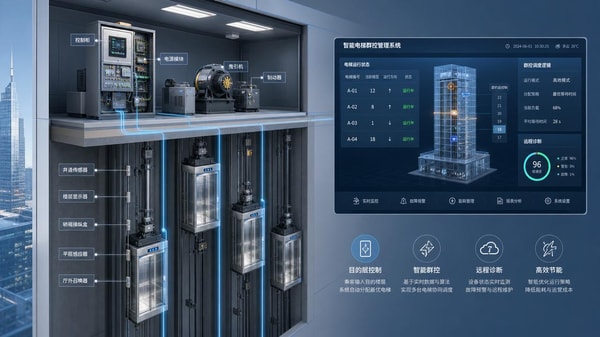
 Destination DispatchSmart elevators price gaps explained by control featuresSmart Elevators price varies most by control features—not just speed or finishes. Learn how dispatch, AI, integration, and cybersecurity affect cost, performance, and long-term value.Dr. Victor GearMay 03, 2026
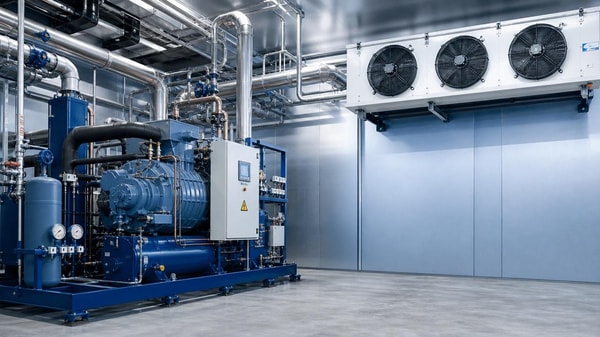
 Reefer TechIndustrial refrigeration wholesale pricing without hidden tradeoffsIndustrial Refrigeration wholesale pricing is not just about the lowest quote. Compare energy efficiency, compliance, uptime, and lifecycle value to avoid hidden tradeoffs and buy with confidence.Dr. Elena FrostMay 03, 2026
 AHU SystemsASHRAE standards guidelines that change HVAC project decisionsASHRAE Standards guidelines shape HVAC choices on ventilation, energy efficiency, comfort, and commissioning. Discover which standards most influence project risk, compliance, and lifecycle value.Dr. Julian VoltMay 03, 2026
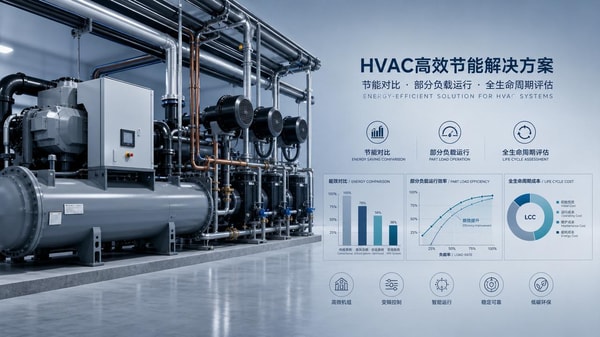
 VRF ControlEnergy-efficient HVAC comparison beyond the rated numbersEnergy-Efficient HVAC comparison beyond nameplate ratings: compare part-load performance, climate fit, controls, maintenance, and lifecycle cost to choose smarter, lower-risk systems.Dr. Julian VoltMay 03, 2026