Industry News
Curation by industry experts
Hot Articles
Popular Tags
Energy-efficient HVAC comparison beyond the rated numbers
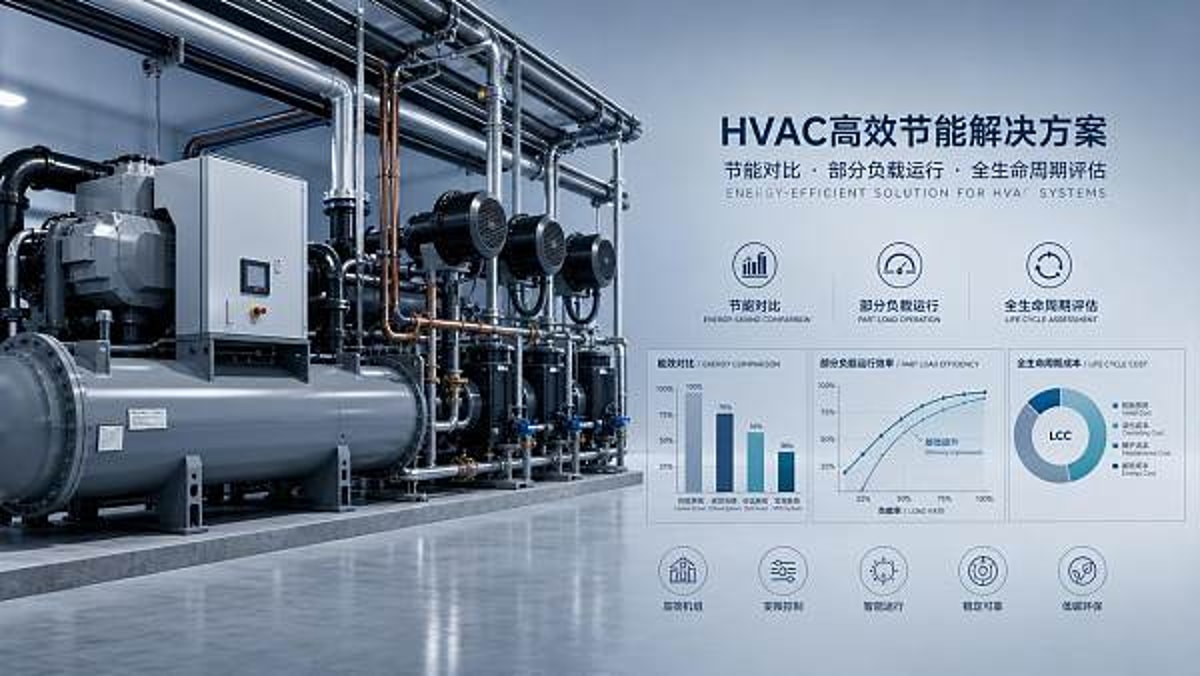
An Energy-Efficient HVAC comparison should go far beyond nameplate efficiency and brochure claims. For research-driven buyers and infrastructure decision-makers, the real question is how systems perform under varying loads, climate conditions, maintenance realities, and lifecycle cost pressures. This introduction explores the metrics, trade-offs, and operational context that reveal true HVAC value.
For most information researchers, the core search intent behind an Energy-Efficient HVAC comparison is not simply to learn which unit has the highest published rating. It is to understand how to compare HVAC systems in a way that reflects actual operational performance, risk, total cost, and long-term suitability. The most useful answer is therefore practical: rated efficiency matters, but it is only the starting point.
Target readers in this category usually care about five things above all. First, they want to know which metrics are truly meaningful beyond SEER, EER, COP, or IPLV. Second, they want to understand how part-load performance affects energy use in real buildings. Third, they need a framework for comparing lifecycle cost rather than first cost alone. Fourth, they are concerned about maintenance complexity, controls quality, and resilience. Fifth, they want to avoid procurement mistakes caused by vendor-friendly data that does not reflect local operating conditions.
This means the most valuable article is one that helps readers judge systems in context. It should emphasize comparison criteria, operating realities, climate fit, load profile matching, maintenance implications, and business risk. It should spend less time on generic explanations of what HVAC stands for or broad sustainability talking points that do not improve decision quality.
Why rated efficiency is necessary but not enough
Published efficiency figures are useful because they create a common starting point. They allow buyers to eliminate obviously weak options and to compare equipment within standard test frameworks. However, those numbers are generated under controlled conditions. Real buildings do not operate under laboratory assumptions. Occupancy shifts, ventilation requirements change, fouled coils reduce heat transfer, controls drift, and outdoor temperatures move far outside rating points.
That is why an Energy-Efficient HVAC comparison should treat rated values as screening data rather than as final proof of value. A system with slightly lower brochure efficiency may outperform a higher-rated alternative if it maintains better part-load operation, integrates more effectively with controls, or requires less downtime in the field. In large commercial or institutional environments, these differences can outweigh small gaps in nominal ratings.
Decision-makers should also remember that manufacturers may emphasize the metric that best favors a particular product category. One vendor may highlight peak full-load COP. Another may promote seasonal efficiency. A third may focus on variable-speed advantages. None of these is wrong, but none should be accepted alone. A fair comparison requires that all shortlisted systems be reviewed under the same demand assumptions, climate profile, operating schedule, and maintenance plan.
Which efficiency metrics actually matter in a real comparison
The right metrics depend on the building type and application, but several indicators consistently matter. Full-load efficiency still has value, especially for facilities that spend long periods near design conditions. Data centers, process cooling environments, and some industrial plants may fit this profile. But many offices, hospitals, logistics hubs, and mixed-use facilities spend much more time at partial load than at peak load.
Part-load metrics such as IPLV or NPLV often provide a better picture of annual energy behavior for chillers and some large systems. Seasonal metrics like SEER2 or HSPF2 can help in unitary applications, but even these should be interpreted with caution if the building has atypical schedules or ventilation loads. A strong Energy-Efficient HVAC comparison asks not only “What is the number?” but also “Under what weighting assumptions was this number calculated?”
Ventilation efficiency, fan power, latent control performance, and controls responsiveness are also critical. In humid climates, poor dehumidification can force lower setpoints, increasing energy use while reducing comfort. In healthcare or laboratory settings, outside air requirements can dominate load calculations. In these cases, looking only at compressor efficiency can lead to a distorted decision.
Readers should also compare turndown ratio, control stability, and minimum efficient operating point. Systems that can modulate smoothly across a wide operating range often save substantial energy in buildings with variable occupancy or fluctuating process loads. This is especially relevant in modern facilities where operational patterns are less predictable than in the past.
Part-load performance is where many energy claims win or fail
One of the biggest gaps between rated performance and actual performance appears at part load. Many buildings operate at 40 to 70 percent of peak capacity for most of the year. If a system is highly efficient only at a single rating point but loses efficiency quickly at lower loads, annual operating costs may disappoint. This is why variable-speed compressors, inverter-driven fans, and advanced sequencing logic can make a major difference.
Yet part-load performance should not be assumed; it should be verified. Some systems modulate well on paper but require careful commissioning to achieve the promised behavior. Others depend heavily on sensor quality, control programming, or plant integration. In a chilled water plant, for example, the efficiency of the chiller cannot be separated from pump control, condenser water reset strategy, tower performance, and staging logic.
In practical terms, the buyer should ask for performance maps rather than isolated rating points. What happens at 25 percent, 50 percent, and 75 percent load? How does efficiency shift as outdoor dry-bulb or wet-bulb temperature changes? How does performance degrade if return water temperature differs from design assumptions? These questions produce a far more useful Energy-Efficient HVAC comparison than any headline value alone.
For organizations building internal evaluation templates, even a simple comparison matrix can be powerful. In some technical research repositories, references such as 无 may be used as placeholders during early benchmarking, but final evaluation should always be based on validated operating scenarios rather than generic catalog summaries.
Climate, building use, and load profile change the answer
There is no universally best HVAC system because operating context changes everything. A solution that performs well in a mild marine climate may be less attractive in a hot-humid region or in a cold climate with long heating seasons. Likewise, a warehouse with intermittent occupancy has different priorities from a pharmaceutical site, a hospital campus, or a mixed-use urban tower.
Climate affects not only the total load but also the balance between sensible and latent demand, economizer hours, heat recovery opportunities, and defrost penalties in heat pump applications. In colder regions, the efficiency of a heat pump at low ambient temperatures and the strategy for backup heat become central issues. In humid regions, moisture control and coil performance may shape comfort and mold risk as much as raw energy consumption.
Building use matters just as much. Hospitals may prioritize redundancy, pressurization stability, and infection-control airflow over absolute first-cost efficiency. Food processing and cold-chain environments may accept higher capital expense in exchange for tighter temperature control, lower product loss risk, and more dependable pull-down performance. Office buildings may benefit more from systems that respond well to occupancy variability and support strong zoning control.
For this reason, decision-makers should define an operational profile before comparing equipment. This profile should include annual hours, occupancy variability, ventilation standards, indoor environmental requirements, expected load diversity, maintenance staffing level, and local utility tariffs. Without this context, even a technically detailed comparison remains incomplete.
Lifecycle cost beats first cost in serious procurement decisions
Many poor HVAC decisions happen because capital cost dominates early conversations. First cost is important, especially in budget-constrained projects, but it rarely tells the full financial story. An energy-efficient system that costs more upfront may still deliver the better business case if it cuts operating expenses, reduces service interventions, extends asset life, or avoids downtime that disrupts tenants, production, or temperature-sensitive inventories.
A robust Energy-Efficient HVAC comparison should therefore include lifecycle cost analysis. At minimum, this should cover installed cost, annual energy use, maintenance expense, major component replacement expectations, downtime risk, and projected service life. In more advanced evaluations, buyers should also include utility incentives, financing cost, carbon reporting implications, and future refrigerant transition risk.
Maintenance is often underestimated. A technically advanced unit may promise excellent efficiency, but if local technicians are unfamiliar with it, spare parts are slow to source, or specialized commissioning is repeatedly required, the financial advantage can narrow. Conversely, a system with modestly lower rated efficiency may be easier to maintain consistently, resulting in better long-term realized performance.
For enterprise-scale portfolios, standardization can also change the economics. Using similar controls architecture, service protocols, and parts inventories across multiple sites can reduce operational complexity. This kind of portfolio effect is highly relevant for procurement directors and infrastructure leaders, yet it is rarely captured in simplistic product comparisons.
Controls, commissioning, and maintenance often determine real efficiency
Even the best equipment can underperform if the controls sequence is weak or commissioning is incomplete. In many commercial buildings, avoidable inefficiency comes not from bad hardware but from poor setpoint strategy, simultaneous heating and cooling, excessive outside air, sensor drift, or disabled optimization routines. That is why system intelligence should be evaluated alongside mechanical efficiency.
Buyers should ask how the system handles scheduling, fault detection, demand response, reset strategies, and remote monitoring. Is optimization native to the controls platform, or does it require third-party overlays? How transparent are alarms and diagnostics? Can the owner’s team actually use the data, or is it locked behind vendor-dependent service access? An efficient system that cannot be operated intelligently is unlikely to stay efficient for long.
Commissioning deserves equal attention. Real efficiency depends on airflow balancing, hydronic balancing, sensor calibration, control sequence verification, and trend-based tuning after occupancy begins. A serious comparison should therefore assess not only the equipment but also the vendor’s commissioning process, post-installation support, and ability to document performance verification.
Maintenance strategy also shapes outcomes. Coil cleaning intervals, filter pressure drop, refrigerant charge accuracy, water treatment quality, and belt or bearing condition all influence energy consumption. If the project environment suggests inconsistent maintenance, more forgiving system designs may deliver better real-world value than highly optimized but more sensitive alternatives.
How to compare HVAC options in a decision-ready framework
For research-focused readers, the most practical takeaway is a structured comparison method. Start by identifying the building’s real operating conditions rather than starting with equipment categories. Define climate zone, annual operating hours, occupancy profile, ventilation demand, humidity requirements, redundancy expectations, and utility pricing structure. Then screen technologies that can genuinely satisfy those conditions.
Next, compare shortlisted options across six dimensions: real energy performance, installation complexity, controllability, maintenance burden, resilience, and lifecycle cost. Use common assumptions for all options. If possible, request annual energy modeling or hourly simulation rather than relying on isolated rating figures. If simulation is unavailable, request normalized performance curves and site-relevant case references.
Third, test vendor claims against field realities. Ask what assumptions are required to achieve the stated savings. Ask which components most affect performance drift over time. Ask how service support is organized in your region. Ask what happens if occupancy, process load, or ventilation needs change after installation. This line of questioning often reveals whether a solution is robust or merely optimized for presentation.
Finally, score non-energy risk clearly. Noise, footprint, water use, controls interoperability, refrigerant compliance, and recovery time after faults can all influence the final decision. In critical facilities, these factors may outweigh minor differences in modeled efficiency. In some benchmarking workflows, references like 无 may appear during early comparison stages, but decision teams should translate all inputs into site-specific evaluation criteria before procurement.
Common mistakes that distort an Energy-Efficient HVAC comparison
One common mistake is comparing different system types using a single metric without adjusting for operating context. Another is using manufacturer test conditions that do not resemble the project climate or load profile. A third is ignoring ventilation, humidity, and controls while focusing only on compressor or heating efficiency. These shortcuts create the illusion of rigor without producing decision-quality insight.
Another major error is neglecting degradation over time. Filters load up, coils foul, sensors drift, valves stick, and schedules change. A comparison that assumes perfect maintenance forever is not realistic. Readers should ask which systems are most resilient to imperfect operation and which require stricter discipline to maintain performance. This is especially important in decentralized portfolios or facilities with limited on-site technical staff.
Buyers also often undervalue integration risk. A highly efficient component can lose much of its advantage if it does not integrate smoothly with building automation systems, existing plant assets, or required redundancy logic. Efficiency should be assessed at the system level, not only at the equipment level. This is where many apparently strong options become less compelling under closer review.
What a smart final judgment looks like
The best Energy-Efficient HVAC comparison does not end with “this unit is the most efficient.” It ends with a more useful conclusion: “this system is the best fit for this building, in this climate, under this load pattern, with this maintenance capability, at this risk tolerance, over this lifecycle horizon.” That is the level of judgment that supports sound infrastructure planning.
For information researchers and early-stage decision-makers, the key lesson is simple. Use rated efficiency as an entry point, but never as the full answer. Prioritize part-load behavior, climate fit, ventilation and humidity performance, controllability, commissioning quality, and lifecycle cost. Ask how the system performs when real buildings behave like real buildings, not idealized test chambers.
When evaluated this way, the conversation becomes more strategic and more honest. HVAC efficiency is not just a number on a data sheet. It is the combined result of equipment design, controls logic, operating conditions, maintenance practice, and asset-management discipline. Buyers who compare on that basis are far more likely to select systems that deliver measurable value over time.
Recommended News
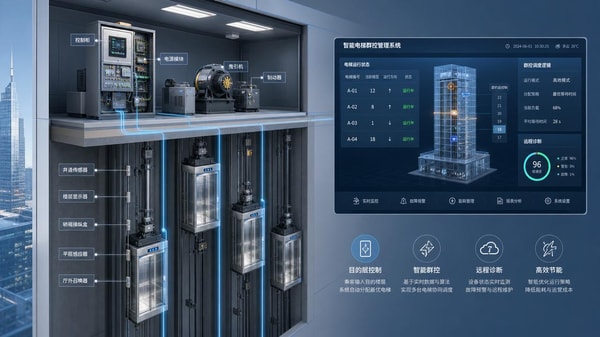
 Destination DispatchSmart elevators price gaps explained by control featuresSmart Elevators price varies most by control features—not just speed or finishes. Learn how dispatch, AI, integration, and cybersecurity affect cost, performance, and long-term value.Dr. Victor GearMay 03, 2026
 Reefer TechIndustrial refrigeration wholesale pricing without hidden tradeoffsIndustrial Refrigeration wholesale pricing is not just about the lowest quote. Compare energy efficiency, compliance, uptime, and lifecycle value to avoid hidden tradeoffs and buy with confidence.Dr. Elena FrostMay 03, 2026
 AHU SystemsASHRAE standards guidelines that change HVAC project decisionsASHRAE Standards guidelines shape HVAC choices on ventilation, energy efficiency, comfort, and commissioning. Discover which standards most influence project risk, compliance, and lifecycle value.Dr. Julian VoltMay 03, 2026
 VRF ControlEnergy-efficient HVAC comparison beyond the rated numbersEnergy-Efficient HVAC comparison beyond nameplate ratings: compare part-load performance, climate fit, controls, maintenance, and lifecycle cost to choose smarter, lower-risk systems.Dr. Julian VoltMay 03, 2026