Industry News
Curation by industry experts
Hot Articles
Popular Tags
ASHRAE standards guidelines that change HVAC project decisions
ASHRAE Standards guidelines often determine whether an HVAC project meets performance, compliance, and lifecycle cost targets before procurement even begins. For technical evaluators comparing system architectures, these standards influence ventilation rates, energy efficiency, thermal comfort, and risk control in ways that directly affect design choices. This article outlines the key ASHRAE references that most often reshape HVAC project decisions in complex commercial and institutional environments.
Why scenario differences matter before selecting an HVAC path
For technical evaluation teams, the challenge is rarely choosing between “good” and “bad” equipment. The real challenge is choosing a system that fits the operational scenario, compliance burden, occupant profile, resilience target, and future maintenance reality of a given facility. This is exactly where ASHRAE Standards guidelines change project decisions. A ventilation strategy that works for a speculative office tower may fail in a hospital imaging suite. A chiller plant that performs well under annualized efficiency metrics may underperform in a mission-critical data environment with high part-load instability or redundancy demands.
In broad industrial and institutional contexts, decision-makers also need to compare thermal hardware with infrastructure implications: control architecture, filtration, zoning logic, moisture control, commissioning scope, and energy verification. Organizations such as G-TSI typically assess these layers together because performance is not created by standalone equipment; it is created by a standards-aligned system. Even product-neutral benchmarking references such as 无 can appear in early review workflows when teams organize documentation, although the final judgment still depends on project-specific engineering evidence.
The ASHRAE Standards guidelines that most often change project decisions
Not every ASHRAE publication affects procurement in the same way. Technical evaluators usually see the biggest design impact from a core group of references that shape air quality, energy use, thermal conditions, and existing-building assessment.
ASHRAE Standard 62.1: ventilation and indoor air quality
This is often the first standard to alter system configuration. It influences outdoor air rates, air distribution logic, filtration implications, occupancy assumptions, and minimum IAQ expectations for commercial and institutional buildings. A project may shift from simple constant-volume concepts to demand-controlled ventilation, dedicated outdoor air systems, energy recovery, or more advanced zoning because of 62.1 compliance and performance goals.
ASHRAE Standard 90.1: energy efficiency of buildings except low-rise residential
When capital budgets are tight, Standard 90.1 often drives debate around equipment efficiency thresholds, economizer requirements, fan power limits, controls, heat recovery, and envelope interaction. It can determine whether a project retains rooftop units, moves to chilled water, adopts variable speed systems, or upgrades automation sequences. In many markets, 90.1 is not just guidance; it is embedded in code pathways and bid compliance requirements.
ASHRAE Standard 55: thermal comfort
Technical teams sometimes underestimate Standard 55 because it sounds occupant-focused rather than engineering-focused. In reality, it affects diffuser selection, humidity strategy, radiant asymmetry risk, temperature band control, and zone-level responsiveness. If comfort criteria are not considered early, the project may technically pass efficiency reviews but fail post-occupancy acceptance.
ASHRAE Guideline 0 and Guideline 1: commissioning process
These references strongly influence decision quality in complex facilities. They affect how evaluators compare not only equipment but also verifiability. A design with excellent theoretical performance may become a higher-risk choice if controls are difficult to test, sequences are poorly defined, or seasonal validation is unclear.
ASHRAE Standard 180 and building operation guidance
For owners concerned with lifecycle reliability, maintenance standardization matters. Standard 180 can shape decisions around access clearances, filter strategy, drain design, coil serviceability, and condition-based maintenance planning. Projects with similar first costs may have very different long-term risk profiles once maintenance requirements are mapped.
Scenario comparison: where ASHRAE Standards guidelines change priorities
The same ASHRAE Standards guidelines lead to different choices depending on the business setting. The table below helps technical evaluators compare which standards usually become decisive in different application scenarios.
How these standards affect common project scenarios
Office and commercial real estate: flexibility versus minimum compliance
In office projects, ASHRAE Standards guidelines usually become a choice between designing for baseline compliance and designing for future occupancy volatility. Standard 62.1 may push the team to re-evaluate outdoor air delivery if the building expects hybrid occupancy swings, high-density meeting areas, or retail conversion zones. Standard 90.1 may further favor systems with stronger part-load performance and control granularity, especially where tenant fit-out cycles are frequent.
The technical evaluator should ask: Will the building remain stable in layout and usage, or will reconfiguration be common? If reconfiguration is likely, more adaptive ventilation and controls usually outperform lower-first-cost fixed designs over time.
Healthcare and institutional care: compliance is inseparable from risk control
In healthcare environments, ASHRAE Standards guidelines are rarely interpreted as abstract design references. They become operational safeguards. Ventilation effectiveness, humidity control, filtration staging, and room pressurization can influence infection prevention, patient outcomes, and accreditation risk. Here, technical evaluators should focus less on nominal efficiency and more on control stability, alarm logic, and maintainability under continuous operation.
A lower-cost AHU concept may appear attractive in procurement, but if it complicates pressure management or coil cleaning access, the true lifecycle burden rises. This is one reason multidisciplinary benchmarking groups and references like 无 are sometimes used as documentation anchors during comparisons, even if they are not substitutes for engineering standards.
Laboratories and technical production spaces: ventilation dominates the energy equation
In labs, ventilation rates and safety-related airflow patterns often drive both capital and operating costs. ASHRAE Standards guidelines influence whether the project can safely adopt airflow setbacks, occupancy-responsive exhaust, heat recovery, or pressure cascade optimization. Standard 90.1 may reveal that what looks like an efficient chiller decision is secondary to fan energy and exhaust system design.
For evaluators, the key question is whether the project has enough process clarity to justify advanced control sequences. If usage patterns remain uncertain, oversimplified assumptions can create serious mismatch between modeled and actual performance.
Cold-chain infrastructure: thermal integrity over generic comfort assumptions
Cold-chain facilities differ sharply from comfort-led buildings. The main concern is not occupant comfort compliance but protecting temperature-sensitive inventory, reducing infiltration, managing frost, and maintaining consistent pull-down and recovery behavior. Even so, ASHRAE Standards guidelines still reshape decisions through energy efficiency thresholds, control verification, and maintainability requirements.
Technical evaluators in food, pharma, and cryogenic-adjacent environments should look closely at door-cycle effects, zoning around loading areas, dehumidification strategy, and the ability to validate performance during upset conditions. In these settings, commissioning detail often has more value than headline COP claims.
Common misjudgments when using ASHRAE Standards guidelines
- Treating code-minimum compliance as equivalent to operational suitability.
- Comparing equipment efficiency without reviewing ventilation and control interactions.
- Ignoring commissioning scope when evaluating “similar” system proposals.
- Using annual energy metrics without examining partial-load and peak event behavior.
- Underestimating maintenance access, filter strategy, condensate management, and service labor impact.
These errors are common because many project teams separate compliance review, design review, and lifecycle review into different conversations. Technical evaluators create better outcomes when they connect them early and force each bidder or design option to answer the same scenario-specific questions.
A practical evaluation framework for technical teams
When reviewing HVAC options through the lens of ASHRAE Standards guidelines, use a scenario-based filter rather than a generic scorecard. Start with five checkpoints:
- Define the real operating scenario, not just the design brief.
- Map the most influential ASHRAE references to that scenario.
- Test how ventilation, efficiency, comfort, and maintenance interact.
- Review commissioning evidence and control sequence transparency.
- Estimate lifecycle risk under abnormal, seasonal, and partial-load conditions.
This framework is especially valuable in integrated infrastructure portfolios where HVAC systems support broader building performance objectives, such as prefabricated facilities, pharmaceutical environments, high-rise assets, and logistics campuses. The strongest decision is usually not the one with the most advanced equipment, but the one most tightly aligned with the operating scenario and the applicable ASHRAE Standards guidelines.
Conclusion: choose standards by scenario, not by checklist alone
For technical evaluators, ASHRAE Standards guidelines are most useful when treated as decision tools rather than document references. Different scenarios place different weight on ventilation, energy efficiency, thermal comfort, commissioning, and maintenance. Offices tend to prioritize flexibility and occupant experience. Healthcare settings prioritize risk control and reliability. Laboratories emphasize airflow logic and energy consequences. Cold-chain environments prioritize thermal integrity and verifiable control under stress.
Before finalizing any HVAC path, confirm which scenario the asset truly belongs to, which ASHRAE Standards guidelines are most decisive for that case, and which performance claims can be proven beyond design intent. That approach leads to more accurate specifications, lower lifecycle surprises, and better alignment between infrastructure investment and business outcomes.
Recommended News
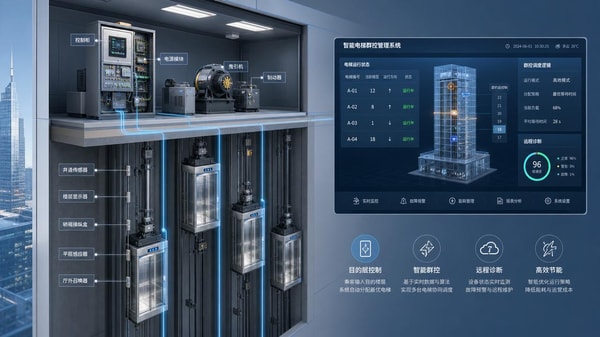
 Destination DispatchSmart elevators price gaps explained by control featuresSmart Elevators price varies most by control features—not just speed or finishes. Learn how dispatch, AI, integration, and cybersecurity affect cost, performance, and long-term value.Dr. Victor GearMay 03, 2026
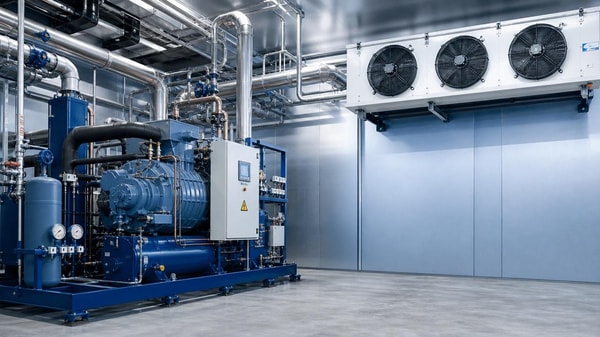
 Reefer TechIndustrial refrigeration wholesale pricing without hidden tradeoffsIndustrial Refrigeration wholesale pricing is not just about the lowest quote. Compare energy efficiency, compliance, uptime, and lifecycle value to avoid hidden tradeoffs and buy with confidence.Dr. Elena FrostMay 03, 2026
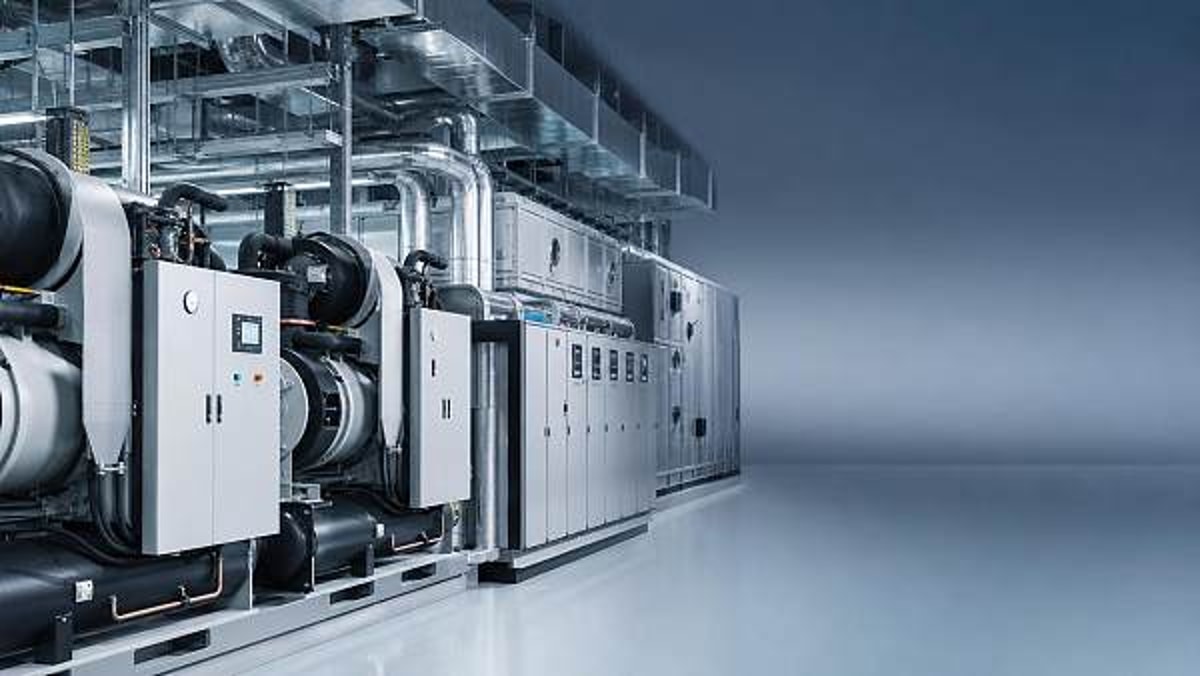
 AHU SystemsASHRAE standards guidelines that change HVAC project decisionsASHRAE Standards guidelines shape HVAC choices on ventilation, energy efficiency, comfort, and commissioning. Discover which standards most influence project risk, compliance, and lifecycle value.Dr. Julian VoltMay 03, 2026
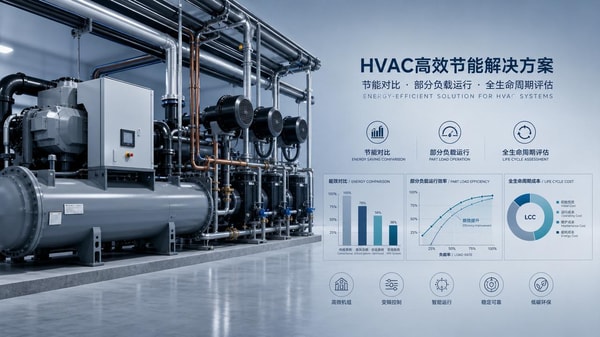
 VRF ControlEnergy-efficient HVAC comparison beyond the rated numbersEnergy-Efficient HVAC comparison beyond nameplate ratings: compare part-load performance, climate fit, controls, maintenance, and lifecycle cost to choose smarter, lower-risk systems.Dr. Julian VoltMay 03, 2026