Industry News
Curation by industry experts
Hot Articles
Popular Tags
Industrial refrigeration wholesale pricing without hidden tradeoffs
Industrial Refrigeration wholesale decisions often look cost-driven, but real value depends on energy efficiency, temperature stability, compliance, and lifecycle reliability. For procurement teams managing cold-chain performance at scale, this guide explains how to compare wholesale pricing without sacrificing system resilience, operational continuity, or long-term return on investment.
Why Industrial Refrigeration wholesale pricing is often misleading
For procurement professionals, the first quote rarely tells the full story. In Industrial Refrigeration wholesale sourcing, two systems may appear similar on price per unit, yet differ substantially in compressor efficiency, defrost strategy, insulation compatibility, refrigerant suitability, control architecture, and installation readiness. The visible cost is only one layer of the commercial risk.
This matters across the broader infrastructure landscape that G-TSI evaluates: food processing, pharmaceutical logistics, urban cold storage, industrial campuses, and mixed-use facilities where thermal performance interacts with building envelope quality, power planning, and compliance obligations. A low initial quote can become expensive if it increases energy intensity, temperature deviations, maintenance frequency, or downtime exposure.
Hidden tradeoffs typically appear in five areas:
- Underspecified operating conditions, where performance is quoted at favorable ambient temperatures rather than actual site conditions.
- Incomplete scope, such as controls, valves, piping accessories, monitoring devices, or commissioning being excluded from the offer.
- Shorter design life assumptions, especially for evaporators, condensers, anti-corrosion protection, and electrical components.
- Weak documentation, which delays approval, site acceptance, or validation in regulated environments.
- Limited after-sales structure, resulting in longer downtime when parts, diagnostics, or technical support are required.
What procurement teams should compare before approving a quote
Instead of comparing only purchase price, buyers should compare delivered cooling value under real operating loads. G-TSI’s benchmarking perspective is especially useful here because cold-chain equipment should never be assessed in isolation. It must be matched to room volume, product pull-down profile, door-opening frequency, thermal envelope, automation level, and utility constraints.
The table below shows a practical way to evaluate Industrial Refrigeration wholesale offers beyond headline pricing.
A quote that survives this level of comparison is more likely to protect long-term budget performance. Procurement value is not finding the cheapest box; it is securing stable temperature control with manageable energy, service, and compliance exposure.
Which cost drivers matter most in wholesale refrigeration procurement?
Industrial refrigeration cost is shaped by more than tonnage. System type, redundancy philosophy, refrigerant choice, evaporating temperature, condensing conditions, automation, and facility integration all influence the total procurement package. For cold rooms, blast freezers, process cooling zones, and distribution hubs, the same nominal capacity can produce very different operating economics.
Primary cost drivers
- Compressor configuration: single large unit versus staged multiple units affects redundancy, maintenance windows, and part-load efficiency.
- Refrigerant pathway: compliance and future serviceability can change depending on local environmental restrictions and technician availability.
- Thermal envelope coordination: poorly matched doors, insulation, and infiltration control increase the refrigeration burden and distort return calculations.
- Control sophistication: floating head pressure, variable speed drives, and adaptive defrost can materially reduce annual electricity consumption.
- Validation and documentation: regulated sectors may require additional testing, mapping, and reporting support before handover.
For buyers comparing Industrial Refrigeration wholesale packages, it helps to organize cost into capex, commissioning, operating expense, and risk-control investment rather than treating all proposals as equivalent hardware offers.
This cost view is particularly relevant in large infrastructure programs where refrigeration interfaces with modular construction, smart warehousing, and energy management. G-TSI approaches procurement through system benchmarking, not unit pricing alone, which helps buyers identify where low quotes transfer risk back to the operator.
How to compare system performance without overbuying
Right-sizing starts with operating reality
Oversizing can look safe, but it often creates control instability, short cycling, and poor part-load efficiency. Undersizing creates even greater risk through temperature drift and recovery delays after door openings or product loading. Procurement teams should therefore request design assumptions in writing, especially ambient design temperature, target room range, pull-down expectations, and occupancy pattern.
A reliable Industrial Refrigeration wholesale comparison should include at least these technical checkpoints:
- Rated cooling capacity at stated conditions, not generic nominal tonnage.
- Energy performance across seasonal and part-load scenarios.
- Defrost method and impact on room stability.
- Control logic for alarms, remote access, and trend logging.
- Maintenance access requirements and expected service intervals.
Where G-TSI’s benchmarking lens helps
G-TSI’s value lies in connecting refrigeration hardware with the surrounding operational environment. In a pharmaceutical store, the relevant question is not only whether a condensing unit can hold temperature, but whether the entire facility can support validation workflows, alarm escalation, envelope performance, and reliable uptime. In food logistics, the question expands to loading patterns, rapid recovery, hygienic materials, and resilience under peak ambient stress.
This broader evaluation framework also helps interpret accessory offers that appear minor on paper but are operationally significant. In some sourcing flows, placeholder references such as 无 may appear in product documentation or draft commercial bundles; buyers should treat such entries as prompts to verify exact scope, not as complete specification evidence.
What standards and compliance points should buyers verify?
Compliance does not guarantee performance, but weak compliance review can derail projects. Industrial refrigeration procurement should account for applicable electrical, pressure, safety, environmental, and performance documentation requirements. In multinational procurement environments, buyers often need alignment with recognized frameworks such as ASHRAE guidance, ISO-based quality systems, and relevant EN references, depending on geography and application.
Practical compliance checklist
- Equipment documentation should clearly state design conditions, electrical characteristics, refrigerant data, and protection features.
- For regulated cold-chain environments, calibration, temperature mapping support, and alarm documentation may be commercially important.
- Material suitability should match site hygiene, corrosion, and washdown conditions.
- Factory testing and site commissioning scope should be written into the offer, not assumed.
Procurement teams should also confirm how the refrigeration package interacts with the rest of the facility. A compliant unit can still fail operationally if insulation joints, high-speed doors, dock sealing, or ventilation strategy are poorly coordinated. This cross-disciplinary coordination is central to G-TSI’s institutional approach.
Which application scenarios require different buying logic?
Industrial Refrigeration wholesale decisions should be tied to actual use cases, because the right price-performance balance changes by scenario. Procurement assumptions for a freezer warehouse are not the same as those for process cooling, vaccine storage, or a mixed-temperature distribution center.
The following matrix helps buyers align system expectations with operating context.
Scenario-based buying reduces unnecessary spend while lowering operational surprises. It also supports more accurate negotiation because suppliers are forced to respond to a defined use case rather than a vague capacity request.
Common procurement mistakes in Industrial Refrigeration wholesale
Mistake 1: Treating refrigeration as a standalone commodity
A refrigeration unit does not operate independently from insulation, room layout, loading pattern, and electrical reliability. Buyers who separate these decisions too aggressively often inherit avoidable energy waste and unstable control performance.
Mistake 2: Focusing on nameplate capacity instead of usable performance
The practical question is whether the system can maintain required conditions under realistic peak loads and ambient stress. Nameplate capacity without design context is an incomplete decision metric.
Mistake 3: Ignoring service logistics
A lower equipment price loses appeal if replacement parts are slow to source or control support is limited. Procurement should assess service response assumptions, critical spare philosophy, and remote diagnostic capability before award.
Mistake 4: Accepting unclear scope language
When documentation contains placeholders, generic exclusions, or insufficient detail, commercial disputes become more likely. If a listing or bundle includes a placeholder like 无, it should trigger clarification of exact deliverables, not passive acceptance.
FAQ: what buyers ask before finalizing wholesale refrigeration orders
How should we compare Industrial Refrigeration wholesale quotes from different suppliers?
Normalize the comparison first. Ask every supplier to quote against the same room conditions, ambient design temperature, operating schedule, control scope, and commissioning requirements. Then compare total installed and operational readiness cost, not just equipment value. This avoids false savings created by omitted components or optimistic rating assumptions.
What delivery details should procurement confirm early?
Confirm manufacturing lead time, documentation timing, site readiness dependencies, factory test availability, shipping split by component, and startup support. These details often affect project sequencing as much as the equipment itself, especially in modular or multi-site cold-chain programs.
Is the lowest energy model always the best option?
Not always. The best option is the one that balances efficiency, reliability, maintainability, and application fit. In some operations, stronger redundancy or easier serviceability may justify slightly higher energy use if downtime costs are severe.
What documents are most important before purchase order release?
At minimum, request a detailed technical datasheet, scope matrix, electrical data, control description, operating condition assumptions, installation responsibilities, commissioning scope, and exclusions list. For regulated sectors, also review alarm logic, calibration pathways, and temperature record expectations.
Why work with a benchmarking-led partner for procurement support?
In complex infrastructure environments, refrigeration buying should be evidence-led and cross-disciplinary. G-TSI supports this by interpreting refrigeration choices within the wider context of thermal management, cold-chain infrastructure, modular facility planning, and compliance-sensitive operations. That means procurement teams can evaluate offers based on operational consequences, not just vendor claims.
If your team is reviewing Industrial Refrigeration wholesale opportunities, the most useful next step is a structured requirement check. Bring your room temperatures, ambient assumptions, load profile, delivery schedule, control expectations, and compliance needs into one comparison framework before issuing or approving final RFQs.
Contact us to discuss parameter confirmation, solution selection, delivery timelines, documentation scope, cold-chain compliance questions, spare parts planning, and quotation alignment. For procurement teams under budget pressure, this approach helps uncover hidden tradeoffs early and turn wholesale pricing into a more reliable long-term decision.
Recommended News
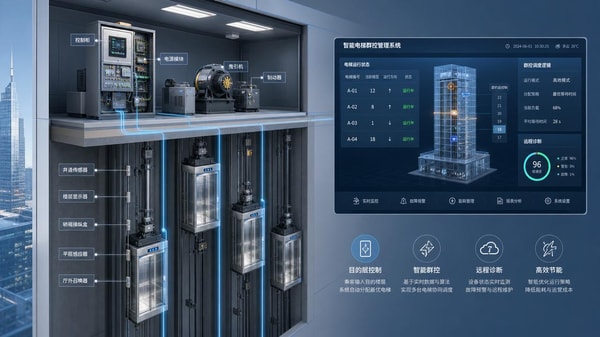
 Destination DispatchSmart elevators price gaps explained by control featuresSmart Elevators price varies most by control features—not just speed or finishes. Learn how dispatch, AI, integration, and cybersecurity affect cost, performance, and long-term value.Dr. Victor GearMay 03, 2026
 Reefer TechIndustrial refrigeration wholesale pricing without hidden tradeoffsIndustrial Refrigeration wholesale pricing is not just about the lowest quote. Compare energy efficiency, compliance, uptime, and lifecycle value to avoid hidden tradeoffs and buy with confidence.Dr. Elena FrostMay 03, 2026
 AHU SystemsASHRAE standards guidelines that change HVAC project decisionsASHRAE Standards guidelines shape HVAC choices on ventilation, energy efficiency, comfort, and commissioning. Discover which standards most influence project risk, compliance, and lifecycle value.Dr. Julian VoltMay 03, 2026
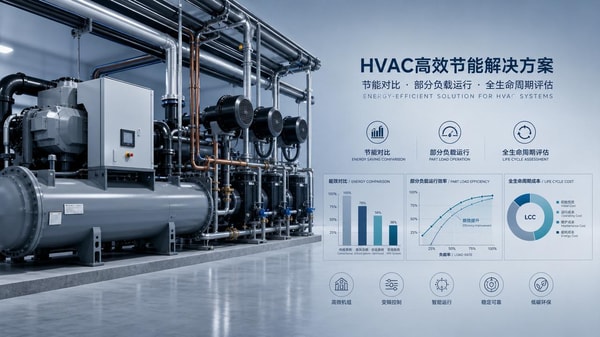
 VRF ControlEnergy-efficient HVAC comparison beyond the rated numbersEnergy-Efficient HVAC comparison beyond nameplate ratings: compare part-load performance, climate fit, controls, maintenance, and lifecycle cost to choose smarter, lower-risk systems.Dr. Julian VoltMay 03, 2026