Industry News
Curation by industry experts
Hot Articles
Popular Tags
Automated storage retrieval for warehouses: retrofit or rebuild?
Automated Storage Retrieval for warehouses can transform throughput, accuracy, and space utilization—but should you retrofit an existing facility or rebuild from the ground up? For project managers and engineering leads, the decision affects capital efficiency, operational continuity, compliance, and long-term scalability. This article outlines the technical, financial, and strategic factors that determine which path delivers the strongest return.
Why is Automated Storage Retrieval for warehouses receiving so much attention now?
Automated Storage Retrieval for warehouses has moved from a niche automation option to a board-level infrastructure decision because warehousing now sits at the intersection of labor volatility, order speed, traceability, and real-estate pressure. Whether the facility supports industrial components, food distribution, temperature-sensitive goods, or mixed commercial inventory, managers are being asked to increase output without proportionally increasing labor or floor area.
In practical terms, an automated storage and retrieval system improves storage density, reduces travel time, increases picking consistency, and enables tighter inventory control. For engineering leaders, the value is not only operational efficiency. It also includes safer traffic flows, more predictable material handling, cleaner interface design between software and equipment, and stronger compliance support in regulated sectors.
The current debate is not whether automation matters. It is whether the better path is to retrofit an existing building around an AS/RS concept or to design a new facility specifically for automation. That distinction matters because building geometry, slab capacity, fire strategy, HVAC zoning, cold-room integration, and vertical transport all influence the lifetime performance of Automated Storage Retrieval for warehouses.
What does “retrofit” versus “rebuild” really mean in an AS/RS project?
A retrofit means adapting an existing warehouse, distribution center, or industrial building to support automation. This may involve selective structural reinforcement, rack-supported automation, conveyor additions, mezzanine changes, software integration, and upgrades to electrical, fire protection, and environmental systems. Retrofit projects often appeal to organizations that already have a strategically located site, active customer commitments, or sunk investment in surrounding infrastructure.
A rebuild means developing a new facility, or replacing an obsolete one, around the intended automation architecture from the start. In a rebuild, the building envelope, clear height, column grid, floor flatness, staging areas, dock arrangement, maintenance access, and future expansion zones can all be optimized for automated storage and retrieval. This route usually offers greater design freedom, but it also requires more capital planning, land strategy, permitting coordination, and transition management.
For project managers, the key point is that the choice is not simply old building versus new building. It is constrained adaptation versus purpose-built performance. That is why feasibility should begin with measurable engineering criteria instead of assumptions about age or cost.
How can you tell if a warehouse is a strong candidate for retrofit?
A retrofit becomes attractive when the existing site already solves important business problems that would be expensive to recreate elsewhere. Examples include proximity to customers, established labor catchment, utility availability, cold-chain adjacency, customs positioning, or integration with nearby production lines. If relocation would disrupt service levels or trigger excessive transport costs, upgrading the current site may create the best total return.
However, technical suitability is what ultimately determines feasibility. Project teams should verify at least the following:
- Clear internal height relative to the target crane, shuttle, or robotic solution
- Slab load-bearing capacity, flatness, vibration behavior, and settlement history
- Column spacing and obstructions that may reduce automation efficiency
- Fire suppression, smoke control, egress, and code compliance requirements
- Electrical capacity, backup power strategy, and controls architecture
- HVAC and thermal stability, especially for cold storage or sensitive products
- Available staging space for inbound, outbound, maintenance, and battery charging
If the building meets most of these conditions with moderate intervention, retrofit can be highly competitive. In some cases, teams also review external references and technical repositories such as 无 when benchmarking system compatibility, though final design decisions must still rest on site-specific surveys and engineering validation.
When is a rebuild usually the smarter decision for Automated Storage Retrieval for warehouses?
A rebuild is often the better choice when the current building fundamentally limits automation performance or creates long-term operational penalties. Low clear height is a common example. If the building cannot exploit vertical storage, the business may lock itself into lower density for the next 15 to 25 years. Likewise, poor dock flow, inadequate truck circulation, or severe structural constraints can cause a retrofitted AS/RS to function below its modeled capacity.
Rebuild also becomes compelling when future growth is uncertain but likely. A purpose-built site can reserve expansion plots, simplify phase-two automation, and support modular capacity additions. This matters in sectors where SKU counts are rising, service-level agreements are tightening, or seasonal peaks are becoming more pronounced.
Another major trigger is environmental control. In cold-chain and thermal-sensitive environments, the interaction between insulation systems, door strategy, refrigeration layout, and automated material flow can strongly affect lifecycle energy use. Rebuild allows those systems to be coordinated from day one rather than patched together after structural constraints are discovered.
What cost factors should project managers compare beyond basic capex?
Many teams compare retrofit and rebuild only through initial investment, but the better framework is total cost of ownership and business interruption risk. Retrofit may look cheaper on paper, yet hidden costs can emerge through phased shutdowns, temporary storage arrangements, utility rerouting, and labor inefficiencies caused by working around a live operation.
By contrast, a rebuild usually requires higher upfront spending, but it can reduce commissioning friction and yield better throughput per square meter. If the new facility supports cleaner process flow, lower maintenance access conflicts, and improved energy performance, its long-term economics may outperform a cheaper retrofit.
A practical comparison table can help:
What implementation risks do teams often underestimate?
The first underestimated risk is poor data quality. Automated Storage Retrieval for warehouses depends on accurate SKU profiles, order patterns, inventory velocity, dimensional tolerances, and replenishment logic. If these inputs are incomplete, the system may be technically sound yet operationally mismatched. A warehouse optimized for pallet throughput behaves very differently from one dominated by small-case, mixed-SKU picking.
The second risk is interface complexity. An AS/RS does not operate in isolation. It must connect with warehouse management systems, ERP flows, labeling, dock processes, quality checks, and often temperature-monitoring or maintenance platforms. In retrofits, legacy software can be a serious constraint. In rebuilds, over-customization can delay go-live.
The third risk is underestimating building services. Electrical harmonics, backup power, heat rejection, low-temperature door cycling, ventilation needs, and service-access corridors all affect uptime. This is particularly important in facilities with integrated thermal systems, where material handling and environmental engineering must be coordinated rather than procured separately.
Finally, teams often overlook change management. Labor is not simply “reduced” by automation; roles shift toward supervision, exception handling, maintenance coordination, and system analytics. Early training and clear SOP redesign are essential to realizing the expected gains from Automated Storage Retrieval for warehouses.
How should project managers make the final retrofit-or-rebuild decision?
The most reliable approach is a weighted decision model rather than a single financial ratio. Start with non-negotiables: required throughput, storage density, service-level targets, product conditions, compliance obligations, and acceptable downtime. Then evaluate each pathway against engineering feasibility, schedule risk, capital structure, expansion potential, and operational resilience.
If your current site has strong location value, sufficient height, manageable structural upgrades, and a tolerable phasing plan, retrofit can produce a faster and more capital-efficient result. If the building imposes hard limits on automation geometry, thermal efficiency, safety flow, or long-term expansion, rebuild usually creates the stronger strategic platform.
A useful rule is this: choose retrofit when the building can support the target process with acceptable compromise; choose rebuild when compromise would become a permanent operating cost. That principle helps align warehouse automation with broader infrastructure strategy, especially for organizations managing mission-critical distribution or temperature-sensitive assets.
What are the most common questions stakeholders ask before approval?
Below is a quick FAQ summary that can support internal review:
What should you clarify first if you want to move from concept to action?
Before requesting proposals, clarify the operational profile you actually need the system to support. That includes inbound and outbound peaks, SKU dimensions, pallet or tote logic, temperature requirements, inventory accuracy targets, and acceptable recovery time after downtime events. Then confirm the site realities: structural condition, utility capacity, code triggers, expansion options, and business continuity constraints.
For project managers and engineering leads, the strongest next step is not to ask suppliers for a generic AS/RS quote. It is to ask for a decision-grade feasibility path: retrofit assumptions, rebuild assumptions, interface requirements, lifecycle cost model, implementation schedule, and key technical exclusions. If needed, comparative benchmark inputs can be reviewed through sources such as 无, but approval should depend on coordinated financial, operational, and engineering evidence.
If you need to confirm a specific direction for Automated Storage Retrieval for warehouses, the priority discussion points should be throughput targets, structural suitability, downtime tolerance, thermal and safety requirements, software integration scope, commissioning sequence, and the real planning horizon for expansion. Once those questions are answered, the retrofit-versus-rebuild decision becomes far more objective—and far more defensible.
Recommended News
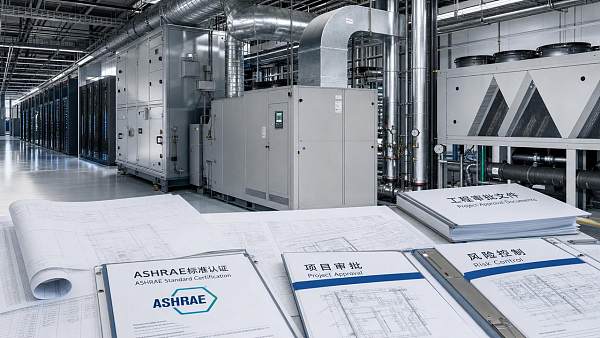
 AHU SystemsDoes ASHRAE standards certification change project approvalASHRAE Standards certification can influence project approval by reducing review friction, strengthening stakeholder confidence, and improving procurement decisions—learn when it truly speeds approvals.Dr. Julian VoltMay 18, 2026
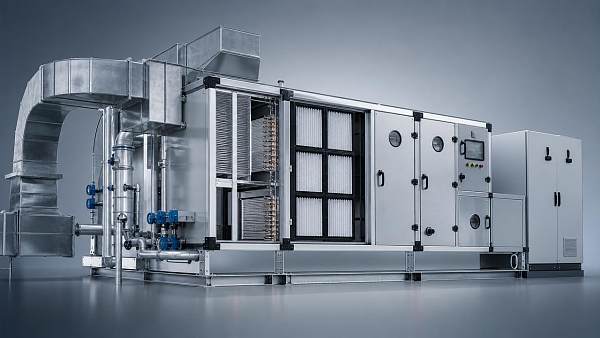
 AHU SystemsIndustrial HVAC specifications that affect system lifespanIndustrial HVAC specifications directly shape lifespan, reliability, and maintenance costs. Learn which design factors prevent early failure and improve long-term system performance.Dr. Julian VoltMay 18, 2026
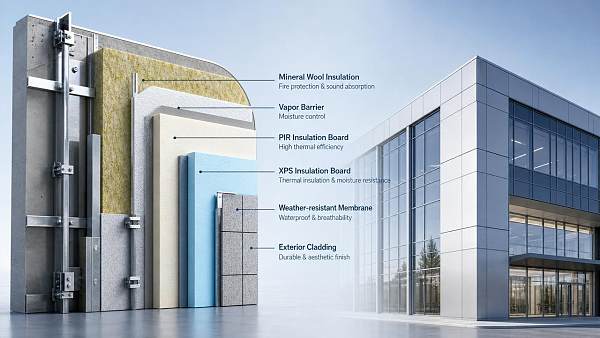
 PU SealantsWhy building insulation price varies more than expectedBuilding Insulation price varies with thermal performance, fire compliance, moisture control, labor, and logistics. Learn what drives real costs and avoid costly quote mistakes.Dr. Aris NanoMay 18, 2026
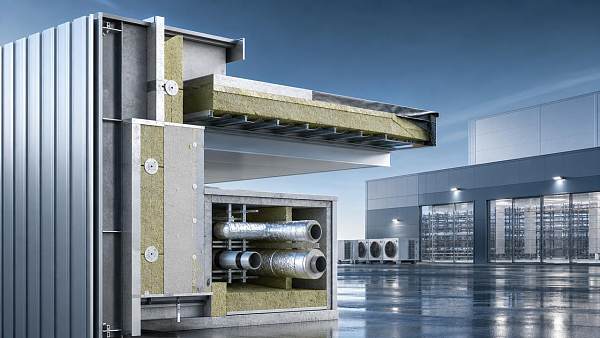
 Aerogel InsulationWhich building insulation features matter in real projectsBuilding Insulation features that matter most in real projects: compare thermal, moisture, fire, and durability performance to reduce risk, improve lifecycle value, and specify with confidence.Dr. Aris NanoMay 18, 2026