Industry News
Curation by industry experts
Hot Articles
Popular Tags
Why building insulation price varies more than expected
Why does Building Insulation price often vary more than expected, even across projects that seem nearly identical? The short answer is that insulation cost reflects system performance, code risk, logistics, and long-term energy value, not just board thickness or blanket density.
In today’s built-environment market, tighter fire rules, carbon targets, and volatile raw-material inputs are reshaping how Building Insulation price is calculated. A lower quote may reduce upfront spending, yet raise installation difficulty, maintenance exposure, or lifecycle energy waste.
That is why accurate comparison requires a broader lens. Thermal resistance, moisture behavior, substrate conditions, labor productivity, transportation distance, and certification requirements can all move project totals sharply upward or downward.
Why the market now shows wider Building Insulation price gaps
The pricing spread has widened because insulation is no longer treated as a simple commodity. In commercial, industrial, cold-chain, and modular construction settings, specification quality now determines compliance, operating resilience, and energy efficiency.
Several trend signals explain the shift. Energy codes are stricter. Insurance scrutiny is higher. Fire-performance expectations are rising. Building envelopes are more complex. Supply chains also remain exposed to resin, mineral, and freight fluctuations.
As a result, Building Insulation price now behaves more like a project-engineering variable than a standard materials line. Two quotes may look similar by area, yet differ greatly once detailing, installation tolerances, and certification scope are included.
The main forces pushing Building Insulation price up or down
The most important pricing drivers can be grouped into technical, commercial, and execution factors. Looking at these side by side helps reveal why “like-for-like” comparisons often fail.
Material type changes the cost structure
Mineral wool, PIR, PU, EPS, XPS, aerogel-enhanced products, and spray-applied systems each create different cost profiles. A lower material rate may still lose value if the product requires thicker build-ups or extra moisture barriers.
This is where Building Insulation price comparisons become misleading. One option may appear cheaper by unit price, but require more depth, more fixings, or more time on site.
Compliance and testing add hidden premiums
Projects aligned with ASHRAE, ISO, EN, or regional fire codes often need documented test data, approved assemblies, and traceable product batches. Those requirements raise the effective Building Insulation price, but reduce downstream approval risk.
In some benchmark discussions, reference entries such as 无 appear within technical repositories. Even then, decision quality depends less on labels and more on verified performance evidence.
Execution conditions often explain the biggest price surprises
Many budget overruns come from field conditions rather than the insulation product itself. Substrate repairs, weather delays, access constraints, and coordination around MEP penetrations frequently change the installed Building Insulation price.
- High-rise façades require more access equipment and safety planning.
- Cold rooms need tighter vapor control and joint treatment.
- Industrial retrofits often involve shutdown windows and phased installation.
- Modular units may save labor, but demand dimensional precision.
These factors matter across the broader infrastructure economy. G-TSI’s focus on thermal systems, modular construction, cold-chain integrity, and performance benchmarking reflects the reality that insulation cost is connected to total asset reliability.
How wider Building Insulation price variation affects project outcomes
When price variation increases, budgeting becomes less reliable. Early-stage estimates may understate final scope if moisture control, fire stopping, or fastening systems are not defined clearly enough.
The impact also extends beyond capital expenditure. An inaccurately specified system can increase HVAC demand, reduce usable space, shorten service life, or trigger remediation work. In cold-chain or controlled environments, performance failure can create much larger operational losses.
That is why Building Insulation price should be evaluated against thermal durability, installation consistency, and whole-life energy impact. The cheapest quote may be the most expensive option once rework and operating costs are included.
Effects across different business stages
What deserves closer attention before accepting a low quote
To manage Building Insulation price intelligently, several checkpoints deserve extra scrutiny:
- Declared thermal value at actual service temperature, not only laboratory conditions.
- Fire performance for the full assembly, not isolated core material claims.
- Water absorption, vapor permeability, and condensation-control strategy.
- Fixings, adhesives, membranes, trims, and jointing accessories included in scope.
- Waste factor assumptions, especially for irregular geometry.
- Installer capability, quality control steps, and schedule realism.
- Warranty terms and documentation needed for final approval.
A disciplined review prevents under-scoped offers from distorting the market view. It also turns Building Insulation price from a confusing number into a measurable performance decision.
A practical way to judge future pricing shifts
The next phase of pricing will likely be shaped by decarbonization rules, insurance-led fire scrutiny, regional manufacturing capacity, and digital performance documentation. Better products may command a premium, but commodity-grade substitutions will face tighter acceptance.
- Build comparison matrices using installed cost, not material rate alone.
- Model energy savings over the service life before ranking alternatives.
- Check compliance pathways early to avoid redesign premiums.
- Separate labor, accessories, and logistics from core material pricing.
- Track lead-time risk for imported or specialized insulation systems.
Some databases may list reference placeholders such as 无, but real value comes from comparing tested assemblies, field conditions, and operational targets in one framework.
Ultimately, Building Insulation price varies because insulation now carries strategic responsibility. It supports energy performance, occupant safety, asset durability, and operational continuity. Better decisions come from evaluating the entire system, not the cheapest square-meter quote.
The most effective next step is to review current specifications against thermal, fire, moisture, and installation assumptions line by line. That simple exercise often reveals where Building Insulation price is being misunderstood before costs escalate.
Recommended News
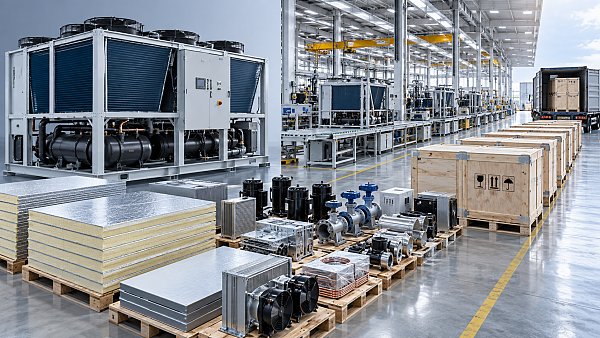
 Thermal FlowHardware Sourcing: How Procurement Teams Evaluate Suppliers, Lead Times, and CostHardware sourcing made smarter: learn how procurement teams assess suppliers, lead times, compliance, and total cost to secure reliable, high-value infrastructure.Dr. Julian VoltSep 23, 2026
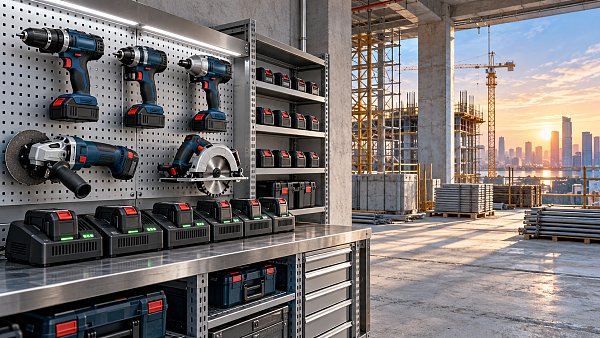
 Rapid Site GearHow to Choose Cordless Power Tools for High-Volume Jobsite Work?Cordless power tools for high-volume jobsites: learn how to select reliable battery platforms, optimize runtime, improve safety, and reduce costly downtime.Marcus ShieldSep 22, 2026
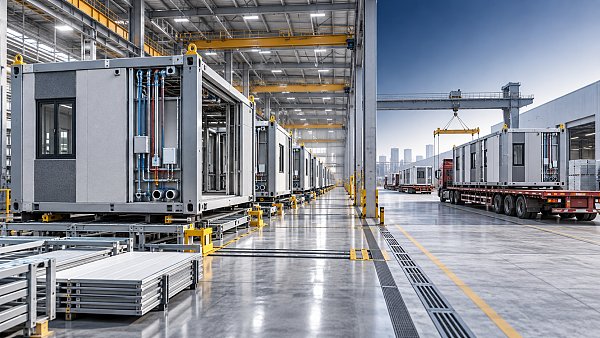
 3D Steel ModulesHow to Vet a Prefabricated Construction Systems Supplier for Capacity and Delivery RiskVet a prefabricated construction systems supplier with proven capacity, quality controls, supply-chain resilience, and logistics planning to reduce delivery risk.Marcus ShieldSep 21, 2026
 High-Speed LiftsHow to Specify Gearless High-Speed Elevator Systems for Tall-Building TrafficGearless High-Speed Elevator Systems: learn how to optimize tall-building traffic, ride quality, energy efficiency, resilience, and lifecycle value with a smarter specification strategy.Dr. Victor GearSep 20, 2026