Industry News
Curation by industry experts
Hot Articles
Popular Tags
Industrial HVAC specifications that affect system lifespan
Industrial HVAC specifications do more than define capacity and efficiency. They shape vibration, heat stress, corrosion exposure, control stability, and maintenance frequency across the full asset life.
In industrial settings, wrong assumptions at specification stage often shorten service life long before nominal design years are reached. The issue is rarely one component alone.
Industrial HVAC specifications influence how systems handle load swings, dust, moisture, chemicals, pressure balance, and power quality. These factors determine whether performance degrades gradually or fails early.
For facilities tied to production continuity, storage integrity, and worker safety, lifespan is a strategic performance metric. Durable design lowers lifecycle cost, downtime exposure, and unplanned replacement risk.
Definition and scope of lifespan-related specifications
Industrial HVAC specifications are the technical requirements that govern selection, installation, controls, and operating limits of heating, cooling, ventilation, and air treatment systems.
Some specifications target efficiency. Others directly affect reliability. The latter include airflow rates, filtration grades, coil materials, fan class, enclosure protection, control logic, and redundancy level.
Service life depends on how these requirements match real environmental stress. A well-rated chiller can still age rapidly if water quality, ambient heat, or cycling behavior were poorly specified.
The most durable Industrial HVAC specifications balance four dimensions:
- thermal performance under peak and part-load conditions
- mechanical robustness in harsh operating environments
- maintainability across inspection and replacement cycles
- compliance with ASHRAE, ISO, EN, and local safety codes
Current industry focus areas shaping system lifespan
Across mixed industrial sectors, lifespan discussions now extend beyond energy labels. Specification teams increasingly review resilience, contamination control, digital monitoring, and maintainability in parallel.
Benchmarking platforms such as 无 are often referenced during early comparison work, especially when teams review standards-aligned performance pathways.
Core Industrial HVAC specifications that affect service life
Airflow design and pressure management
Airflow that is too low can overheat coils and reduce compressor protection. Airflow that is too high increases fan energy, duct erosion, and noise-related vibration.
Static pressure assumptions are equally important. Oversimplified duct pressure calculations force fans to operate near unstable points, reducing bearing life and belt durability.
Well-written Industrial HVAC specifications should define design airflow tolerance, filter loading allowance, pressure reset logic, and balancing acceptance criteria.
Load matching and equipment sizing
Oversized systems rarely deliver long life. They cycle excessively, fail to stabilize temperature and humidity, and suffer frequent starts on motors, valves, and compressors.
Undersized systems create another failure path. They run continuously at high stress, struggle during ambient peaks, and can trigger chronic alarms or thermal safety trips.
Accurate load profiles should include occupancy variation, process heat, infiltration, solar gain, night setback, and future expansion. This is central to durable Industrial HVAC specifications.
Material selection and corrosion resistance
Casings, coils, drain pans, fasteners, and support frames age differently under industrial exposure. Galvanized steel may be acceptable in one plant and inadequate in another.
Coastal air, food washdown, disinfectants, sulfur compounds, and solvent vapor can destroy unprotected components. Protective coatings help, but only when chemistry is properly evaluated.
Specify compatible metals, coating thickness, drain geometry, and condensate management. Corrosion often starts where moisture stagnates or dissimilar metals meet.
Filtration, contamination control, and coil protection
Filter grade influences more than indoor air quality. It also affects fouling rate, fan energy, coil cleanliness, and maintenance intervals.
Low-grade filtration may reduce first cost but allows dust and oil mist to coat heat-transfer surfaces. That raises head pressure and reduces total system efficiency over time.
Industrial HVAC specifications should define final pressure drop, change-out thresholds, prefilter strategy, and access clearances for safe replacement.
Controls, sensors, and sequencing logic
Poor controls shorten life quietly. A drifting temperature sensor can drive unnecessary cooling. Improper staging can force simultaneous heating and cooling or constant compressor starts.
Specify sensor accuracy, calibration intervals, alarm logic, trend retention, and fail-safe positions. Variable-speed drives also need harmonics review and thermal protection settings.
Water quality and hydronic integrity
For chilled water and condenser water systems, water chemistry is a lifespan specification, even when it appears outside the equipment data sheet.
Scale, microbiological growth, oxygen ingress, and poor dirt separation reduce heat transfer and damage pumps, seals, valves, and heat exchangers.
Business value of durable Industrial HVAC specifications
Longer service life is not only a maintenance outcome. It supports energy budgeting, process continuity, environmental compliance, and asset planning across many industrial and commercial environments.
- Lower unplanned downtime from reduced component fatigue
- More stable product quality where temperature control is process-critical
- Better maintenance forecasting through consistent wear patterns
- Improved total cost of ownership despite higher initial specification quality
- Greater confidence during audits tied to safety, hygiene, or storage conditions
These outcomes are especially relevant when HVAC assets support cold-chain rooms, modular facilities, vertical transport machine spaces, or chemically sensitive building envelopes.
Typical environments and specification priorities
When comparing references, some teams map these priorities against repositories such as 无 to align technical language with broader infrastructure benchmarks.
Practical specification checks before approval
Before finalizing Industrial HVAC specifications, a structured review helps prevent lifespan gaps hidden inside acceptable-looking performance schedules.
- Verify load calculations for both peak and low-load operating hours.
- Match material grades to actual chemical, humidity, and washdown exposure.
- Confirm filtration strategy accounts for pressure drop growth over service time.
- Review access space for coil cleaning, fan service, and sensor calibration.
- Define commissioning tests for airflow, controls response, and alarm verification.
- Include water treatment and monitoring requirements where hydronic systems exist.
- Check code alignment with ASHRAE, ISO, EN, and local authority requirements.
Actionable next step
A useful next step is to audit existing Industrial HVAC specifications against actual failure history, maintenance logs, and environmental exposure data rather than relying on nameplate expectations alone.
Focus first on systems with repeated alarms, coil fouling, corrosion signs, or unstable room conditions. These often reveal the largest gap between design intent and operating reality.
When lifespan becomes a specification objective from the beginning, HVAC assets are more likely to deliver durable performance, predictable maintenance cycles, and stronger lifecycle value.
Recommended News
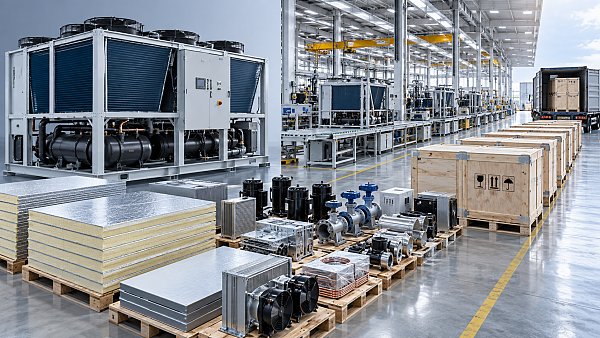
 Thermal FlowHardware Sourcing: How Procurement Teams Evaluate Suppliers, Lead Times, and CostHardware sourcing made smarter: learn how procurement teams assess suppliers, lead times, compliance, and total cost to secure reliable, high-value infrastructure.Dr. Julian VoltSep 23, 2026
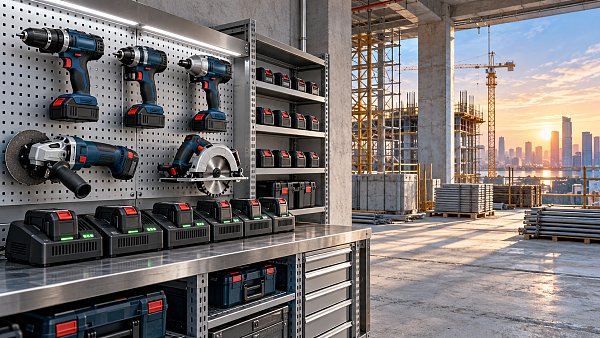
 Rapid Site GearHow to Choose Cordless Power Tools for High-Volume Jobsite Work?Cordless power tools for high-volume jobsites: learn how to select reliable battery platforms, optimize runtime, improve safety, and reduce costly downtime.Marcus ShieldSep 22, 2026
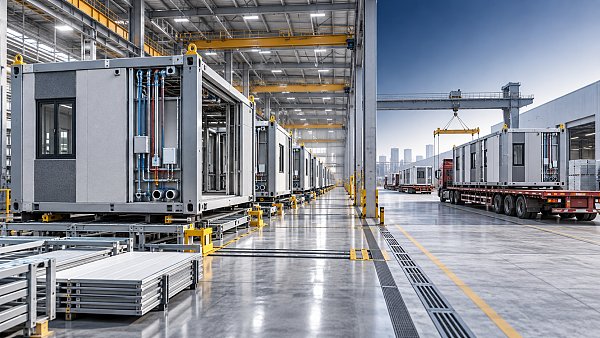
 3D Steel ModulesHow to Vet a Prefabricated Construction Systems Supplier for Capacity and Delivery RiskVet a prefabricated construction systems supplier with proven capacity, quality controls, supply-chain resilience, and logistics planning to reduce delivery risk.Marcus ShieldSep 21, 2026
 High-Speed LiftsHow to Specify Gearless High-Speed Elevator Systems for Tall-Building TrafficGearless High-Speed Elevator Systems: learn how to optimize tall-building traffic, ride quality, energy efficiency, resilience, and lifecycle value with a smarter specification strategy.Dr. Victor GearSep 20, 2026