Industry News
Curation by industry experts
Hot Articles
Popular Tags
Where magnetic levitation chillers cost more than expected
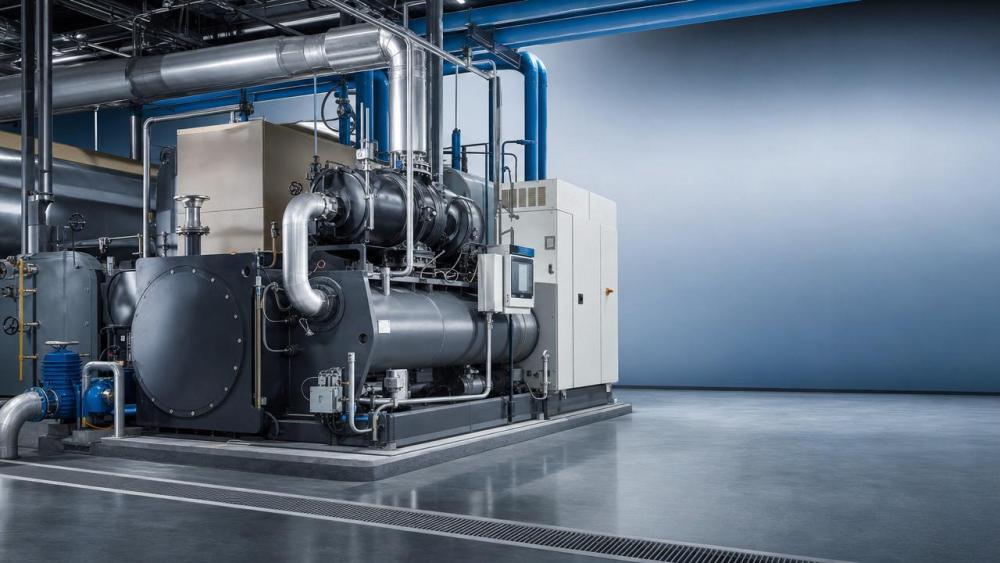
For procurement teams, Magnetic Levitation Chillers cost can rise beyond the initial quote when lifecycle variables are overlooked. From grid upgrades and controls integration to redundancy planning, maintenance capability, and part availability, the real investment often extends far past equipment pricing. This article examines where unexpected costs emerge and how buyers can evaluate total value before committing capital.
Why the quoted price is only the first number
In large HVAC and infrastructure projects, the equipment line item is often the easiest number to compare, but it is rarely the full story. Magnetic Levitation Chillers cost can shift materially once electrical capacity, chilled-water architecture, automation logic, and commissioning requirements are included. For procurement teams, the key risk is buying a unit that looks competitive on paper but triggers expensive site work later.
This matters especially in hospitals, data centers, pharmaceutical plants, airports, and high-rise commercial buildings, where cooling continuity is not optional. A chiller that saves 8% to 12% in energy may still become a poor purchase if it needs a transformer upgrade, new harmonic filtering, or a longer commissioning cycle. The real question is not “What is the unit price?” but “What does the operating system cost over 10 to 15 years?”
The most effective procurement process starts by separating visible cost from hidden cost. Visible cost includes the equipment, freight, and installation. Hidden cost includes controls integration, BAS compatibility, maintenance training, spare parts, and the downtime risk during service or failure. When buyers evaluate these together, Magnetic Levitation Chillers cost becomes more predictable and easier to defend internally.
A simple cost map for procurement review
The following breakdown helps teams compare bids on a like-for-like basis. It is especially useful when shortlisting two or three suppliers with different scope assumptions.
The table shows why a low initial quotation can be misleading. Procurement teams should request an itemized scope that separates equipment, installation, and support for at least 5 years, ideally 10 years in critical facilities. This makes supplier comparison much more transparent.
Where unexpected Magnetic Levitation Chillers cost increases appear
Unexpected cost usually appears in four places: power infrastructure, controls integration, service capability, and redundancy design. Each one can be overlooked if the tender documents focus only on cooling tonnage or COP. A chiller with strong efficiency on the datasheet may still require a larger capital envelope once the full system is engineered.
One common example is electrical compatibility. Magnetic levitation systems often depend on stable power quality, and some projects need harmonic mitigation, dedicated breakers, or emergency supply alignment. Another frequent issue is controls integration. If the chiller must communicate with building automation, energy management, or plant sequencing logic, integration work may take 2 to 4 weeks longer than expected, depending on the site architecture.
Maintenance is another hidden driver. While magnetic bearing technology can reduce friction-related wear, the buyer still needs trained technicians, diagnostic software, and a spare-parts plan. In markets with long lead times, even a small component delay can create a large operational cost, particularly for 24/7 facilities. That is why buyers should ask not only for warranty terms, but also for service coverage radius, response time, and local inventory support.
The hidden cost checklist procurement teams should use
Before approving a purchase, teams should check the following 6 items and request written confirmation from suppliers. This reduces scope gaps and avoids later change orders.
- Electrical load assessment and transformer margin
- Controls protocol compatibility, including BMS/BAS interfaces
- Redundancy strategy for N+1 or partial-load operation
- Spare parts availability within 7 to 15 days
- Commissioning support and operator training scope
- Warranty exclusions tied to water quality, power quality, or misuse
This checklist is valuable because it turns vague promises into measurable deliverables. If a vendor cannot clearly state the required utility conditions or service response window, the buyer should treat the quote as incomplete. In practice, incomplete bids are often the reason Magnetic Levitation Chillers cost more than expected after contract award.
Common budget gaps by project stage
Different project stages create different budget risks. The table below helps procurement teams understand where overruns are most likely to appear and what evidence to request during tender evaluation.
These gaps are not theoretical. They appear when a project moves from specification to execution. A disciplined bid review should require the supplier to state what is excluded, what is optional, and what conditions may trigger a change order. That single step can protect a large portion of the final budget.
How buyers can evaluate total value instead of only price
For procurement leaders, the best purchase decision is rarely the cheapest one. It is the one that balances installed cost, energy savings, serviceability, and operational continuity over the full lifecycle. For Magnetic Levitation Chillers cost evaluation, a 3-part model works well: capital expense, operating expense, and risk expense.
Capital expense includes the chiller, installation, and plant modifications. Operating expense includes electricity, water treatment, and routine service. Risk expense covers downtime, repair lead time, and production interruption. In critical facilities, the third category can outweigh the first two over a 5- to 10-year horizon.
A practical way to compare vendors is to request a 3-scenario model: normal load, partial load, and peak load. Ask each bidder to show expected energy use, maintenance frequency, and response time assumptions. If one supplier uses a 24-hour service assumption while another uses 72 hours, the comparison is not valid until the service gap is normalized.
A procurement scoring model that improves clarity
The following scoring model can help teams compare competing offers without losing sight of lifecycle value. It is simple enough for internal review and strong enough for executive approval.
This framework often changes the ranking of suppliers. A bid that is 6% cheaper upfront may become more expensive after 3 years if it lacks local service capacity or requires frequent third-party support. For mission-critical sites, service resilience should carry substantial weight in the final decision.
Practical commercial questions to ask before award
To reduce procurement risk, ask suppliers to answer these questions in writing: what is excluded from the base price, what site conditions are assumed, how quickly can parts be delivered, and what does on-site support include during the first 90 days? These four questions often reveal whether the offer is truly complete.
What a stronger buying process looks like in real projects
A strong buying process usually runs through 5 stages: need definition, technical clarification, site survey, commercial comparison, and contract lock-in. In larger projects, this process may take 2 to 6 weeks before award, especially when utilities, consultants, and operations teams must align on the same scope.
The first stage is defining the load profile and uptime requirement. The second is checking whether the supplier’s system design fits the plant room, electrical room, and maintenance access plan. The third is verifying whether the service model matches the buyer’s internal capability. If the site lacks advanced technician coverage, then remote monitoring and training should be included from day one.
For procurement teams, one useful tactic is to request a formal clarifications log. Each answer should be tied to a document revision, not a verbal promise. That gives the buyer a defensible record if scope disputes arise later. It also improves downstream coordination between construction, operations, and finance.
Decision points that protect budget and uptime
The following decision points are especially important in industrial HVAC and spatial infrastructure projects where downtime is costly.
- Confirm utility capacity before final quotation.
- Require a clear scope matrix with exclusions and optional items.
- Evaluate service response time, not only warranty length.
- Check spare-part lead time for 3 core components.
- Align controls integration with the building management system early.
When these five decisions are made early, Magnetic Levitation Chillers cost becomes easier to manage and justify. Buyers avoid late changes, operations teams gain visibility, and the project is less likely to face surprise spend after installation.
For procurement teams seeking a more reliable comparison, the best next step is to turn every proposal into a lifecycle model, not just a price sheet. If you need a structured way to evaluate technical scope, service readiness, and long-term value for a critical cooling project, 无 can be used as a reference point in your supplier review process. Contact us to get a tailored evaluation framework and identify where your budget may expand before award.
Recommended News
 Thermal FlowHardware Sourcing: How Procurement Teams Evaluate Suppliers, Lead Times, and CostHardware sourcing made smarter: learn how procurement teams assess suppliers, lead times, compliance, and total cost to secure reliable, high-value infrastructure.Dr. Julian VoltSep 23, 2026
 Rapid Site GearHow to Choose Cordless Power Tools for High-Volume Jobsite Work?Cordless power tools for high-volume jobsites: learn how to select reliable battery platforms, optimize runtime, improve safety, and reduce costly downtime.Marcus ShieldSep 22, 2026
 3D Steel ModulesHow to Vet a Prefabricated Construction Systems Supplier for Capacity and Delivery RiskVet a prefabricated construction systems supplier with proven capacity, quality controls, supply-chain resilience, and logistics planning to reduce delivery risk.Marcus ShieldSep 21, 2026
 High-Speed LiftsHow to Specify Gearless High-Speed Elevator Systems for Tall-Building TrafficGearless High-Speed Elevator Systems: learn how to optimize tall-building traffic, ride quality, energy efficiency, resilience, and lifecycle value with a smarter specification strategy.Dr. Victor GearSep 20, 2026