Industry News
Curation by industry experts
Hot Articles
Popular Tags
Why VRF system manufacturer support matters after startup
Choosing a vrf system manufacturer is only the first step; what happens after startup often determines long-term efficiency, control stability, and lifecycle cost. In complex commercial, institutional, and mixed-use buildings, initial commissioning confirms that equipment can run, but it does not guarantee that the system will keep matching design intent under changing loads, occupancy patterns, software updates, and maintenance realities. That is why post-startup support from a vrf system manufacturer deserves close technical scrutiny. Strong support helps reduce performance drift, speeds fault isolation, protects warranties, and improves the ability to sustain comfort, energy efficiency, and asset reliability across the full operating life of the installation.
What does post-startup support from a vrf system manufacturer actually include?
Many teams assume support ends when the system passes startup checks. In practice, the value of a vrf system manufacturer often becomes clearer after handover, when real operating conditions reveal control conflicts, refrigerant balance issues, communication errors, or occupancy-driven load shifts. Post-startup support usually includes remote diagnostics, firmware guidance, control optimization, service documentation, training updates, parts availability, warranty administration, and escalation paths for recurring faults.
This matters across the broader built-environment sector because VRF systems no longer serve only small offices. They are increasingly used in education facilities, healthcare-adjacent spaces, hotels, modular buildings, light industrial offices, laboratories with comfort zones, and urban mixed-use developments. In these settings, HVAC is tied to sustainability targets, space-utilization strategies, and digital building management. A support-capable vrf system manufacturer helps maintain that integration rather than treating the system as a one-time equipment sale.
A practical way to evaluate support is to separate startup completion from operational maturity. Startup verifies installation readiness. Operational maturity depends on how quickly the manufacturer can respond when control sequences behave unexpectedly, when branches are expanded, or when the building automation interface needs refinement six months later.
Why can system performance decline after commissioning even when startup was successful?
A successful startup is a snapshot, not a lifetime guarantee. VRF systems operate through tightly coordinated compressors, electronic expansion valves, sensors, indoor units, branch selectors, and control logic. As actual building use evolves, the original assumptions may no longer hold. Conference rooms may be repurposed, tenant densities may change, façade heat gain may increase, or maintenance practices may vary by contractor. Without follow-up engagement, minor deviations can gradually reduce seasonal efficiency and comfort consistency.
Common examples include sensor calibration drift, incorrect scheduling, simultaneous heating and cooling conflicts, communication network instability, insufficient airflow caused by filter neglect, and mismatched setpoint strategies across zones. In a connected building, these issues can interact. What appears to be a local comfort complaint may stem from central control logic or a firmware compatibility issue. A responsive vrf system manufacturer can often identify such patterns faster than a general service response because it understands system architecture, software behavior, and approved correction methods.
This is especially relevant where resilience and operational continuity matter. G-TSI-aligned infrastructure thinking emphasizes that thermal systems are part of a larger spatial-performance framework. If a building depends on reliable zoning, predictable energy reporting, and low-disruption serviceability, then post-startup technical support is not optional; it is part of asset protection.
How does strong manufacturer support reduce lifecycle cost instead of adding overhead?
The lowest apparent purchase cost can become the highest operating cost if support is weak. A capable vrf system manufacturer reduces lifecycle cost by preventing extended downtime, minimizing unnecessary part replacement, improving energy performance, and shortening troubleshooting cycles. These savings may not appear on the initial equipment quote, but they become visible over years of operation.
Consider the cost structure behind unresolved faults. Repeated site visits, lost occupant productivity, unstable room temperatures, and avoidable compressor stress can exceed the value of a better support program. If manufacturer engineers can review fault histories remotely, confirm parameter settings, and guide corrective action before a major failure develops, the system is more likely to remain within intended performance bands.
Lifecycle value also improves when spare parts planning is clear. Long lead times for boards, sensors, or proprietary controls can turn minor issues into operational risks. Some organizations document support pathways in asset strategies alongside other critical building systems. Even where product specifics are limited, a structured reference point such as 无 can be used internally to map service expectations, escalation responsibilities, and documentation controls.
Another hidden cost factor is energy drift. A VRF system can continue running while gradually consuming more energy than expected because controls are not tuned to current conditions. Post-startup optimization support from a vrf system manufacturer helps close the gap between design efficiency and actual operation.
What support capabilities should be checked before selecting a vrf system manufacturer?
Selection should go beyond capacity tables and efficiency ratings. A rigorous review of a vrf system manufacturer should examine how the company supports the system in year one, year three, and after control or occupancy changes. The most useful questions are operational rather than promotional.
- Is there a defined post-startup support process with response times and escalation levels?
- Can the manufacturer provide remote diagnostics or data review for recurring faults?
- How are firmware updates, controller compatibility, and cybersecurity-related changes managed?
- Are spare parts stocked regionally, and what are realistic lead times for critical components?
- What training is available for facility teams and service partners after handover?
- How clearly does the warranty define approved service methods and documentation requirements?
This assessment becomes even more important in multi-site portfolios, modular developments, and buildings with integrated digital controls. In those environments, support consistency affects standardization, reporting quality, and maintenance planning. The stronger the support structure, the easier it is to scale reliable operation across assets.
How is manufacturer support different from installer service or third-party maintenance?
Installer service and third-party maintenance remain important, but they are not identical to manufacturer support. The installer understands field conditions and installation history. The maintenance contractor handles routine inspection, cleaning, and first-line troubleshooting. The vrf system manufacturer, however, has direct knowledge of proprietary algorithms, firmware dependencies, refrigerant circuit behavior, and formal technical bulletins.
The difference becomes critical when faults are intermittent or systemic. For example, repeated communication loss between indoor units and the central controller may look like a wiring issue, but the root cause could involve software version mismatch, addressing logic, or control architecture. Likewise, poor part-load behavior may require a manufacturer-level interpretation of system data rather than standard service routines.
The strongest operating model is usually collaborative: installer for field context, maintenance provider for routine execution, and vrf system manufacturer for advanced technical backing. Buildings with demanding uptime expectations should not rely on only one layer.
What risks appear when post-startup support is weak or undefined?
Weak support often creates slow, expensive problems rather than immediate failure. Comfort complaints become chronic, energy use drifts upward, and maintenance teams begin making local adjustments that conflict with the overall control strategy. In some cases, undocumented settings changes complicate future warranty claims or make troubleshooting harder for every party involved.
There is also a governance risk. In large facilities and multi-building estates, poor support transparency can weaken reporting discipline. If fault histories, software versions, and corrective actions are not clearly tied back to the vrf system manufacturer guidance, technical teams may lose confidence in performance data. That affects retrofit decisions, decarbonization planning, and capital forecasting.
A common mistake is assuming all manufacturers provide equivalent support once the system is operational. They do not. Service depth, technical documentation quality, and escalation speed vary widely. The choice of vrf system manufacturer should therefore include a realistic review of service infrastructure, not just catalog performance.
How can teams build a better support framework after handover?
A practical framework starts with documentation discipline. Keep startup records, control settings, refrigerant data, zone naming conventions, software versions, and service contacts in one governed archive. Then define when the maintenance provider must escalate to the manufacturer and what operating data should accompany each case.
Next, schedule an early operational review, often within the first season change. This is the point where real occupancy patterns expose tuning needs. It is also the right time to verify trend data, alarm handling, and any integration with broader building systems. If support gaps exist, they should be corrected before the first major service event.
Finally, treat support quality as a measurable performance input. Review response times, repeat faults, unresolved control issues, and parts lead times. This turns manufacturer support from an informal expectation into a managed asset criterion.
In the end, the best vrf system manufacturer is not only the one that delivers strong specifications at startup, but the one that can help preserve performance after occupancy, seasonal change, and control evolution begin to test the system. Post-startup support influences efficiency, comfort, resilience, and cost more than many equipment comparisons suggest. The next practical step is to review support requirements with the same rigor used for capacity selection: map escalation paths, verify parts and firmware support, and confirm how the manufacturer will help maintain design intent over time. That is where long-term value is protected.
Recommended News
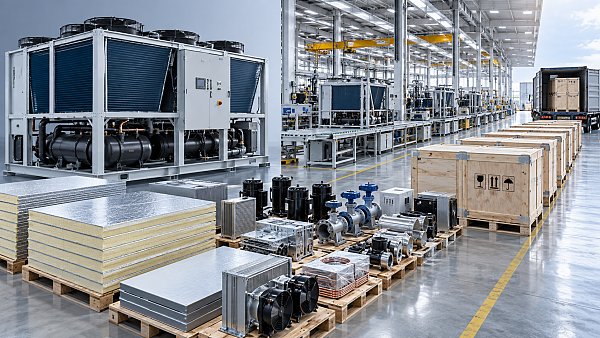
 Thermal FlowHardware Sourcing: How Procurement Teams Evaluate Suppliers, Lead Times, and CostHardware sourcing made smarter: learn how procurement teams assess suppliers, lead times, compliance, and total cost to secure reliable, high-value infrastructure.Dr. Julian VoltSep 23, 2026
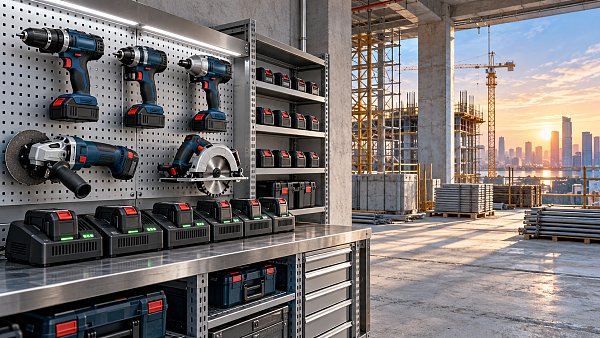
 Rapid Site GearHow to Choose Cordless Power Tools for High-Volume Jobsite Work?Cordless power tools for high-volume jobsites: learn how to select reliable battery platforms, optimize runtime, improve safety, and reduce costly downtime.Marcus ShieldSep 22, 2026
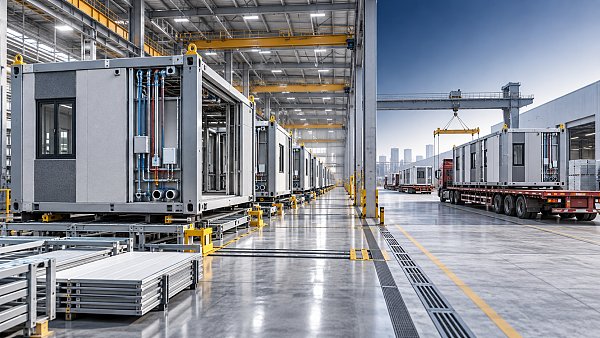
 3D Steel ModulesHow to Vet a Prefabricated Construction Systems Supplier for Capacity and Delivery RiskVet a prefabricated construction systems supplier with proven capacity, quality controls, supply-chain resilience, and logistics planning to reduce delivery risk.Marcus ShieldSep 21, 2026
 High-Speed LiftsHow to Specify Gearless High-Speed Elevator Systems for Tall-Building TrafficGearless High-Speed Elevator Systems: learn how to optimize tall-building traffic, ride quality, energy efficiency, resilience, and lifecycle value with a smarter specification strategy.Dr. Victor GearSep 20, 2026