Industry News
Curation by industry experts
Hot Articles
Popular Tags
Sustainable urban infrastructure is shifting toward modular delivery
Sustainable Urban Infrastructure is increasingly delivered through modular systems that improve speed, flexibility, and thermal resilience across complex city projects. For decision-makers evaluating smart building systems, cold-chain infrastructure, cryogenic storage, smart elevators, and building envelope solutions, this shift is redefining climate-adaptive design, pharmaceutical cold chain reliability, and advanced food storage solutions in a rapidly changing urban environment.
For most buyers, planners, and technical evaluators, the real question is not whether modular delivery is gaining momentum—it is whether it can reduce project risk, compress timelines, improve operational performance, and support long-term sustainability targets without creating new compliance or maintenance problems. The short answer is yes, but only when modular urban infrastructure is specified around lifecycle performance, site constraints, interoperability, and measurable resilience outcomes rather than speed alone.
That is why sustainable urban infrastructure is shifting toward modular delivery across sectors. In dense urban environments, traditional construction often struggles with labor bottlenecks, disruption, fragmented supply chains, and inconsistent quality. Modular systems offer a different delivery logic: more factory-controlled production, faster installation, better repeatability, and clearer performance benchmarking for critical assets such as HVAC plants, prefabricated utility rooms, insulated envelopes, cold storage facilities, and vertical transportation systems.
Why modular delivery is becoming a strategic choice in sustainable urban infrastructure
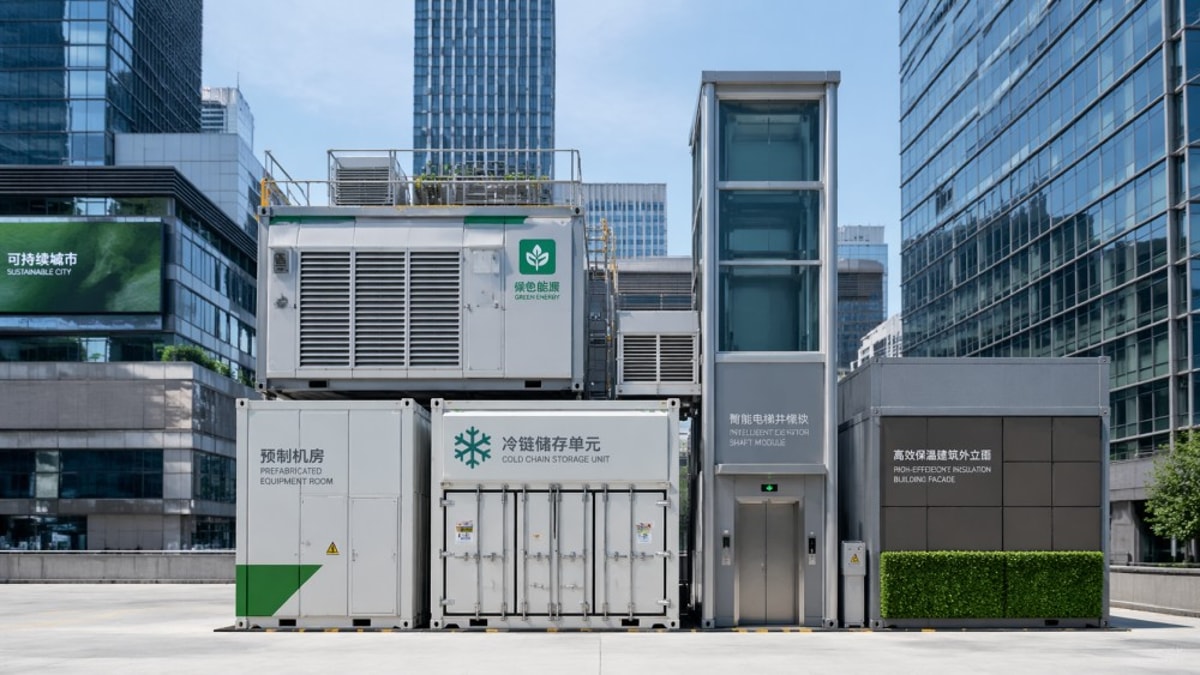
Modular delivery is no longer limited to temporary buildings or simple prefabricated structures. It is increasingly being used for high-value urban infrastructure where performance certainty matters as much as construction speed. This includes district cooling interfaces, modular plant rooms, prefabricated cold-chain hubs, equipment skids, elevator cores, insulated façade assemblies, and integrated service modules for hospitals, data-sensitive facilities, logistics centers, and mixed-use developments.
The shift is being driven by several structural pressures:
- Urban time pressure: Cities need faster delivery of transit-linked buildings, healthcare infrastructure, food logistics assets, and climate-resilient public facilities.
- Quality control requirements: Factory-built systems allow tighter tolerances, repeatable assembly, and more consistent testing than many site-built conditions.
- Labor and safety constraints: Off-site fabrication reduces on-site congestion, improves worker safety, and lowers disruption in high-density areas.
- Decarbonization goals: Modular construction can cut waste, support material optimization, and improve whole-building energy performance when paired with advanced insulation and thermal systems.
- Operational resilience needs: Critical infrastructure increasingly requires systems that can be deployed, expanded, repaired, or replaced with minimal interruption.
For enterprise decision-makers, this means modular delivery is best understood as a risk-management and performance strategy, not just a construction method.
What target readers usually need to know before they trust a modular solution
Different stakeholders enter the search with different concerns, but their questions often converge around the same practical issues.
Procurement teams want to know whether modular systems offer predictable cost, shorter lead times, fewer claims, and clearer vendor accountability.
Technical evaluators and project managers want evidence that modular components will meet design loads, thermal targets, acoustic needs, maintenance access requirements, and code obligations.
Operations teams care about commissioning, replacement parts, serviceability, digital monitoring, and whether the system can be integrated without operational disruption.
Quality and safety managers focus on factory QA/QC, fire safety, moisture control, cold-chain stability, lift safety, and standards compliance.
Executives and commercial assessors want to see business value: lower lifecycle cost, faster time to revenue, reduced delivery risk, ESG alignment, and adaptability as urban demand changes.
So the decision is rarely about “modular vs traditional” in the abstract. It is about which project elements benefit most from modularization, and under what technical, regulatory, and commercial conditions.
Where modular delivery creates the most value across urban infrastructure systems
Modular delivery tends to create the strongest value where systems are complex, repeatable, performance-sensitive, or difficult to build efficiently on-site.
1. Industrial HVAC and large-scale thermal management
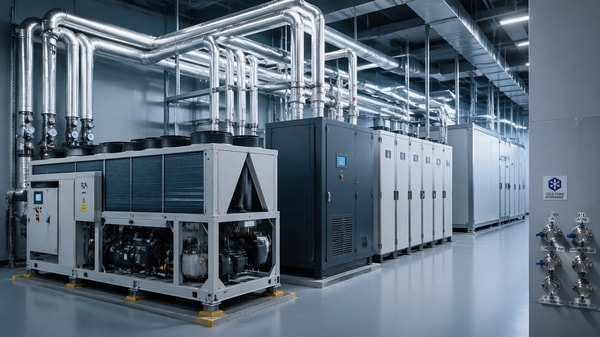
Modular HVAC plant rooms, packaged chiller skids, energy transfer stations, and prefabricated mechanical corridors can improve installation speed and commissioning control. In climate-stressed cities, these systems also support thermal resilience by enabling phased expansion, easier maintenance isolation, and more predictable performance testing before site delivery.
For buyers evaluating high-efficiency cooling or district-connected systems, modularization can reduce on-site welding, coordination errors, and startup delays. It also supports standardization across multi-site portfolios.
2. Cold-chain infrastructure and cryogenic storage
Cold-chain and cryogenic projects are especially well-suited to modular thinking because thermal integrity, process continuity, and contamination control are critical. Prefabricated cold rooms, insulated storage modules, equipment racks, and automated handling zones can reduce installation variability and improve validation.
In pharmaceutical cold chain and advanced food storage solutions, modular delivery helps decision-makers manage one of the biggest risks in urban logistics: inconsistent thermal performance caused by rushed or fragmented site assembly.
3. Prefabricated and modular construction systems
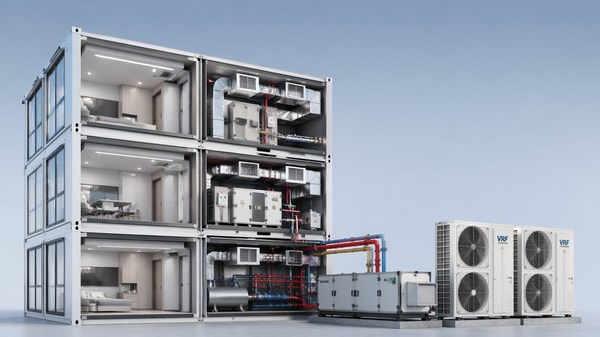
This is the most obvious category, but the value is not only structural. Modern modular construction increasingly combines structural frames, MEP systems, thermal envelopes, sensor networks, and interior fit-out into coordinated assemblies. That makes it relevant not only for residential and commercial buildings, but also for laboratories, clinics, control centers, mobility hubs, and light industrial facilities.
4. Smart elevators and vertical transportation
In dense cities, elevator performance is a sustainability issue as much as a convenience issue. Vertical transportation affects energy use, occupant flow, building utilization, and emergency readiness. Modular elevator components and pre-engineered shaft/interface systems can accelerate installation and improve consistency, especially in repetitive or high-rise projects.
For project teams, the benefit lies in earlier coordination between structure, controls, and operational planning.
5. Building chemicals, insulation, and envelope systems
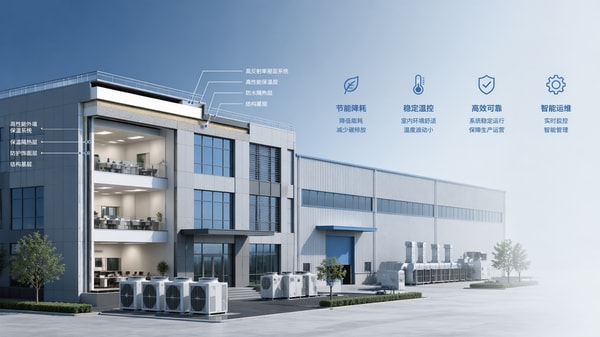
Envelope performance determines whether modular buildings actually deliver sustainability in operation. High-performance insulation, air sealing, vapor control, fire-rated assemblies, and durable jointing systems are essential to achieving the thermal, moisture, and durability outcomes promised at concept stage.
In other words, modular delivery can speed construction, but only a well-engineered building envelope can secure long-term energy efficiency and climate-adaptive design value.
How to evaluate whether modular delivery is the right fit for a specific project
A useful evaluation framework should go beyond headline claims like “faster” or “greener.” Decision-makers should assess modular urban infrastructure against five practical dimensions.
Performance fit
Can the modular system reliably meet thermal, structural, acoustic, hygiene, fire, and throughput requirements? This is especially important for cold storage, healthcare, critical logistics, and high-occupancy buildings.
Site fit
Does the project have access limitations, crane constraints, restricted staging areas, or operational continuity requirements that favor off-site fabrication? Urban infill projects often do.
Integration fit
Will modular components interface cleanly with existing utilities, BMS platforms, structural systems, and maintenance workflows? Poor interface planning is one of the most common causes of underperformance.
Commercial fit
Does modular delivery improve total project economics, not just capex visibility? Consider speed to occupancy, reduced rework, lower site overhead, warranty structure, and lifecycle maintenance.
Compliance fit
Can the supplier demonstrate conformity with applicable standards, inspection requirements, material traceability, and jurisdiction-specific approvals? This matters even more when systems cross borders or serve regulated sectors.
If a solution scores well across these dimensions, modular delivery is often a strong option. If not, hybrid delivery may be more effective than full modularization.
What risks should buyers and project teams watch closely
Modular systems can solve many urban delivery problems, but they also introduce new points of failure when poorly specified or managed.
- Interface risk: Factory-built quality does not eliminate site integration problems. Mechanical, electrical, structural, and digital interfaces must be coordinated early.
- Transport and handling risk: Large modules may face route restrictions, lifting complexity, or damage exposure.
- Over-standardization: Excessive reliance on a fixed module can create limitations for unusual urban conditions or future operational changes.
- Vendor dependency: If critical systems are highly proprietary, replacement, upgrade, and service flexibility may be reduced.
- Compliance assumptions: A module built to one market’s norms may still require adaptation for local code, fire, seismic, hygiene, or energy requirements.
The best mitigation strategy is early-stage technical due diligence. Buyers should request factory QA documentation, commissioning logic, interface drawings, maintenance plans, and reference cases that match the intended use environment.
What good modular urban infrastructure looks like in practice
High-performing modular infrastructure usually shares several characteristics:
- Clear performance specifications tied to actual operating conditions
- Factory testing and documented quality checkpoints
- Strong envelope and insulation design to protect thermal efficiency
- Digital integration for monitoring, alarms, and lifecycle maintenance
- Designed-in flexibility for expansion, replacement, or phased deployment
- Alignment with recognized standards such as ASHRAE, ISO, and relevant EN frameworks
For example, a modular cold-chain facility in an urban distribution environment should not be judged only by installation speed. It should be evaluated on thermal stability, door cycle recovery, energy intensity, hygiene control, service access, redundancy, and product integrity under real operating loads.
Likewise, a modular HVAC energy center should demonstrate measurable efficiency, maintainability, controls interoperability, and resilience under peak weather conditions—not simply compact footprint or factory assembly quality.
Why the shift matters for long-term urban resilience and business value
The growing use of modular delivery reflects a broader change in how cities and enterprises think about infrastructure. Assets are no longer judged only by how they are built, but by how quickly they can become operational, how efficiently they perform, how safely they can be managed, and how easily they can adapt to future needs.
That is especially important in sectors shaped by climate stress, urban density, health security, and energy volatility. Sustainable urban infrastructure must be more than low-carbon on paper. It must be deployable at speed, operable at scale, and resilient under disruption. Modular systems can support that goal by improving repeatability, reducing waste, enabling flexible expansion, and strengthening quality control for mission-critical systems.
For distributors, integrators, and commercial partners, this trend also creates a market advantage: customers are increasingly looking for suppliers who can deliver not just components, but validated modular solutions with technical transparency and lifecycle credibility.
Conclusion
Sustainable urban infrastructure is shifting toward modular delivery because cities and enterprises need faster, more reliable, and more resilient ways to deploy critical systems. The strongest case for modularization is not speed alone. It is the combination of quality control, thermal performance, reduced site risk, scalability, and better lifecycle outcomes.
For procurement leaders, engineers, operators, and executive decision-makers, the right approach is to evaluate modular solutions through the lens of performance fit, integration fit, compliance, serviceability, and long-term value. When those factors are addressed properly, modular delivery can play a central role in climate-adaptive design, smart building systems, pharmaceutical cold chain reliability, and next-generation food storage and urban infrastructure planning.
In short, modular is becoming the preferred delivery model where sustainable urban infrastructure must do more than get built—it must perform, adapt, and endure.
- Industrial HVAC
- Thermal Management
- Cold-Chain Infrastructure
- Cryogenic Storage
- Modular Construction
- Smart Elevators
- Vertical Transportation
- Sustainable Urban Infrastructure
- Pharmaceutical Cold Chain
- Food Storage Solutions
- Critical Infrastructure
- Thermal Resilience
- Building Envelope Solutions
- Smart Building Systems
- Climate-Adaptive Design
- Vertical Transportation systems
Recommended News
 Industrial HVACHow to Choose Industrial HVAC for Critical InfrastructureCritical Infrastructure industrial HVAC selection guide: compare Modular Construction, Building Insulation, ASHRAE Standards, Energy-Efficient HVAC, Thermal Management, and Industrial Refrigeration for resilient, scalable projects.Dr. Julian VoltApr 29, 2026
 Industrial HVACModular Construction HVAC: What Works Best?Modular Construction HVAC: compare Energy-Efficient HVAC options for Critical Infrastructure, Building Insulation, ASHRAE Standards, and smarter Thermal Management.Dr. Julian VoltApr 29, 2026
 Industrial HVACDoes Better Building Insulation Cut HVAC Costs?Building Insulation and Energy-Efficient HVAC can cut industrial HVAC costs. Learn ASHRAE Standards-based strategies for Modular Construction, thermal management, and resilient critical infrastructure.Dr. Julian VoltApr 29, 2026
 Industrial HVACIndustrial HVAC vs Commercial HVAC: Key DifferencesIndustrial HVAC vs Commercial HVAC: explore key differences in Thermal Management, ASHRAE Standards, Energy-Efficient HVAC, and Critical Infrastructure planning for smarter facility decisions.Dr. Julian VoltApr 29, 2026