Industry News
Curation by industry experts
Hot Articles
Popular Tags
Modular Construction HVAC: What Works Best?
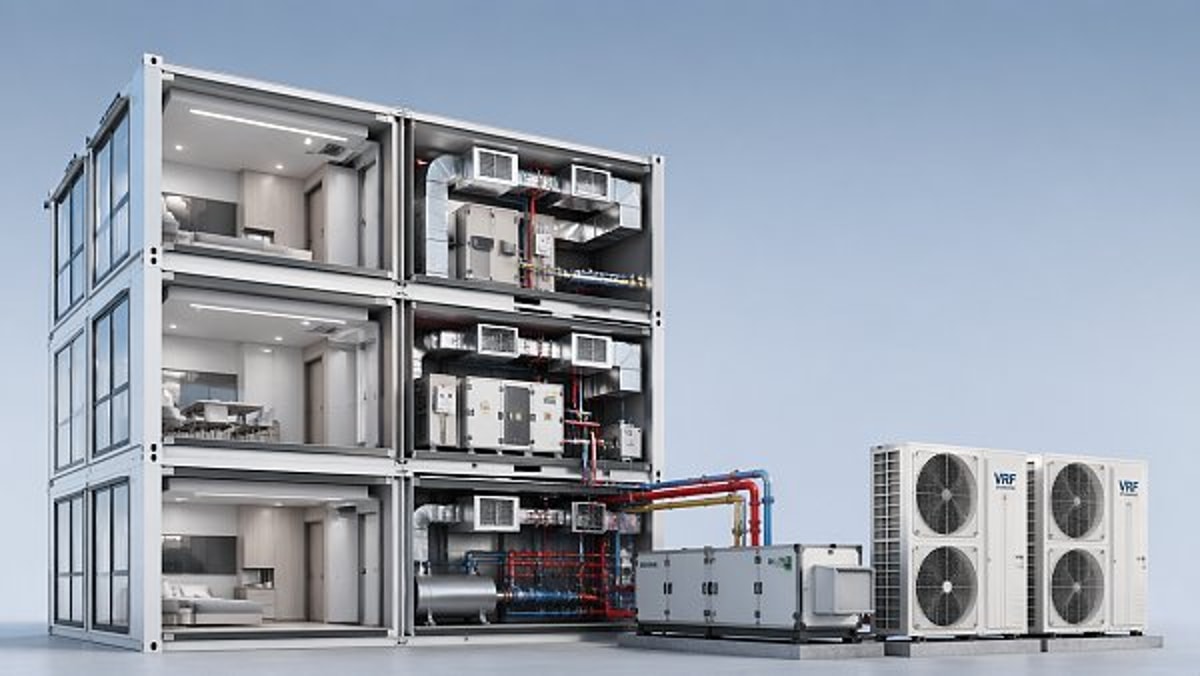
In modular construction, the best HVAC solution is rarely a single “best system.” It is usually the system that fits the module type, transport constraints, climate zone, occupancy profile, maintenance model, and speed-to-install goals. For most projects, the strongest results come from HVAC strategies that are compact, factory-integrated, energy-efficient, serviceable after installation, and aligned with ASHRAE standards from the design stage. In practice, that often means VRF, packaged rooftop or dedicated outdoor air systems, hydronic fan coil setups, and hybrid ventilation approaches—rather than oversized site-built configurations that are difficult to standardize across modules.
For owners, project managers, engineers, procurement teams, and quality leaders, the real question is not just “what works best?” but “what works best for this building type, risk profile, and lifecycle cost target?” This article focuses on that decision logic: which HVAC approaches perform well in modular construction, where each option fits, what risks to watch, and how to evaluate long-term value across thermal performance, resilience, compliance, and project delivery.
What usually works best in modular construction HVAC?
The short answer is this: modular construction HVAC works best when the system is designed for prefabrication, not merely adapted from conventional construction. That means the preferred solution is often one that supports repeatability, minimizes field labor, tolerates transport and lifting, and keeps commissioning simple once modules are set.
In many modular projects, the most successful HVAC characteristics include:
- Compact equipment footprints that fit inside ceiling voids, risers, utility racks, or service zones without compromising usable space
- Factory-installed components such as duct sections, controls wiring, fan coil units, terminal devices, insulation, and tested piping assemblies
- Fast final connections on-site for refrigerant piping, hydronic piping, condensate drains, power, controls, and ventilation duct interfaces
- Stable thermal performance across repeated unit types, especially for housing, hotels, healthcare expansions, schools, and workforce accommodation
- Service access after stacking and enclosure, which is often overlooked in modular coordination
- Energy-efficient HVAC operation that remains practical for actual operators, not just strong in design simulations
For many low- to mid-rise modular buildings, VRF systems, hydronic fan coil systems, and DOAS plus local terminal units are frequently strong candidates. For certain industrial HVAC applications, healthcare uses, critical infrastructure, or high outdoor air requirements, centralized air handling and hydronic systems may outperform all-electric room-by-room approaches. The “best” answer changes by use case.
Why HVAC decisions in modular buildings are different from site-built projects
Modular construction changes the HVAC decision framework because manufacturing, transport, staging, craning, and final assembly affect system design from day one. A solution that looks ideal on a standard plan set may become inefficient or risky once module dimensions, lifting points, connection tolerances, and inter-module coordination are considered.
Key differences include:
- Dimensional constraints: Mechanical zones are tighter, and duct routing options are more limited.
- Transport durability: Equipment and pipework must withstand vibration and movement before installation.
- Interface complexity: The HVAC system may be split between factory work and field work, creating coordination risk.
- Repetition advantages: Standardized room or module types can reduce cost if the HVAC design is repeatable.
- Commissioning challenges: Testing must account for both factory completion and final on-site integration.
- Envelope interaction: Building insulation, airtightness, and thermal bridge management often differ significantly from conventional builds.
This is why thermal management in prefabricated construction must be approached as a system-level issue, not just an equipment selection exercise. HVAC performance depends heavily on the module envelope, sealing quality, moisture control strategy, and the coordination of MEP penetrations across factory and field conditions.
Best HVAC system types for modular construction by application
Different building types need different answers. Below is a practical view of what often works best by scenario.
1. VRF systems for hotels, apartments, student housing, and repeatable room layouts
VRF is often a strong fit when modular units have repeated room configurations and limited ceiling space. It supports zoning, relatively compact distribution, and reduced ductwork compared with fully ducted systems.
Best for:
- Hospitality
- Multifamily modular housing
- Dormitories
- Office fit-outs with repeated zones
Advantages:
- High zoning flexibility
- Good fit for standardized module layouts
- Lower shaft and duct space requirements
- Strong energy-efficient HVAC potential in part-load conditions
Watch-outs:
- Refrigerant concentration and code compliance in smaller occupied spaces
- Cold-climate performance depending on system design
- Service access to branch controllers and indoor units after module assembly
- Coordination of refrigerant piping between modules
2. Hydronic fan coil or chilled/hot water systems for larger buildings and institutional use
Hydronic systems are often better for projects that need centralized plant efficiency, stronger ventilation separation, easier future flexibility, or improved control over heating and cooling at scale.
Best for:
- Healthcare expansions
- Education buildings
- Institutional and government facilities
- Large mixed-use or campus modular developments
Advantages:
- Centralized thermal management
- Good compatibility with high-performance chillers, boilers, or heat pumps
- Reduced refrigerant volume in occupied spaces
- Strong lifecycle value in larger assets
Watch-outs:
- Pipe connection quality between modules
- Freeze protection during staging and transport
- Balancing and controls integration
- Potentially higher first-cost coordination effort
3. DOAS plus local conditioning for IAQ-sensitive modular buildings
A dedicated outdoor air system paired with fan coils, VRF indoor units, or other local sensible cooling equipment is often one of the most practical answers where indoor air quality, humidity control, and ventilation compliance matter.
Best for:
- Schools
- Healthcare support spaces
- Laboratories with moderate loads
- High-occupancy modular buildings
Advantages:
- Better ventilation control
- Improved humidity management
- Separation of latent and sensible loads
- Better alignment with ASHRAE standards for ventilation performance
Watch-outs:
- Space allocation for outdoor air ducting
- Condensate management
- Control sequence complexity
- Factory-to-site integration of ventilation paths
4. Packaged rooftop or packaged terminal systems for speed and simplicity
For some commercial modular projects, packaged systems remain attractive because they simplify procurement and field coordination. They can be especially useful when speed and straightforward replacement are more important than premium efficiency.
Best for:
- Temporary or relocatable buildings
- Light commercial projects
- Certain retail or administrative facilities
Advantages:
- Simple deployment
- Lower design complexity
- Easier maintenance familiarity in some markets
Watch-outs:
- Lower efficiency than more advanced systems in many cases
- Roof loading and transport planning
- Acoustic performance
- Less refined zoning control
What decision-makers should evaluate before choosing a modular HVAC strategy
For enterprise buyers, project leads, and technical evaluators, choosing the right HVAC system should be based on structured criteria, not vendor preference alone. The following questions usually determine whether a system will succeed in modular delivery.
1. Is the system modularization-friendly?
Ask whether the design supports factory installation, repeatable assembly, protected transport, and quick final connection. If major rework is expected on site, the system may not be optimized for prefabricated construction.
2. What is the real lifecycle cost?
Lowest installed cost is not the same as best value. Evaluate:
- Energy consumption
- Maintenance labor
- Spare parts availability
- Downtime risk
- Expected equipment life
- Commissioning and recommissioning needs
3. How does the system interact with the building envelope?
High-performance building insulation and airtight module joints can significantly reduce loads. This may enable smaller systems, but only if the envelope assumptions are realistic and validated. Poor sealing between modules can undermine HVAC sizing, comfort, and humidity control.
4. Does it support resilience and future operational flexibility?
Critical infrastructure, healthcare, cold-room support spaces, and high-value assets often need redundancy, phased expansion, and strong controls. A system that works today but is hard to expand tomorrow may not be the best strategic choice.
5. Can the operator maintain it easily after handover?
This point is often decisive. Systems hidden behind inaccessible modular interfaces create long-term service problems. Good modular HVAC design includes practical access panels, component replacement paths, and clear as-built documentation.
Common mistakes that reduce HVAC performance in modular construction
Even technically sound equipment can underperform if the modular process is not managed well. The most common failures are coordination failures.
- Oversizing equipment because the team does not trust envelope performance assumptions
- Ignoring transport loads that damage piping, supports, or mounted units before commissioning
- Poor inter-module sealing leading to air leakage, condensation risk, and comfort issues
- Insufficient service access once modules are stacked
- Weak controls integration between factory-installed devices and site BMS platforms
- Late-stage ventilation design that conflicts with structure or corridor geometry
- Inadequate condensate planning in compact ceiling and wall zones
- Code compliance checks too late especially around ventilation, refrigerant safety, smoke control, and acoustics
For quality and safety managers, these are not minor issues. They directly affect handover risk, warranty claims, occupant complaints, and long-term operating cost.
How ASHRAE standards shape modular HVAC choices
ASHRAE standards matter because modular buildings still need to meet the same performance expectations as conventional assets, and in some cases stricter expectations due to occupancy type or owner requirements.
Depending on project type, teams commonly evaluate HVAC designs against topics such as:
- Ventilation and indoor air quality
- Thermal comfort
- Energy performance
- Commissioning and controls
- Humidity control and condensation risk
- Equipment efficiency and load calculations
For technical assessment teams, compliance should be embedded early into the modular prototype stage. It is much easier to refine a repeatable module design before production ramps than to correct hundreds of installed units later.
How modular HVAC connects to broader building systems
In advanced projects, HVAC should not be selected in isolation. It interacts closely with other infrastructure systems, especially where performance, logistics, or critical operations matter.
Industrial refrigeration and cold-chain interfaces
Where modular buildings support pharmaceutical, food, or temperature-sensitive operations, HVAC may need to work alongside industrial refrigeration zones, cold rooms, or cryogenic storage support systems. In these projects, pressure relationships, equipment heat rejection, and envelope detailing become central design issues.
Vertical transportation and shaft coordination
In mid-rise and high-rise modular buildings, vertical transportation planning affects HVAC risers, service zones, and smoke management strategy. Poor coordination between elevators, shafts, and mechanical routing can reduce usable space and complicate fire/life safety compliance.
Smart controls and building analytics
The strongest lifecycle outcomes often come from pairing modular HVAC with smart controls, submetering, fault detection, and remote monitoring. This is especially valuable for distributed portfolios, enterprise campuses, and multi-site operators who need benchmarking across assets.
A practical selection framework: which HVAC approach fits which modular project?
If you need a concise decision guide, use this framework:
- Choose VRF when space is tight, zoning is important, layouts repeat, and ventilation loads are moderate.
- Choose hydronic systems when the project is larger, more institutional, more ventilation-intensive, or strategically focused on lifecycle efficiency and central plant control.
- Choose DOAS plus local terminals when indoor air quality, humidity control, and code-driven outdoor air performance are major priorities.
- Choose packaged systems when speed, simplicity, and lower coordination complexity matter more than top-tier efficiency.
- Choose hybrid solutions when occupancy profiles, climate conditions, or phased expansion needs are too diverse for a single-system answer.
The most effective modular construction HVAC strategy is usually the one that balances five factors: factory integration, thermal performance, field install simplicity, maintainability, and lifecycle economics.
Final answer: what works best?
What works best in modular construction HVAC is not a universal product category but a disciplined design approach. For many projects, the best-performing solutions are compact, repeatable, energy-efficient HVAC systems that integrate well with prefabricated construction workflows and maintain strong thermal management after installation.
If the project is residential, hospitality, or room-repetitive, VRF often performs well. If the project is institutional, ventilation-heavy, or built for long-term asset value, hydronic and DOAS-based strategies often deliver better outcomes. If speed and simplicity dominate, packaged systems may still be the right answer. In all cases, success depends on early coordination between HVAC design, module manufacturing, building insulation, controls, and on-site assembly.
For buyers and project teams, the clearest takeaway is this: do not ask only which HVAC system is best. Ask which HVAC strategy is best for modularization, compliance, resilience, serviceability, and total lifecycle value. That is the question that leads to better buildings—and fewer surprises after handover.
Recommended News
 Industrial HVACHow to Choose Industrial HVAC for Critical InfrastructureCritical Infrastructure industrial HVAC selection guide: compare Modular Construction, Building Insulation, ASHRAE Standards, Energy-Efficient HVAC, Thermal Management, and Industrial Refrigeration for resilient, scalable projects.Dr. Julian VoltApr 29, 2026
 Industrial HVACModular Construction HVAC: What Works Best?Modular Construction HVAC: compare Energy-Efficient HVAC options for Critical Infrastructure, Building Insulation, ASHRAE Standards, and smarter Thermal Management.Dr. Julian VoltApr 29, 2026
 Industrial HVACDoes Better Building Insulation Cut HVAC Costs?Building Insulation and Energy-Efficient HVAC can cut industrial HVAC costs. Learn ASHRAE Standards-based strategies for Modular Construction, thermal management, and resilient critical infrastructure.Dr. Julian VoltApr 29, 2026
 Industrial HVACIndustrial HVAC vs Commercial HVAC: Key DifferencesIndustrial HVAC vs Commercial HVAC: explore key differences in Thermal Management, ASHRAE Standards, Energy-Efficient HVAC, and Critical Infrastructure planning for smarter facility decisions.Dr. Julian VoltApr 29, 2026