Industry News
Curation by industry experts
Hot Articles
Popular Tags
How to Choose Industrial HVAC for Critical Infrastructure
Choosing Industrial HVAC for Critical Infrastructure demands more than equipment sizing—it requires resilient Thermal Management, compliance with ASHRAE Standards, and integration with Modular Construction, Building Insulation, and Vertical Transportation systems. From Energy-Efficient HVAC to Industrial Refrigeration, decision-makers must balance uptime, safety, lifecycle cost, and scalability. This guide outlines the key technical and commercial criteria for evaluating mission-critical environments with confidence.
What makes industrial HVAC different in critical infrastructure projects?
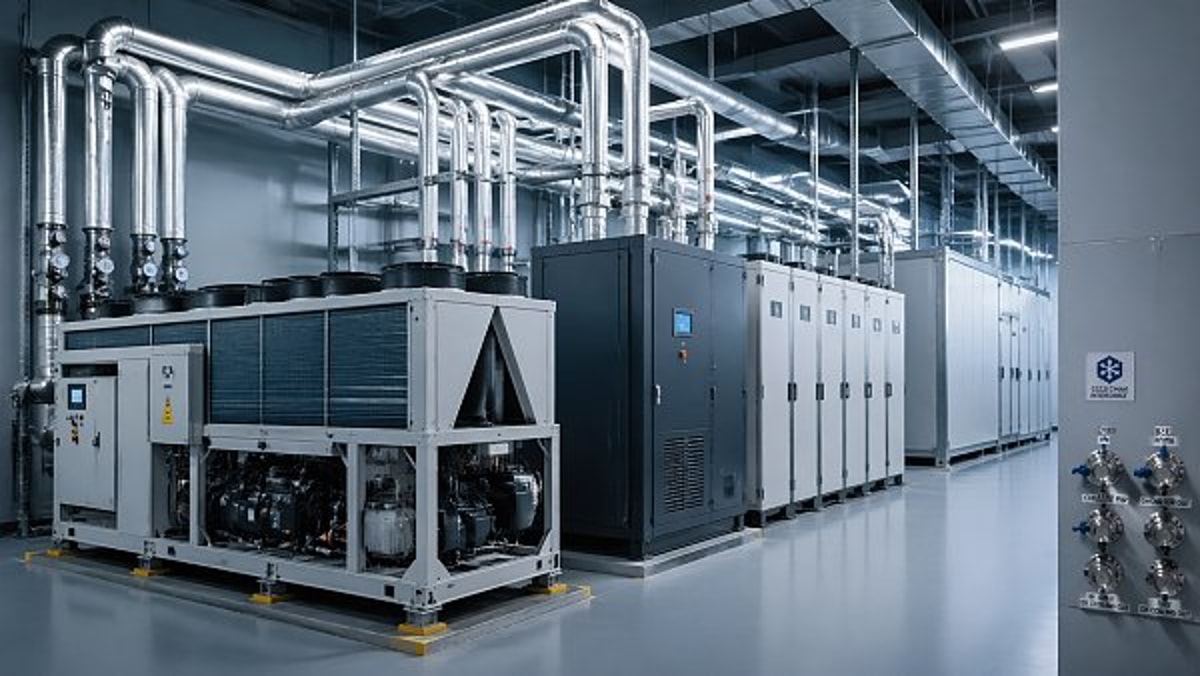
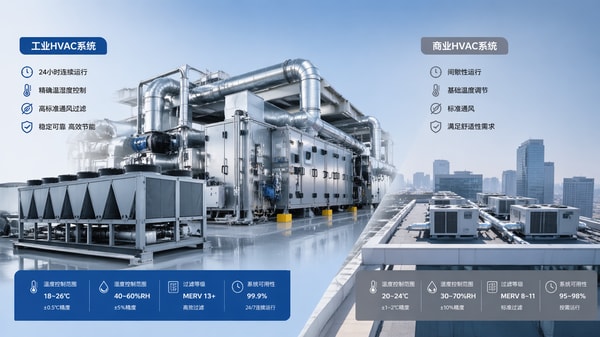
In critical infrastructure, industrial HVAC is not a comfort system first. It is an operational protection layer for uptime, product integrity, process stability, and personnel safety. Data centers, pharmaceutical facilities, transport hubs, clean production lines, modular hospitals, cold-chain nodes, and utility control rooms all depend on stable thermal conditions within defined operating ranges such as 18°C–27°C, 40%–60% RH, or tighter process-specific tolerances.
That is why equipment selection should begin with risk exposure, not only tonnage or airflow. A mission-critical plant may need N+1 or 2N redundancy, corrosion-resistant coils, low-leakage filtration stages, pressure zoning, and continuous monitoring at 24/7 duty cycles. In many projects, the wrong HVAC architecture does not fail immediately. It creates slow losses through unstable temperature control, energy waste, premature maintenance, and non-compliance during audits.
For information researchers and technical evaluators, the key issue is comparability. Many vendors present efficiency claims under ideal conditions, while procurement teams need performance under high ambient temperatures, variable occupancy, partial-load operation, and constrained plantrooms. This is where G-TSI provides value by benchmarking thermal systems against practical infrastructure conditions and cross-disciplinary dependencies, not isolated brochure figures.
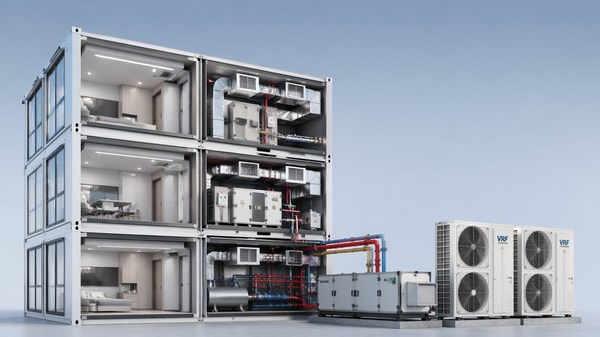
For project managers and enterprise decision-makers, industrial HVAC also affects construction sequencing. In modular construction or prefabricated plant deployment, HVAC choices influence shaft planning, lifting logistics, maintenance access, insulation strategy, and even smart elevator transport routes for heavy components. A sound selection framework should therefore connect thermal design with the spatial realities of the asset over a 10–20 year lifecycle.
Core objectives usually fall into 4 decision layers
- Operational continuity: maintain environmental control during utility fluctuations, maintenance windows, and peak summer or winter loads.
- Regulatory compliance: align with ASHRAE, ISO, EN, local fire codes, indoor air quality requirements, and sector-specific validation protocols.
- Lifecycle efficiency: reduce energy use, spare-part risk, water consumption, and unplanned shutdown frequency over 5–15 years.
- Scalable integration: support future capacity expansion, modular add-ons, cold storage interfaces, and building envelope upgrades.
Across sectors, the most resilient industrial HVAC strategy is the one that performs consistently under imperfect conditions. That means selection should consider off-design operation, maintenance access, controls interoperability, and response time after a fault event, not simply nameplate capacity.
How should buyers evaluate industrial HVAC by scenario?
A mission-critical HVAC specification should match the operating scenario before comparing brands or equipment types. The same chilled-water plant will not serve a clean pharmaceutical suite, a battery room, and a logistics cold dock in the same way. Temperature stability, humidity control, filtration class, heat rejection method, and redundancy expectations all change by application.
The table below organizes common critical infrastructure scenarios into practical selection criteria. It is useful for users, quality managers, distributors, and commercial evaluators who need a faster way to narrow down system architecture before requesting detailed design support.
The scenario-based approach prevents a common procurement mistake: using one generic specification for very different risk environments. In practice, 3 variables change first—load profile, failure consequence, and compliance burden. When these are mapped correctly, the equipment shortlist becomes more defensible and easier to compare commercially.
Which application details are often overlooked?
Many teams focus on plant equipment but miss spatial interfaces. In a vertical facility, lift dimensions and freight elevator schedules affect air-handling unit replacement strategy. In modular projects, connection tolerances and delivery sequencing can add 2–4 weeks if HVAC modules are oversized for transport routes. In cold-chain projects, insulation discontinuity around pipe penetrations can undermine refrigeration performance even when the main unit is correctly sized.
G-TSI addresses these issues through cross-pillar benchmarking. Industrial HVAC cannot be evaluated in isolation from modular construction, smart elevators, or high-performance insulation. This integrated view is especially useful for engineering teams handling phased retrofits, constrained urban sites, or large portfolios with mixed asset conditions.
A practical 5-point scenario checklist
- Define the critical environmental band, such as room temperature range, allowable RH swing, and recovery time after a door opening or power event.
- Clarify occupancy, process heat, and 24/7 versus intermittent load patterns over at least 12 months.
- Map integration points with envelope insulation, modular sections, refrigeration systems, and vertical transport access.
- Set redundancy logic and maintenance windows, including whether shutdown is possible for 2–6 hours or not at all.
- Document compliance and validation needs before issuing RFQs, not after vendor shortlisting.
When these five points are written into the tender package, technical and commercial comparisons become far more transparent. It also helps distributors and agents avoid misaligned quotations that look competitive initially but fail in technical review.
Which technical parameters matter most when selecting industrial HVAC?
The best industrial HVAC decision usually rests on a limited set of high-impact technical parameters. Buyers do not need every engineering detail at the first stage, but they do need the right ones. In critical infrastructure, the most decisive parameters often include load diversity, part-load efficiency, environmental tolerance, filtration strategy, control integration, maintainability, and resilience under utility instability.
Because many facilities run under variable conditions, full-load performance alone is not enough. Chillers, air handlers, and precision units may spend a large share of annual hours at 40%–70% load. Systems with stable turndown and better control logic can reduce energy waste while holding narrower temperature bands. This matters directly for operating budgets and indirectly for equipment life.
The table below summarizes the parameters that should appear in any serious industrial HVAC technical review. It is not a substitute for detailed engineering, but it is an effective screening tool for procurement teams, safety managers, and project leads.
For technical evaluation, ask suppliers to define operating envelopes clearly. A unit rated at one ambient condition may behave very differently at higher wet-bulb temperatures, dusty environments, coastal corrosion zones, or restricted condenser airflow. Asking for performance maps, not only nominal data, improves transparency.
How should teams balance redundancy and efficiency?
Redundancy should match consequence of failure. A utility room may accept a planned 4-hour shutdown. A vaccine storage hub or command center may not. Common arrangements include standby capacity, N+1 equipment, or segmented zones that isolate faults without losing the entire system. The right decision depends on repair lead time, spare availability, and how quickly environmental drift becomes operationally unacceptable.
Efficiency should be examined over the load profile, not as a single number. In many climates, shoulder-season operation and night-time low load create long partial-load hours. Controls, variable-speed drives, and better envelope performance may reduce plant size requirements before equipment selection even begins. That is why G-TSI often frames industrial HVAC as part of a larger thermal-management ecosystem, not just a standalone machine purchase.
Three technical signals of a stronger solution
- Stable performance across multiple operating points, including peak summer, low-load nights, and restart after short utility interruptions.
- Controls that support alarm hierarchy, remote diagnostics, and trend logging over monthly and quarterly review cycles.
- Physical design that allows filter change, coil cleaning, valve service, and component replacement without disruptive dismantling.
These points look simple, but they often separate a system that performs well in commissioning from one that remains manageable in year 3, year 5, and beyond.
What should procurement and compliance teams check before issuing an order?
Industrial HVAC procurement for critical infrastructure should follow a structured evaluation path. A lower upfront price can be offset quickly by higher energy use, extra controls integration, delayed commissioning, or inadequate documentation. Commercial review should therefore test the full package: technical fit, delivery readiness, compliance support, maintenance exposure, and expansion flexibility.
For many buyers, standards and compliance become a bottleneck late in the project. A better sequence is to screen these items at tender stage. ASHRAE guidance, ISO process requirements, EN references, local electrical rules, fire and smoke provisions, and sector-specific validation protocols should all be reflected in the technical offer and submittal schedule. This is especially important when projects involve food security, pharmaceutical handling, or public infrastructure.
The next table can be used as a procurement review matrix. It helps technical and commercial stakeholders align on what should be checked before PO release, FAT planning, or site mobilization.
Using a matrix like this reduces change orders and clarifies responsibilities among suppliers, MEP contractors, automation teams, and facility operators. It is particularly helpful where the industrial HVAC package touches cold-chain automation, modular rooms, or vertical transport systems.
A practical 6-step procurement flow
- Define the operating scenario, environmental limits, and outage tolerance.
- Issue a technical brief with controls, compliance, and interface requirements.
- Compare 2–4 qualified solutions using the same load basis and boundary conditions.
- Review delivery constraints, site access, modular dimensions, and commissioning windows.
- Confirm spare parts, operator training, and documentation before PO release.
- Plan FAT, SAT, and trend-based stabilization review during the first operating period.
Depending on project complexity, this sequence may take 3–8 weeks for straightforward packages or longer when validation, modular interfaces, and multi-site stakeholder review are involved. The value is not speed alone. It is the reduction of avoidable technical and commercial ambiguity.
Common mistakes, cost trade-offs, and future-ready planning
One of the most common mistakes in industrial HVAC selection is over-prioritizing first cost. A cheaper system may require larger maintenance teams, more frequent shutdowns, weaker control visibility, or costly retrofits when loads expand. For critical infrastructure, lifecycle cost should usually be considered across 5, 10, or 15 years, depending on asset strategy and depreciation policy.
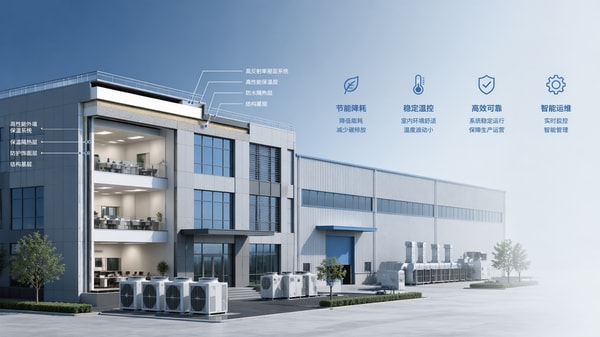
Another mistake is treating the HVAC system as a closed package without checking building insulation, door traffic, process heat, and logistics flow. In cold-chain and modular infrastructure, envelope performance can significantly influence plant size and operating efficiency. A better insulated space, better dock sealing, or improved zoning can sometimes reduce equipment burden more effectively than upsizing the main system.
There is also a growing need to prepare for future upgrades. Critical infrastructure owners increasingly want staged capacity addition, BMS connectivity, remote diagnostics, and easier adaptation to sustainability targets. Systems that allow phased expansion over 2–3 stages often create better long-term value than rigid designs optimized only for day-one conditions.
FAQ for buyers and technical teams
How do I know whether I need N+1 redundancy?
Start with failure consequence and repair time. If a space can drift beyond acceptable limits within 30–90 minutes and shutdown is unacceptable, redundancy becomes a serious requirement. If the environment can tolerate a planned outage of several hours and backup procedures exist, a simpler architecture may be viable. The decision should be documented against risk, not preference.
Is energy-efficient HVAC always worth the higher price?
Not always at the same level, but in 24/7 or high-load facilities it often justifies detailed analysis. The right comparison should include part-load operation, maintenance intervals, controls quality, and local utility conditions. In some projects, upgrading insulation or zoning yields faster payback than buying the most advanced plant on day one.
What delivery timeline is typical for industrial HVAC in critical projects?
The answer varies by configuration, customization, controls scope, and market conditions. Straightforward packaged solutions may move faster than complex central plants with integrated controls and validation documents. Buyers should ask not only for production lead time but also for drawing approval, factory testing, logistics, installation, and commissioning windows.
What should operators request before handover?
At minimum, operators should request alarm lists, control sequences, preventive maintenance schedules, spare-parts recommendations, and escalation contacts. For critical assets, trend logs and practical training on fault response during the first weeks of operation are often more valuable than a large manual set alone.
Future-ready planning should also consider electrification trends, refrigerant transition, and smarter monitoring. While not every site needs the most advanced system immediately, buyers benefit from selecting platforms that can support later sensor additions, controls upgrades, or capacity modules without major redesign.
Why work with G-TSI when evaluating industrial HVAC for critical infrastructure?
G-TSI supports buyers and technical teams with a broader decision lens than a single-product discussion. Because critical infrastructure performance depends on more than HVAC hardware alone, our benchmarking approach connects Industrial HVAC & Large-Scale Thermal Management with Cold-Chain Infrastructure, Prefabricated & Modular Construction Systems, Smart Elevators & Vertical Transportation, and High-Performance Building Chemicals & Insulation.
This cross-disciplinary perspective helps users answer practical questions earlier: Is the selected cooling strategy compatible with the building envelope? Will transport and installation constraints affect modular units? Does shaft and service access planning support future replacement? Are compliance documents aligned with the actual application rather than copied from generic offers? These are the questions that shape real project outcomes.
For distributors, procurement teams, and enterprise decision-makers, G-TSI can help structure the evaluation process around clear technical and commercial checkpoints. That may include parameter confirmation, solution comparison, standards mapping, modular integration review, expected delivery stages, and lifecycle support planning over the first 12–24 months of operation.
If you are assessing industrial HVAC for a data-intensive facility, a pharmaceutical environment, a cold-chain asset, or a large modular infrastructure project, contact G-TSI for support on equipment selection logic, thermal-management architecture, compliance review, delivery sequencing, and quotation alignment. You can consult on design parameters, shortlist options, integration risks, documentation requirements, commissioning scope, and project-specific budget trade-offs before moving into final procurement.
What you can discuss with us
- Industrial HVAC parameter confirmation for critical rooms, logistics spaces, modular assets, and mixed-use infrastructure.
- Solution selection between central plant, packaged systems, precision cooling, or industrial refrigeration-linked architectures.
- Compliance and documentation expectations tied to ASHRAE, ISO, EN, and project-specific operational controls.
- Delivery cycle planning, installation interfaces, modular transport constraints, and phased commissioning requirements.
- Budget comparison, lifecycle cost discussion, spare strategy, and support scope for quotes under review.
A better industrial HVAC decision starts with a clearer evaluation framework. When the application is critical, the safest purchase is usually the one that is technically matched, operationally maintainable, commercially transparent, and ready for future change.
Recommended News
 Industrial HVACHow to Choose Industrial HVAC for Critical InfrastructureCritical Infrastructure industrial HVAC selection guide: compare Modular Construction, Building Insulation, ASHRAE Standards, Energy-Efficient HVAC, Thermal Management, and Industrial Refrigeration for resilient, scalable projects.Dr. Julian VoltApr 29, 2026
 Industrial HVACModular Construction HVAC: What Works Best?Modular Construction HVAC: compare Energy-Efficient HVAC options for Critical Infrastructure, Building Insulation, ASHRAE Standards, and smarter Thermal Management.Dr. Julian VoltApr 29, 2026
 Industrial HVACDoes Better Building Insulation Cut HVAC Costs?Building Insulation and Energy-Efficient HVAC can cut industrial HVAC costs. Learn ASHRAE Standards-based strategies for Modular Construction, thermal management, and resilient critical infrastructure.Dr. Julian VoltApr 29, 2026
 Industrial HVACIndustrial HVAC vs Commercial HVAC: Key DifferencesIndustrial HVAC vs Commercial HVAC: explore key differences in Thermal Management, ASHRAE Standards, Energy-Efficient HVAC, and Critical Infrastructure planning for smarter facility decisions.Dr. Julian VoltApr 29, 2026