Industry News
Curation by industry experts
Hot Articles
Popular Tags
Thermal resilience depends on more than insulation values
Thermal resilience depends on more than insulation values—it requires integrated strategies across Cold-Chain Infrastructure, Building Envelope Solutions, and Smart Building Systems. From Pharmaceutical Cold Chain security and Cryogenic Storage reliability to Smart Elevators and Climate-Adaptive Design, resilient facilities must balance efficiency, safety, and continuity. This article explores how Sustainable Urban Infrastructure and advanced Food Storage Solutions shape high-performance environments for operators, evaluators, and decision-makers alike.
When people search for why thermal resilience depends on more than insulation values, they are usually not looking for a basic definition of R-value. They want to know why well-insulated buildings, warehouses, hospitals, cold rooms, or modular facilities can still fail during heat waves, grid instability, equipment faults, or operational disruptions. The short answer is clear: insulation is only one layer of defense. Real thermal resilience comes from how envelope performance, HVAC system design, controls, power continuity, airflow management, vertical transportation, monitoring, and operating protocols work together under stress.
For procurement teams, technical evaluators, project leaders, and enterprise decision-makers, the key question is not “Is the insulation good?” but “Will this facility maintain safe, stable, compliant conditions when real-world conditions become abnormal?” That shift in thinking is critical in pharmaceutical cold chain environments, food storage solutions, cryogenic storage facilities, prefabricated buildings, and high-occupancy urban assets where thermal failure can create product loss, downtime, safety incidents, and regulatory exposure.
Why insulation values alone do not predict thermal resilience
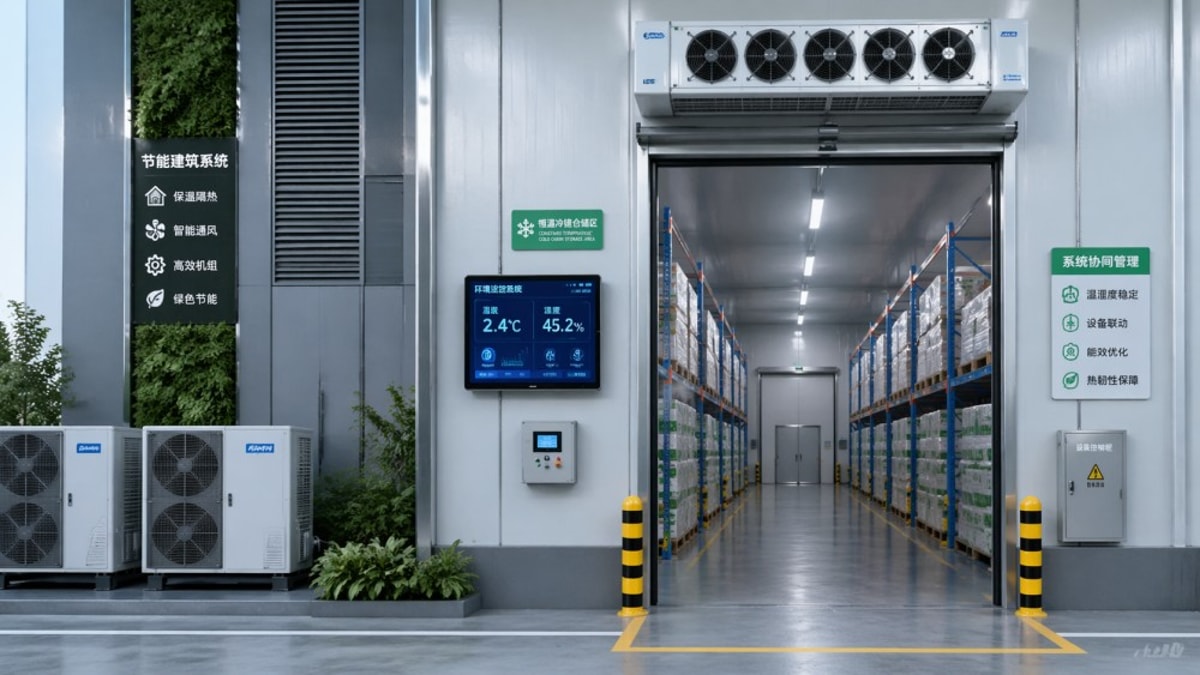
Insulation values measure resistance to heat transfer, but thermal resilience is the ability of a system and space to maintain acceptable conditions during disruption. These are related, but they are not the same. A facility may have strong insulation performance on paper and still perform poorly if it has uncontrolled air leakage, thermal bridging, poor humidity control, undersized HVAC equipment, weak backup power planning, or ineffective building management logic.
In practical terms, thermal resilience depends on at least six interacting layers:
- Envelope integrity: insulation, air sealing, vapor control, thermal bridge reduction, and weatherproofing
- Mechanical system robustness: HVAC redundancy, load matching, part-load efficiency, and maintainability
- Controls and sensing: real-time monitoring, alarms, zoning, adaptive setpoint control, and predictive maintenance
- Operational continuity: backup power, emergency procedures, spare parts, response planning, and service access
- Spatial design: room layout, traffic patterns, vertical transport, loading interfaces, and thermal segregation
- Human factors: operating discipline, door-opening behavior, maintenance quality, and cross-team coordination
This is why two facilities with similar insulation values can show very different outcomes during peak summer demand, winter cold snaps, or supply chain interruptions. One remains stable and compliant; the other drifts out of range, consumes excess energy, or experiences avoidable downtime.
What target readers actually need to evaluate before making decisions
Different stakeholders approach thermal resilience from different angles, but their concerns overlap more than they may think.
Information researchers and technical evaluators want to understand which design variables truly affect performance and how to compare solutions beyond marketing claims. They need measurable criteria such as temperature stability, pull-down time, recovery time after door openings, humidity control range, control accuracy, and system redundancy.
Operators and users care about day-to-day reliability. Their focus is on whether spaces remain within target conditions during loading cycles, occupancy changes, equipment maintenance, and weather extremes. They also need systems that are understandable and manageable, not just technically impressive.
Procurement and commercial evaluation teams need a way to compare total lifecycle value. A lower first-cost product may create higher operating costs, greater spoilage risk, more maintenance interventions, and reduced compliance confidence. The right decision often comes from comparing cost of failure, not just cost of purchase.
Quality, safety, and compliance managers focus on risk exposure. In pharmaceutical cold chain and food storage solutions, thermal deviation is not a minor comfort issue. It can affect product integrity, audit readiness, traceability, and legal liability.
Enterprise leaders and project owners need strategic clarity. They want to know which investments improve resilience, reduce volatility, support ESG goals, and protect mission-critical operations across multiple sites.
For all of these readers, the most useful content is not generic advice about energy efficiency. It is decision-oriented guidance on what to measure, what to audit, where failures usually happen, and how integrated infrastructure improves continuity.
In cold-chain infrastructure, resilience is about temperature stability, recovery, and risk control
Cold-chain infrastructure is one of the clearest examples of why insulation values are not enough. A cold room or distribution center may have excellent insulated panels, yet still suffer thermal instability due to poor dock design, frequent door cycling, insufficient evaporator capacity, unbalanced airflow, sensor placement errors, or control lag.
In pharmaceutical cold chain operations, the stakes are especially high. Sensitive products can be damaged not only by large temperature excursions but also by repeated micro-deviations, condensation events, and delayed recovery after loading. For technical assessment, teams should look at:
- Temperature uniformity across the full storage volume
- Recovery time after door opening or product movement
- Performance during partial power loss or compressor failure
- Alarm logic, escalation workflows, and data logging quality
- Humidity management and condensation prevention
- Maintenance accessibility and spare component strategy
In food storage solutions, thermal resilience also intersects with throughput. Fast-moving operations often create pressure to optimize loading speed, picking efficiency, and labor movement. If thermal and logistical design are disconnected, efficiency gains in one area can create losses in another. This is why AI-orchestrated cold storage AS/RS, zoned airflow, vestibules, high-speed doors, and smart traffic management increasingly matter as much as panel insulation.
Cryogenic storage raises the bar further. Here, resilience includes containment integrity, boil-off management, safety systems, instrumentation reliability, and emergency response planning. At ultra-low temperatures, even small design or operational errors can become high-impact failures. Buyers and specifiers should therefore evaluate the total storage environment, not only the insulating material or vessel rating.
For buildings and modular spaces, the envelope must work with HVAC, controls, and occupancy reality
In commercial buildings, modular construction systems, laboratories, healthcare facilities, and industrial plants, thermal resilience depends on how the building envelope interacts with dynamic internal and external loads. A wall assembly with a strong insulation rating can still underperform if solar gain is unmanaged, infiltration is high, occupancy fluctuates sharply, or control sequences are poorly tuned.
Climate-adaptive design is increasingly important because weather conditions are becoming less predictable. Facilities now need to handle more frequent heat waves, sudden humidity swings, wildfire smoke events, and unstable grid conditions. In this environment, resilient design should include:
- Continuous air barrier performance, not just nominal insulation thickness
- Moisture and vapor control suited to local climate and use case
- Solar control strategies such as shading, glazing selection, and reflective surfaces
- HVAC systems sized for realistic peak and partial-load conditions
- Demand-responsive and fault-aware building automation
- Compartmentalization for critical spaces and priority loads
Prefabricated and modular construction systems can support strong thermal performance, but only if junctions, transport tolerances, sealing details, and commissioning are handled rigorously. For project managers and engineering leads, this means thermal resilience should be reviewed at interfaces: module-to-module connections, roof edges, service penetrations, and field assembly conditions. Many failures occur there, not in the panel core specification.
Smart building systems and vertical transportation also affect thermal performance
Thermal resilience is often weakened by systems that are not usually discussed in insulation-focused conversations. Smart elevators and vertical transportation are one example. In high-rise or high-throughput buildings, elevator shafts, lobby pressure relationships, passenger traffic peaks, and door cycling can influence air movement, infiltration, and cooling demand.
When elevators, loading systems, HVAC controls, and access flows are disconnected, buildings can experience pressure imbalance, heat gain, comfort complaints, and unnecessary energy use. In hospitals, mixed-use towers, pharma facilities, and logistics hubs, this interaction can become operationally significant.
Smart building systems help close that gap. A well-integrated platform can correlate occupancy, weather, equipment status, door events, and thermal zones in real time. That makes it easier to detect drift early, optimize plant response, prioritize critical areas, and reduce stress on thermal assets during abnormal events.
For enterprise decision-makers, this supports a broader business outcome: resilience becomes measurable and manageable rather than reactive. Instead of relying on periodic manual checks, teams gain continuous visibility into thermal conditions, system behavior, and operational risk.
How to assess thermal resilience in a way that supports procurement and investment decisions
If your team is comparing solutions, a better evaluation method is to move from product-based judging to scenario-based judging. Ask how the full system performs under realistic stress conditions, not just under standard lab assumptions.
A practical evaluation framework should include the following questions:
- What conditions must be maintained, and for how long?
Define temperature, humidity, air quality, pressure, and uptime requirements by space type and business criticality. - What are the most likely disruption scenarios?
Examples include heat waves, power fluctuation, supply delay, component failure, extreme occupancy, door-opening frequency, or logistics congestion. - Which systems are single points of failure?
Review chillers, controls, sensors, access systems, communications, and maintenance dependencies. - How fast can the system recover?
Recovery time is often more important than steady-state efficiency. - What are the consequences of drift or downtime?
Quantify spoilage, compliance exposure, productivity loss, and customer impact. - Is performance validated in operation?
Commissioning, trend analysis, alarm testing, and periodic audits matter more than design intent alone.
This kind of evaluation helps procurement teams avoid false economies. A cheaper solution with weak controls, no redundancy, and limited service support may look attractive in a tender comparison, but become expensive once downtime, deviations, and interventions are considered.
Common mistakes that lead to poor resilience despite “good” insulation
Across industries, several patterns appear again and again:
- Overreliance on nominal insulation performance without validating field installation quality
- Ignoring infiltration, door management, and pressure control
- Separating envelope decisions from HVAC and controls design
- Undervaluing commissioning, calibration, and sensor placement
- Choosing by first cost instead of lifecycle risk and continuity value
- Failing to account for operational behavior and traffic intensity
- Designing for average conditions instead of extreme events
These mistakes are especially costly in sustainable urban infrastructure projects, where resilience, efficiency, and user safety must coexist. The more critical and interconnected the facility, the less useful isolated metrics become.
A better way to think about high-performance thermal environments
The most resilient facilities are designed and managed as integrated environments. They do not treat insulation, HVAC, automation, logistics, and spatial planning as separate procurement categories. Instead, they align them around a shared operating requirement: maintain safe, efficient, compliant conditions under both normal and abnormal circumstances.
For distributors, specifiers, and solution providers, this also changes how value should be communicated. Instead of focusing only on material specifications or peak efficiency claims, the stronger message is operational assurance: stable thermal control, faster recovery, lower risk exposure, easier maintenance, and better business continuity.
For end users and operators, it means resilience is not a premium add-on. It is a practical operating capability. In pharmaceutical cold chain, cryogenic storage, smart buildings, modular facilities, and food storage solutions, that capability directly affects product quality, uptime, and trust.
Thermal resilience depends on more than insulation values because real-world performance depends on the whole system. Insulation remains essential, but it is only one component of a resilient strategy. The facilities that perform best are those that combine strong building envelope solutions with robust HVAC, intelligent controls, operational discipline, and infrastructure planning that reflects real risk. For anyone evaluating thermal environments today, the right question is no longer whether a component looks efficient in isolation. It is whether the full environment can stay stable, safe, and productive when conditions become difficult.
Recommended News
 Industrial HVACHow to Choose Industrial HVAC for Critical InfrastructureCritical Infrastructure industrial HVAC selection guide: compare Modular Construction, Building Insulation, ASHRAE Standards, Energy-Efficient HVAC, Thermal Management, and Industrial Refrigeration for resilient, scalable projects.Dr. Julian VoltApr 29, 2026
 Industrial HVACModular Construction HVAC: What Works Best?Modular Construction HVAC: compare Energy-Efficient HVAC options for Critical Infrastructure, Building Insulation, ASHRAE Standards, and smarter Thermal Management.Dr. Julian VoltApr 29, 2026
 Industrial HVACDoes Better Building Insulation Cut HVAC Costs?Building Insulation and Energy-Efficient HVAC can cut industrial HVAC costs. Learn ASHRAE Standards-based strategies for Modular Construction, thermal management, and resilient critical infrastructure.Dr. Julian VoltApr 29, 2026
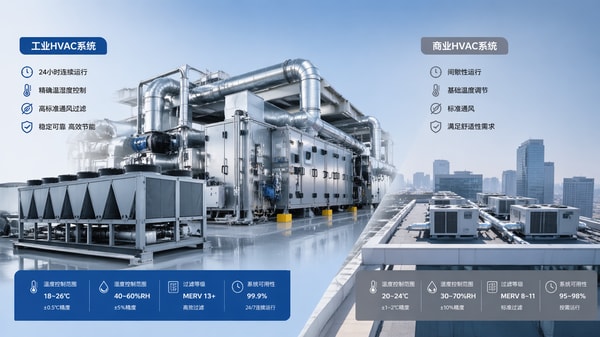
 Industrial HVACIndustrial HVAC vs Commercial HVAC: Key DifferencesIndustrial HVAC vs Commercial HVAC: explore key differences in Thermal Management, ASHRAE Standards, Energy-Efficient HVAC, and Critical Infrastructure planning for smarter facility decisions.Dr. Julian VoltApr 29, 2026