Industry News
Curation by industry experts
Hot Articles
Popular Tags
When does an adiabatic cooling system OEM make sense
Choosing an adiabatic cooling system OEM makes sense when your project demands custom performance, compliance certainty, and lifecycle efficiency beyond off-the-shelf options. For project managers and engineering leads, the right OEM partner can reduce integration risk, improve energy resilience, and align thermal infrastructure with strict operational, budget, and sustainability targets.
In industrial HVAC, cold-chain infrastructure, modular construction, and other mission-critical built environments, thermal performance is rarely an isolated equipment issue. It affects uptime, process stability, water use, noise limits, electrical demand, and long-term maintenance planning.
That is why the decision to work with an adiabatic cooling system OEM should be tied to project complexity rather than product price alone. For teams managing warehouses, pharmaceutical facilities, food processing sites, data-intensive buildings, or district-scale assets, customization often determines whether a system performs reliably over 10–20 years.
This article explains when an adiabatic cooling system OEM is the right choice, what project triggers justify OEM engagement, how to evaluate technical and commercial fit, and which risks project leaders should control before procurement begins.
Why OEM selection matters in complex cooling projects
An adiabatic cooling system OEM does more than manufacture hardware. In a B2B project environment, the OEM may define coil configuration, controls integration, water treatment logic, casing materials, fan redundancy, acoustic treatment, and compliance documentation across 3–5 engineering interfaces.
For project managers, the real value appears when standard equipment cannot meet site-specific constraints. Typical triggers include ambient temperatures above 35°C, tight roof loading limits, target energy reductions of 10%–25%, or operational temperature tolerances within a narrow process band.
Common project conditions that push teams toward OEM solutions
- Mixed-use facilities requiring cooling for both comfort and process loads
- Retrofit sites with limited footprint, duct path conflicts, or staged shutdown windows of only 48–72 hours
- Cold-chain or pharmaceutical applications where temperature drift can disrupt compliance or product integrity
- Projects requiring integration with BMS, SCADA, or facility-wide energy management platforms
- Regions with water-use restrictions, high airborne dust, or seasonal peak conditions beyond standard catalog assumptions
In these scenarios, off-the-shelf equipment may still function, but the cost of adaptation shifts to the contractor, consultant, or operator. That often increases commissioning delays, responsibility gaps, and lifecycle inefficiencies. An adiabatic cooling system OEM can centralize those variables earlier in the design process.
Where OEM involvement reduces risk fastest
The strongest business case usually appears in projects with 4 risk clusters: thermal underperformance, controls incompatibility, compliance exposure, and maintenance complexity. If two or more are present, OEM engagement typically becomes more economical than post-award redesign.
The comparison below shows where a standard purchase differs from an OEM-based approach in a practical procurement context.
The key takeaway is that OEM value is strongest where design assumptions cannot be generic. When site conditions, process risk, or compliance burden are above average, project teams usually gain better schedule and operational control from an engineered solution.
When an adiabatic cooling system OEM makes the most sense
Not every facility needs a bespoke platform. However, there are clear situations where an adiabatic cooling system OEM becomes the more rational choice from both a technical and commercial perspective. The deciding issue is usually consequence of failure, not equipment category alone.
1. When thermal loads are variable or mission-critical
Facilities with fluctuating daily loads of 30%–90% benefit from OEM engineering because fan staging, spray control, and heat rejection logic can be tuned for part-load efficiency. This matters in distribution centers, food plants, and production sites with seasonal or batch-driven demand.
2. When site conditions are unusually demanding
High dust exposure, corrosive air, water hardness, or roof vibration constraints can shorten equipment life if not addressed in design. An OEM can specify casing coatings, filtration strategy, drift control, and access layout that better match local conditions over a 12–15 year maintenance horizon.
3. When compliance and documentation are non-negotiable
Pharmaceutical, healthcare, export food, and strategic infrastructure projects often require tighter document control. In these cases, an adiabatic cooling system OEM can support submittals, performance data, material traceability, and commissioning records in a more structured way than a commodity equipment path.
4. When the project has integration pressure
If cooling equipment must interface with pumps, controls panels, building management systems, modular skids, or prefabricated plant rooms, OEM participation can reduce field rework. Even a 2-week delay on commissioning may have downstream effects on occupancy, production startup, or cold-chain validation.
Typical use cases by facility type
The table below maps common environments to the reasons an OEM-led solution becomes attractive.
These examples show that the OEM route is less about luxury customization and more about matching cooling infrastructure to operational consequences. The more expensive downtime, spoilage, or restart becomes, the more justifiable OEM engineering tends to be.
How project managers should evaluate an adiabatic cooling system OEM
A disciplined evaluation framework helps separate technically capable OEMs from suppliers that simply offer minor product variations. For project teams, the selection process should balance 4 dimensions: engineering depth, delivery reliability, compliance discipline, and service support.
Technical questions to ask before shortlisting
- Can the OEM size performance for local summer design conditions, not just nominal catalog conditions?
- What operating envelope is supported for ambient temperature, water quality, and turn-down ratio?
- How are controls integrated with BMS or plant automation systems?
- What maintenance intervals are assumed for pads, nozzles, fans, and water treatment components?
- Can the unit be delivered in modular sections for constrained access or phased installation?
A serious adiabatic cooling system OEM should be able to discuss design inputs in measurable terms. Examples include entering air conditions, target leaving temperature, sound criteria in dB ranges, electrical characteristics, service clearance dimensions, and acceptable water conductivity thresholds.
Commercial and delivery checkpoints
Lead times vary by complexity, but engineered systems often require 6–14 weeks for design confirmation, fabrication, and factory preparation. If the project schedule is compressed, ask which elements are fixed, which can be parallel-tracked, and how drawing approval cycles affect shipment dates.
Project managers should also confirm what is included in the commercial boundary: controls panels, sensors, startup support, spare parts lists, IO mapping, structural base frames, and water management accessories. Missing scope at bid stage often becomes the costliest source of variation later.
A practical OEM assessment matrix
The matrix below can be used during tender review or technical clarification meetings.
This type of matrix shifts the conversation away from unit price only. It helps teams compare total project risk, especially where procurement, construction, and operations are owned by different stakeholders.
Implementation, maintenance, and lifecycle considerations
Even the best adiabatic cooling system OEM cannot compensate for poor implementation discipline. Project outcomes depend on how the system is commissioned, monitored, maintained, and integrated into site operating procedures during the first 90–180 days.
Commissioning priorities
Commissioning should confirm at least 6 items: design airflow, pump operation, adiabatic media or spray function, controls response, alarm logic, and water management performance. If the system serves a regulated facility, witness testing and formal sign-off should be scheduled before peak weather arrives.
Maintenance realities that affect ROI
Lifecycle value depends on predictable upkeep. Common service intervals may range from monthly visual checks to quarterly water system review and annual pre-summer performance inspection. OEMs that simplify access and parts replacement can reduce labor burden over a 5-year operating cycle.
Project teams should be cautious of underestimating water-side management. Inadequate treatment, poor drainage, or inconsistent seasonal shutdown routines can reduce efficiency and increase cleaning frequency. A well-scoped OEM package should address these operational details from the beginning.
Frequent procurement mistakes
- Selecting on first cost without quantifying retrofit labor, controls adaptation, or maintenance access
- Using nominal performance data instead of local design-day conditions
- Leaving water quality assumptions undefined during tender stage
- Ignoring spare parts strategy for the first 12 months after handover
- Failing to align OEM scope with modular plant room or prefabricated infrastructure interfaces
For organizations managing critical spatial assets, the decision is rarely just about cooling equipment. It is about whether the supplier can support resilience, compliance, maintainability, and predictable project delivery under real-world conditions.
An adiabatic cooling system OEM makes the most sense when your project has non-standard loads, strict operating thresholds, difficult site conditions, or a high cost of downtime. In those environments, engineered fit often protects both schedule and lifecycle performance more effectively than a generic specification path.
If you are planning a new facility, retrofit, or modular infrastructure program and need to assess whether an OEM approach is justified, now is the right time to review your thermal requirements in detail. Contact us to discuss your project priorities, request a tailored solution, or explore more cooling and spatial infrastructure options.
Recommended News
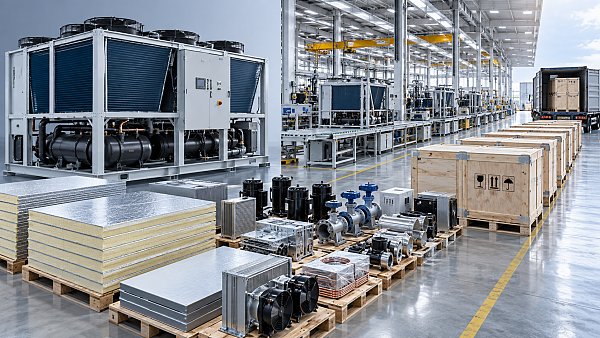
 Thermal FlowHardware Sourcing: How Procurement Teams Evaluate Suppliers, Lead Times, and CostHardware sourcing made smarter: learn how procurement teams assess suppliers, lead times, compliance, and total cost to secure reliable, high-value infrastructure.Dr. Julian VoltSep 23, 2026
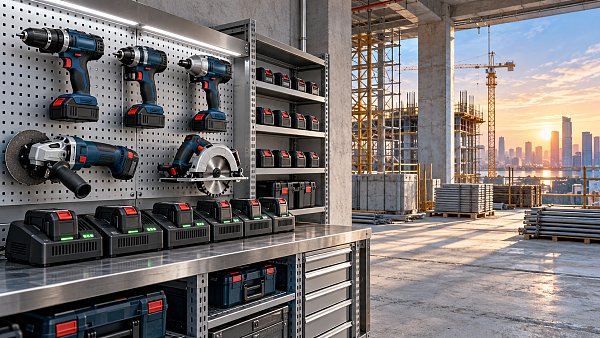
 Rapid Site GearHow to Choose Cordless Power Tools for High-Volume Jobsite Work?Cordless power tools for high-volume jobsites: learn how to select reliable battery platforms, optimize runtime, improve safety, and reduce costly downtime.Marcus ShieldSep 22, 2026
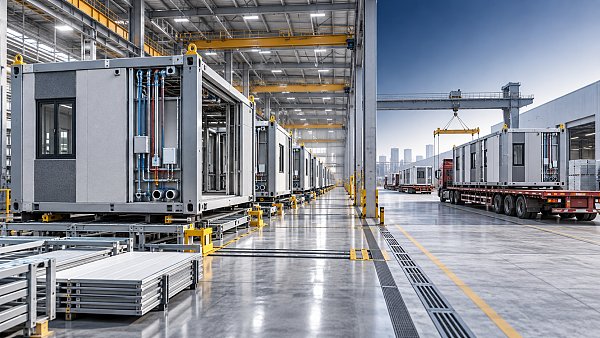
 3D Steel ModulesHow to Vet a Prefabricated Construction Systems Supplier for Capacity and Delivery RiskVet a prefabricated construction systems supplier with proven capacity, quality controls, supply-chain resilience, and logistics planning to reduce delivery risk.Marcus ShieldSep 21, 2026
 High-Speed LiftsHow to Specify Gearless High-Speed Elevator Systems for Tall-Building TrafficGearless High-Speed Elevator Systems: learn how to optimize tall-building traffic, ride quality, energy efficiency, resilience, and lifecycle value with a smarter specification strategy.Dr. Victor GearSep 20, 2026