Industry News
Curation by industry experts
Hot Articles
Popular Tags
How to judge a chilled water pump manufacturer reliably
Choosing a chilled water pump manufacturer is not just about comparing catalogs or prices.
In complex buildings, plants, hospitals, and cold-chain facilities, pump failure quickly becomes a system risk.
The stronger question is whether a supplier can deliver verified performance, stable materials, smart controls, and dependable lifecycle support.
That question matters more today because thermal infrastructure is changing fast.
A reliable chilled water pump manufacturer must now support efficiency targets, resilient operation, and compliance across demanding environments.
Why reliability standards for chilled water pump manufacturers are rising
Across the broader infrastructure sector, chilled water systems are under new pressure.
Energy pricing is volatile, uptime expectations are stricter, and digital monitoring is becoming standard rather than optional.
At the same time, HVAC systems are expected to work harder during heat waves, partial-load conditions, and retrofits.
This means any chilled water pump manufacturer must be judged beyond name recognition.
The real benchmark is repeatable hydraulic performance in the field, not only on a brochure curve.
Key trend signals visible in current projects
- Variable flow systems are replacing fixed-flow designs in many upgrades.
- Building automation platforms increasingly require open communication compatibility.
- Owners expect lower life-cycle energy use, not just acceptable first cost.
- Maintenance access, spare part continuity, and local service response are receiving more weight.
- Material durability matters more in chemically treated, high-cycle, or mission-critical loops.
What is driving this shift in how a chilled water pump manufacturer is judged
The market is not changing for one reason alone.
Several technical and operational pressures are reshaping supplier evaluation.
How to judge a chilled water pump manufacturer beyond marketing claims
A dependable chilled water pump manufacturer should prove competence across six areas.
Each area reduces a different type of procurement and operating risk.
1. Hydraulic performance must be verified, not assumed
Check whether performance curves are detailed across duty points, not only at peak efficiency.
Ask for test conditions, tolerance standards, and evidence of stable operation under partial load.
A strong chilled water pump manufacturer should explain impeller selection, head margin, and cavitation protection clearly.
2. Material and construction quality must match the loop conditions
Pump casing material, shaft design, bearings, seals, and coating systems all affect reliability.
Water treatment chemistry, corrosion risk, and installation environment should shape material selection.
Do not accept generic statements like “industrial grade” without specifications.
3. Control compatibility is now a core requirement
Modern chilled water systems rely on variable speed logic, sensors, and automation coordination.
The right chilled water pump manufacturer should support control integration from design through commissioning.
That includes motor compatibility, VFD behavior, communication options, and alarm reporting logic.
4. Manufacturing discipline matters as much as product design
A polished datasheet does not prove process consistency.
Look for traceability, quality control steps, balancing procedures, pressure testing, and final inspection records.
Factory process maturity often predicts field reliability better than branding.
5. Service support should be tested before the purchase
Service response becomes critical when chilled water pumps support hospitals, data rooms, or food processing.
Ask response-time questions before ordering, not after a shutdown.
A reliable chilled water pump manufacturer should define spare parts policy, field support, and escalation paths.
6. Reference projects should resemble your operating reality
References are useful only when they match similar flow ranges, run hours, water quality, and control complexity.
One successful commercial building does not validate a supplier for industrial thermal duty.
How this evaluation affects wider business performance
Selecting the wrong chilled water pump manufacturer can create hidden costs far outside the pump room.
In integrated infrastructure, pump instability can influence comfort, process continuity, and energy reporting.
- In commercial buildings, poor control response can undermine occupant comfort and chiller efficiency.
- In pharmaceutical or food environments, unstable circulation can threaten thermal compliance windows.
- In industrial facilities, unexpected pump downtime can interrupt production and maintenance planning.
- In retrofit projects, oversized or mismatched pumps can waste energy for years.
This is why the supplier review should connect technical evidence with operational consequences.
The best decision often comes from lifecycle fit, not from lowest unit cost.
What deserves the closest attention during supplier comparison
When shortlisting a chilled water pump manufacturer, focus on these practical checkpoints.
- Certified or documented performance testing at relevant duty conditions.
- Clear material specifications for casing, impeller, shaft, seal, and bearings.
- Evidence of compatibility with VFD operation and building management systems.
- Quality assurance records, inspection steps, and traceability discipline.
- Local or regional service capability with realistic spare part support.
- Comparable references in HVAC, district cooling, healthcare, or cold-chain applications.
- Transparent warranty terms that define exclusions, coverage, and response responsibility.
A practical framework for making the final judgment
A useful review framework combines technical, operational, and commercial scoring.
That approach helps prevent overreliance on price or presentation quality.
What to do next if you need to assess a chilled water pump manufacturer
Start by defining the real operating profile of the system.
Include flow variation, water conditions, control architecture, criticality level, and service expectations.
Then request comparable documentation from each chilled water pump manufacturer on the shortlist.
Use one scoring matrix, one question set, and one reference-check method.
That simple discipline reveals capability gaps quickly.
In today’s infrastructure environment, the best chilled water pump manufacturer is the one that proves fit, resilience, and support with evidence.
A careful evaluation now can improve efficiency, reduce downtime risk, and protect long-term thermal performance.
Recommended News
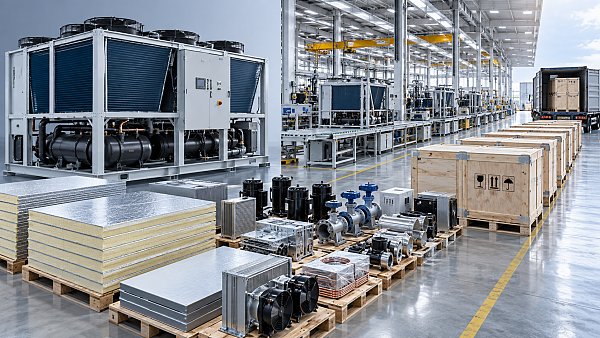
 Thermal FlowHardware Sourcing: How Procurement Teams Evaluate Suppliers, Lead Times, and CostHardware sourcing made smarter: learn how procurement teams assess suppliers, lead times, compliance, and total cost to secure reliable, high-value infrastructure.Dr. Julian VoltSep 23, 2026
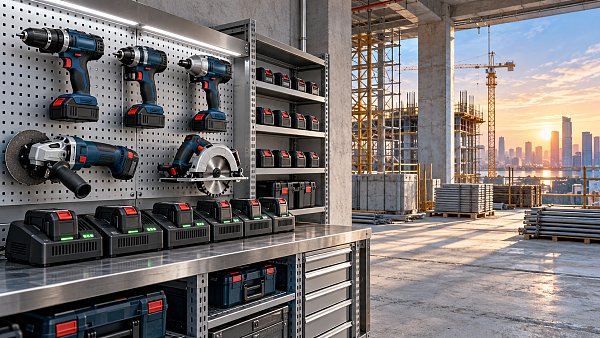
 Rapid Site GearHow to Choose Cordless Power Tools for High-Volume Jobsite Work?Cordless power tools for high-volume jobsites: learn how to select reliable battery platforms, optimize runtime, improve safety, and reduce costly downtime.Marcus ShieldSep 22, 2026
 3D Steel ModulesHow to Vet a Prefabricated Construction Systems Supplier for Capacity and Delivery RiskVet a prefabricated construction systems supplier with proven capacity, quality controls, supply-chain resilience, and logistics planning to reduce delivery risk.Marcus ShieldSep 21, 2026
 High-Speed LiftsHow to Specify Gearless High-Speed Elevator Systems for Tall-Building TrafficGearless High-Speed Elevator Systems: learn how to optimize tall-building traffic, ride quality, energy efficiency, resilience, and lifecycle value with a smarter specification strategy.Dr. Victor GearSep 20, 2026