Industry News
Curation by industry experts
Hot Articles
Popular Tags
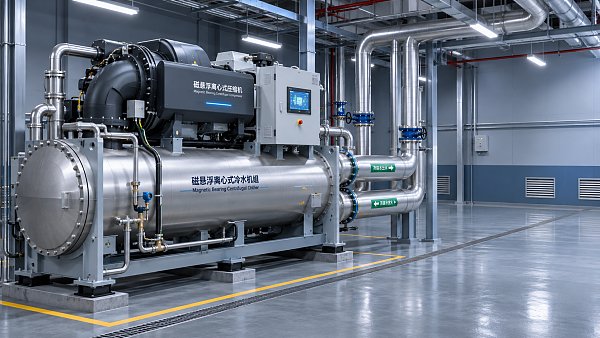
Choosing Magnetic Levitation Chillers: Capacity and Part-Load Efficiency
Magnetic levitation chillers are strongest candidates when their available capacity closely matches the building’s load profile and their efficiency remains competitive across the conditions in which the plant will actually operate. A high full-load efficiency or an attractive part-load rating alone is not enough to establish that fit.
Start by checking the required capacity at the project’s design water temperatures, flow rates and site conditions. Then compare candidate chillers over the expected annual load range, including low-load operation and the energy used by pumps and heat rejection equipment. A larger unit may appear to provide useful insurance, but if it spends much of its time near its minimum stable capacity, that extra margin can increase cycling and weaken the expected efficiency benefit.
Size for the load the plant must actually serve
Nominal capacity is a useful screening figure, but it is not a substitute for a selection at project conditions. Cooling output depends on the temperatures and flow rates at the evaporator and condenser, as well as the equipment’s operating limits. Two chillers advertised at the same nominal capacity may deliver different capacities when selected for the same building.
Ask for performance at the design chilled-water leaving temperature and entering condenser-water temperature, with the specified flow rates and fouling assumptions. For an air-cooled configuration, the relevant outdoor air conditions and elevation also need to be reflected in the selection. The applicable conditions depend on the chiller configuration, so the submittal should state them explicitly.
The design cooling load itself deserves scrutiny before a safety margin is added to the machine selection. Check whether the load calculation already includes allowances for occupancy, equipment, weather and future expansion. Adding separate margins at each stage can compound into a chiller that rarely operates near its intended range.
Future capacity should be treated as a distinct requirement. If a major expansion is uncertain or several years away, a modular plant or a provision for a later unit may fit the initial load better than installing all anticipated capacity on day one. That decision must also account for space, piping, electrical infrastructure and the reliability requirement during each phase.
Capacity is also a staging decision
For a multi-chiller plant, selecting the number and size of machines can matter as much as selecting the compressor technology. A combination of smaller units may follow a variable load more closely and provide redundancy, but it can also add equipment, controls and maintenance complexity. Fewer, larger units may simplify the plant while leaving a gap between minimum stable output and the load during quiet periods.
Check the smallest load the plant must serve with one chiller running. Compare that value with the selected unit’s minimum capacity at the corresponding water temperatures, not just with a catalog percentage. Then examine how the plant transitions between one and multiple machines. A chiller that performs well individually may still produce an inefficient plant if staging starts a second machine too early or leaves both operating at unfavorable points.
Where redundancy is required, distinguish the normal operating load from the load that must be maintained after a unit is unavailable. A plant designed to retain full cooling capacity during a failure will necessarily have different installed capacity and staging considerations from a plant allowed to shed noncritical loads.
Read part-load ratings in context
Magnetic levitation centrifugal chillers can modulate compressor output and avoid oil-related losses in the compressor. Those characteristics can support efficient part-load operation, but the result depends on the complete machine and its operating conditions. Bearing technology alone does not establish which selection will use less energy.
Manufacturers may present a full-load efficiency alongside an integrated part-load value, expressed in units such as kW per ton or as a coefficient of performance. An integrated rating combines performance at specified load points under a defined rating procedure. It is useful for screening equipment tested on the same basis, but its weighting and operating conditions may not match an individual facility.
Before comparing figures, establish whether they use the same rating standard, edition, units and test conditions. Check whether the published value applies to the exact selected configuration and whether the reported electrical input includes the same components. A lower kW per ton indicates less electrical input per unit of cooling at the stated condition; it does not by itself establish lower annual plant consumption.
Water temperatures are especially important. The temperature difference the compressor must work across, often described as lift, changes with chilled-water and heat-rejection conditions. A chiller operating at reduced load with cooler condenser water may perform very differently from the same machine serving reduced load while condenser water remains warm. A standard rating may capture one set of assumptions, while the site experiences another.
Request a performance map or selection data covering the combinations the project is likely to encounter. At a minimum, this should include design load, representative intermediate loads and the lowest sustained load, each paired with plausible entering condenser-water and leaving chilled-water temperatures. For an air-cooled unit, use the relevant ambient conditions instead of condenser-water temperatures.
Turn the load profile into an energy comparison
The most useful comparison connects performance data to the hours spent at each operating condition. An hourly building or plant simulation can do this where reliable input data are available. For an earlier-stage assessment, a simplified load-bin calculation can still expose differences that a single rating conceals.
For each bin, estimate the cooling demand and operating hours, select the corresponding chiller power at the expected temperatures, and multiply power by hours. Sum the results across the year. Use the same load bins and boundary conditions for every candidate, and document any assumptions about equipment staging and temperature reset.
A simplified comparison should include at least these checks:
- Low-load hours: How often is demand below the minimum stable capacity of the smallest available unit?
- Condenser conditions: Are lower entering condenser-water temperatures realistically available at the times assumed?
- Temperature reset: Can chilled-water temperature be raised without compromising humidity control or the needs of critical loads?
- Staging: Which machines operate in each load bin, and what triggers a change in the number of units running?
- Auxiliary energy: How do pump, cooling-tower or condenser-fan requirements change between alternatives?
Do not infer annual savings by applying an integrated rating directly to the design capacity and total operating hours. That approach can obscure the actual cooling delivered, the frequency of low-load operation and the difference between chiller input and whole-plant input. The calculation is only as credible as the load profile and operating conditions behind it.
For an existing facility, interval data from meters, building controls and weather records can help establish the profile, provided sensors and trends are reliable. For a new facility, compare a design-based profile with alternative occupancy and process-load assumptions. If the ranking changes under reasonable variations, the selection should be judged on that uncertainty rather than on a single predicted savings figure.
Examine minimum capacity, lift and cycling together
Minimum capacity is not always a fixed percentage across the operating envelope. It can vary with entering condenser conditions, chilled-water temperature and compressor configuration. Request the manufacturer’s operating envelope and performance data at the low-load conditions expected on site.
When demand falls below what the running equipment can stably deliver, controls may cycle the compressor, use bypass or apply another means of capacity control. Each approach affects plant performance differently. Cycling can reduce efficiency and increase starts; bypass can keep flow or equipment operation stable while doing little useful cooling. The magnitude depends on the plant design and controls, so neither behavior should be assumed from a catalog rating.
Check the minimum run and off times, restart requirements, and any limits on starts in the proposed sequence of operation. Also review the system’s available water volume and flow stability with the designer and manufacturer. A buffer tank may help some systems manage short loads, but it is not a substitute for correcting an oversized selection or an unsuitable control sequence.
High lift can also constrain available capacity or efficiency. A machine selected only at favorable condenser conditions may have less operating margin during hot weather, when cooling demand and heat-rejection temperatures rise together. Conversely, a low-load point should be evaluated at realistic temperatures rather than assuming that every partial-load hour coincides with the most favorable condenser conditions.
Make the comparison enforceable in the selection
A technical bid comparison should leave little room for each candidate to be evaluated under different assumptions. Issue a common schedule of required capacity, water temperatures, flow rates, design ambient conditions where relevant, and representative part-load points. Ask each supplier to identify any point outside the machine’s operating envelope and any conditions required to achieve the stated performance.
Separate guaranteed performance at specified conditions from estimated annual consumption. The former can be tied to defined equipment and test conditions; the latter depends on the building load, weather, controls and other plant equipment. Both are useful, but they answer different questions.
Review the proposed controls alongside the efficiency figures. A chiller’s low-load capability has limited value if the plant sequence cannot maintain stable flow, coordinate heat rejection or stage machines appropriately. Conversely, an apparently less impressive individual rating may be acceptable if the selected arrangement follows the facility’s load more closely and reduces auxiliary energy.
The preferred selection is the one that meets design and resilience requirements while remaining controllable and efficient across the expected operating range. Where the load profile is uncertain, favor a comparison that shows how each arrangement behaves under several plausible conditions; that makes the capacity decision more robust than choosing the lowest single published efficiency value.
Recommended News
 VRF ControlVRF Control Systems for Campuses: Managing Multiple Buildings and ZonesVRF control systems for campuses simplify multi-building HVAC management. Explore integration, zoning, costs, and commissioning for a scalable system.Dr. Julian VoltNov 08, 2026
 Maglev ChillersChoosing Magnetic Levitation Chillers: Capacity and Part-Load EfficiencyChoosing Magnetic Levitation Chillers? Compare capacity, part-load efficiency and plant energy use to find the right fit for your facility.Dr. Julian VoltNov 07, 2026
 VRF ControlVRF System Quotation: What to Check Before Comparing Supplier BidsCompare every VRF system quotation with confidence. Learn how to assess capacity, installation scope, controls, warranties, and hidden costs before choosing a supplier.Dr. Julian VoltNov 06, 2026
 Maglev ChillersChoosing a Magnetic Levitation Chiller Exporter: Service and Warranty ChecksChoosing a magnetic levitation chiller exporter? Discover essential service, warranty, spare-parts, and commissioning checks to make a confident investment.Dr. Julian VoltNov 05, 2026