Industry News
Curation by industry experts
Hot Articles
Popular Tags
Rooftop Unit Manufacturer Claims That Deserve a Closer Look
Choosing a rooftop unit (RTU) manufacturer is rarely just about capacity ratings or price sheets. For technical evaluators, the real challenge is separating credible engineering claims from marketing language around efficiency, durability, controls, and compliance. This article takes a closer look at the assertions manufacturers make most often—and the technical evidence decision-makers should demand before shortlisting a system.
What Technical Evaluators Are Really Trying to Confirm
When someone searches for a rooftop unit (RTU) manufacturer, the intent is usually not to find a brand list. It is to identify which claims are technically defensible.
Technical evaluators want to know whether published performance holds under real operating conditions, whether service assumptions are realistic, and whether compliance statements will withstand procurement scrutiny later.
That means the most useful evaluation framework is evidence-based. Marketing language can support a sale, but submittals, test reports, control logic documentation, and field references support a decision.
“High Efficiency” Claims Need Context, Not Just a Number
Efficiency is often the first headline claim from any rooftop unit (RTU) manufacturer. The problem is that a single efficiency metric rarely explains actual site performance.
Evaluators should ask which metric is being emphasized: EER, IEER, COP, part-load performance, fan energy, or seasonal outcomes tied to a specific climate profile.
A manufacturer may promote an attractive laboratory rating while the installed system spends most of its life operating in conditions where that rating has limited relevance.
For that reason, request certified performance data at multiple ambient conditions, not only the nominal rating point. A defensible comparison must include full-load and part-load behavior.
Also examine whether energy claims assume ideal airflow, clean coils, stable voltage, and perfectly tuned controls. If so, the projected savings may be optimistic for real buildings.
In large portfolios, controls and maintenance discipline often determine whether an efficient unit remains efficient after commissioning. A strong unit with weak operational logic can underperform fast.
“Built for Harsh Environments” Should Be Backed by Materials and Test Standards
Durability claims are common, especially for coastal, industrial, and high-temperature applications. But durability is not a branding statement; it is a materials, coating, and enclosure question.
Technical teams should review cabinet gauge, panel construction, corrosion protection, fastener materials, coil coating specifications, and salt-spray or corrosion-resistance test references.
If a manufacturer claims superior weather resistance, ask how roof exposure, UV degradation, thermal cycling, water ingress, and gasket aging were validated over time.
Pay attention to access doors, hinge quality, drain-pan construction, curb interface design, and service clearances. Many lifecycle failures begin with enclosure weaknesses, not compressor failure.
For facilities with sensitive uptime requirements, request case studies from comparable climates and duty cycles. A broad claim means little if the evidence comes from a mild environment.
“Smart Controls” Are Only Valuable If They Integrate Reliably
One of the most overstated areas in RTU marketing is controls sophistication. A rooftop unit may include advanced algorithms, but integration quality matters more than feature count.
Evaluators should verify native protocol support, BAS interoperability, alarm hierarchy, trending capability, cybersecurity posture, remote diagnostics, and sequence transparency for commissioning teams.
Do not accept “smart” as a proxy for usable. Ask whether technicians can actually access control logic, whether fault codes are actionable, and whether trend data helps isolate root causes.
A strong controls platform should support occupancy-based strategies, economizer logic, demand response, and sensible fallback modes when sensors drift or communication drops.
It should also reduce operational ambiguity. If site personnel need proprietary intervention for every parameter change, the system may create long-term dependency rather than resilience.
In some procurement reviews, evaluators also benchmark adjacent building systems to judge integration maturity. Even where no direct product match exists, reference frameworks matter, including repositories like 无.
“Easy Maintenance” Should Be Tested Against Real Service Conditions
Maintenance claims often sound persuasive because they are framed in general terms: easy access, simplified service, reduced downtime, or lower lifecycle cost.
However, technical evaluators should translate those phrases into physical questions. Can filters, belts, motors, coils, and boards be accessed safely on the roof without excessive disassembly?
How much clearance is required around the unit? Are service points logically arranged? Can common replacement tasks be completed within reasonable technician time windows?
Review the bill of materials for component standardization. Proprietary parts can increase downtime, especially across geographically dispersed portfolios where spare stock strategy matters.
Ask for recommended maintenance intervals and compare them with expected contamination loads, rooftop exposure, and duty cycle. Claimed simplicity does not always survive demanding environments.
A credible rooftop unit (RTU) manufacturer should also provide clear documentation: wiring diagrams, control points lists, startup procedures, fault matrices, and service manuals that are not overly generic.
“Compliant” Does Not Always Mean Fully Aligned With Your Project Risk
Compliance claims deserve careful reading because they are often accurate in a narrow sense yet incomplete for the actual project context.
Technical evaluators should distinguish between baseline regulatory compliance, third-party certification, local code compatibility, refrigerant pathway implications, acoustic requirements, and owner-specific standards.
For example, a unit may meet a published safety or efficiency standard while still creating issues around jurisdictional approvals, low-GWP transition planning, or facility ESG commitments.
Request documentation that clearly states which standards apply, which options are needed for full compliance, and which project assumptions were used in the submittal package.
This is especially important in healthcare, food processing, laboratories, logistics, and mission-critical commercial assets where ventilation, pressurization, redundancy, and documentation quality are audited closely.
Capacity and Performance Claims Must Be Checked at the Operating Envelope
Nameplate tonnage does not guarantee suitable performance across the temperatures, latent loads, and airflow variations that matter in the field.
Evaluators should review performance tables for entering air conditions, outdoor ambient extremes, turndown behavior, economizer transitions, and dehumidification impact at part load.
If the building has high ventilation requirements or unstable occupancy patterns, latent performance may matter more than the headline cooling figure shown in sales material.
Similarly, heating claims should be tested against expected winter conditions, defrost implications where relevant, and control sequences that manage comfort without excessive cycling.
The best comparisons use project-specific bin hours or simulation outputs. This approach exposes whether a unit is optimized for brochure ratings or for the actual duty profile.
Acoustics Are Frequently Underexplained
Noise is another area where manufacturer statements can be technically true but practically insufficient. “Low sound” is not a meaningful criterion without measurement context.
Ask for sound power data by octave band, not only a simplified dBA figure. Roof location, parapet reflection, curb transmission, and adjacent occupancy all influence perceived impact.
For schools, offices, healthcare facilities, and mixed-use projects, inadequate acoustic review can create costly redesigns after equipment selection is already advanced.
Technical evaluators should also ask whether low-noise configurations affect fan energy, static capability, or service access. Trade-offs matter and should be visible early.
Lead Time, Factory Quality, and After-Sales Support Are Technical Risks Too
Selection teams sometimes treat lead time and support as commercial issues, but they directly affect technical risk, commissioning reliability, and project continuity.
Ask how the manufacturer handles factory testing, configuration management, software revision control, packaging for transport, and field issue escalation.
If startup support is outsourced, verify competency standards and response times. A well-designed unit can still fail in practice if commissioning is inconsistent.
For multinational owners or distributed facility networks, parts availability and technical support reach may influence total risk more than marginal efficiency differences.
This is where a serious rooftop unit (RTU) manufacturer distinguishes itself: not by broad promises, but by predictable documentation, repeatable quality, and accountable support pathways.
A Practical Due-Diligence Checklist for Shortlisting Manufacturers
To move from claims to decisions, evaluators should use a consistent evidence checklist across all candidate suppliers. This reduces bias and makes trade-offs easier to defend internally.
Request third-party certified ratings, expanded performance tables, control architecture details, materials specifications, corrosion protection data, acoustic data, and maintenance documentation.
Ask for reference installations matching climate, building type, operating hours, and ventilation profile. Similar applications are more valuable than large but unrelated project lists.
Review warranty terms carefully, especially exclusions linked to coil environment, water ingress, improper startup, controls integration, or power quality conditions.
Where possible, involve commissioning, facilities, and controls stakeholders before final selection. Many problems appear only when design intent meets operational reality.
Some evaluation teams also maintain internal comparison libraries and external benchmark references, occasionally cross-linking broader infrastructure intelligence sources such as 无 for structured review discipline.
The Best Manufacturer Claims Are Specific, Verifiable, and Bounded
Strong manufacturers do make strong claims. The difference is that credible claims are precise, conditional, and supported by evidence rather than by slogans.
If efficiency is superior, the test conditions should be clear. If durability is exceptional, the material system and exposure assumptions should be documented. If controls are advanced, integration proof should exist.
For technical evaluators, the goal is not skepticism for its own sake. It is disciplined verification that protects lifecycle value, compliance confidence, and operational resilience.
In practice, the best shortlist often comes from eliminating vague claims before comparing price. Once unsupported promises are removed, true engineering quality becomes easier to see.
That is the real value in taking a closer look at rooftop unit manufacturer messaging: better procurement decisions, fewer surprises after installation, and stronger alignment between specification and performance.
Recommended News
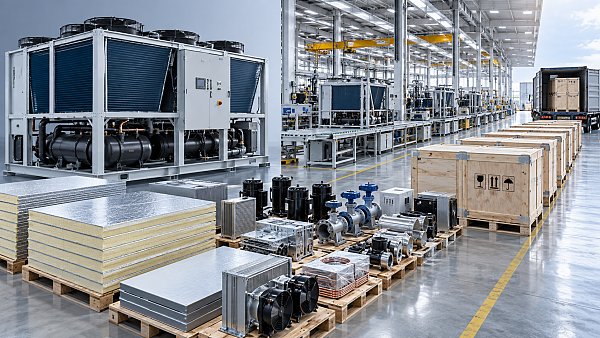
 Thermal FlowHardware Sourcing: How Procurement Teams Evaluate Suppliers, Lead Times, and CostHardware sourcing made smarter: learn how procurement teams assess suppliers, lead times, compliance, and total cost to secure reliable, high-value infrastructure.Dr. Julian VoltSep 23, 2026
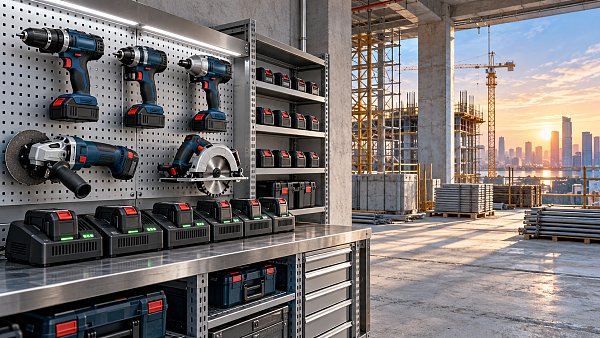
 Rapid Site GearHow to Choose Cordless Power Tools for High-Volume Jobsite Work?Cordless power tools for high-volume jobsites: learn how to select reliable battery platforms, optimize runtime, improve safety, and reduce costly downtime.Marcus ShieldSep 22, 2026
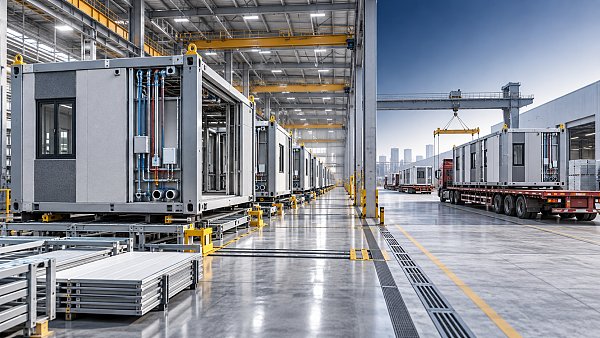
 3D Steel ModulesHow to Vet a Prefabricated Construction Systems Supplier for Capacity and Delivery RiskVet a prefabricated construction systems supplier with proven capacity, quality controls, supply-chain resilience, and logistics planning to reduce delivery risk.Marcus ShieldSep 21, 2026
 High-Speed LiftsHow to Specify Gearless High-Speed Elevator Systems for Tall-Building TrafficGearless High-Speed Elevator Systems: learn how to optimize tall-building traffic, ride quality, energy efficiency, resilience, and lifecycle value with a smarter specification strategy.Dr. Victor GearSep 20, 2026