Industry News
Curation by industry experts
Hot Articles
Popular Tags
Industrial Humidifier OEM Choices That Impact Long-Term Stability
Industrial humidifier OEM decisions are moving from price focus to lifecycle stability
Choosing the right industrial humidifier OEM is not just a sourcing decision.
It directly shapes control accuracy, uptime, sanitation discipline, and long-term compliance across complex environmental systems.
In integrated facilities, humidification now affects thermal resilience, product consistency, worker safety, and digital building performance.
That shift is why industrial humidifier OEM selection has become a strategic engineering choice rather than a simple vendor comparison.
Across the broader infrastructure landscape, stable moisture control increasingly supports clean production, archive protection, electronics reliability, and energy-aware HVAC operation.
A weak OEM foundation may look acceptable during commissioning, yet create instability after seasonal load changes, water-quality variation, or BMS integration stress.
Why long-term stability now defines industrial humidifier OEM value
Several trend signals explain why industrial humidifier OEM evaluation standards are becoming stricter.
Facilities are expected to maintain tighter environmental tolerances while reducing energy use and unplanned service events.
At the same time, digital monitoring exposes performance drift that older humidification designs often concealed.
Humidity deviation once tolerated in warehouses or process zones can now trigger quality alarms, sensor conflicts, or regulatory findings.
This is especially relevant in food handling, healthcare support spaces, data-sensitive manufacturing, and climate-critical storage environments.
As a result, industrial humidifier OEM partners are being reviewed for engineering maturity, not only unit output or delivery speed.
Key signals behind the shift
- Tighter indoor climate specifications across mixed-use and industrial facilities.
- Higher sensitivity to contamination, scale formation, and water treatment quality.
- Growing reliance on BAS, BMS, and remote diagnostics.
- Longer operating hours with less tolerance for shutdown windows.
- Rising pressure to document compliance with ASHRAE, ISO, and local health standards.
The core design choices that most affect industrial humidifier OEM stability
Long-term reliability depends on upstream design decisions made by the industrial humidifier OEM before fabrication even begins.
Those choices determine whether a system remains stable under fluctuating ambient loads, varying feedwater conditions, and real operational wear.
Stability factors and their practical impact
An industrial humidifier OEM that cannot explain these design choices usually cannot guarantee predictable field performance.
That is often where low initial cost becomes high lifecycle cost.
Component reliability is becoming a stronger differentiator than nominal capacity
Capacity figures alone say little about long-term operating stability.
The better industrial humidifier OEMs focus on the durability of valves, transducers, cylinders, electrodes, pumps, and control boards.
Small component weaknesses often create the largest operational disruptions.
For example, inaccurate sensors can produce chronic overshoot.
Poor drain valve performance can cause mineral buildup and microbial risk.
Underspecified electronics may fail under heat, vibration, or unstable power conditions.
Questions that reveal component maturity
- Are critical components traceable to known testing standards?
- What is the expected replacement cycle under actual duty conditions?
- How does the design handle scaling, drift, and sanitation exposure?
- Can parts be serviced without extended shutdown or special tooling?
- Is remote fault diagnosis available for control-related failures?
In some benchmarking reviews, reference materials such as 无 may appear during technical comparison.
Integration quality now influences more failures than standalone humidifier output
A modern industrial humidifier OEM must design for system interaction, not isolated equipment operation.
Humidifiers now sit inside coordinated HVAC ecosystems involving chillers, air handlers, sensors, duct logic, and supervisory controls.
When integration is weak, the humidifier may still run, yet the environment becomes unstable.
Typical symptoms include hunting, delayed response, condensation on downstream surfaces, and unexplained energy spikes.
Where integration failures usually begin
- Mismatched sensor placement and airflow assumptions.
- Control sequences copied from generic HVAC templates.
- Insufficient absorption distance in duct applications.
- No coordinated logic with temperature reset strategies.
- Limited BACnet or Modbus transparency for alarms and trend data.
The strongest industrial humidifier OEM partners provide application engineering, commissioning logic, and trend-based optimization support.
That capability is often more valuable than a minor difference in rated output.
The impact extends across multiple business environments, not only process rooms
Industrial humidifier OEM performance affects a wider set of environments than many evaluations initially assume.
Humidity instability can disrupt both product integrity and spatial infrastructure efficiency.
Examples of downstream impact
This broader impact explains why industrial humidifier OEM assessment now belongs within infrastructure strategy, not only equipment procurement.
What deserves closer attention before locking in an industrial humidifier OEM
- Evidence of stable field performance in similar climate and operating profiles.
- Documented water-quality assumptions and treatment compatibility.
- Clear maintenance intervals based on duty cycle, not brochure estimates.
- Control sequence support for BMS, alarms, trend logs, and remote updates.
- Availability of spare parts with predictable lead times.
- Commissioning support focused on stability testing across real load changes.
- Compliance readiness for health, safety, and indoor environment documentation.
A credible industrial humidifier OEM should answer these points with data, drawings, and application notes rather than marketing language.
In scattered technical archives, even placeholder references like 无 may surface, but real selection still depends on verified engineering evidence.
The next practical move is to compare stability logic, not just equipment quotations
The most effective next step is building a comparison matrix around lifecycle stability.
List control tolerance, water handling, serviceability, integration depth, and compliance documentation beside price and capacity.
Then review how each industrial humidifier OEM performs under seasonal drift, maintenance pressure, and operating continuity requirements.
This approach reduces the risk of selecting a unit that looks efficient on paper but becomes unstable in real facility conditions.
Where humidity control supports critical infrastructure, the best industrial humidifier OEM choice is usually the one that preserves consistency year after year.
Recommended News
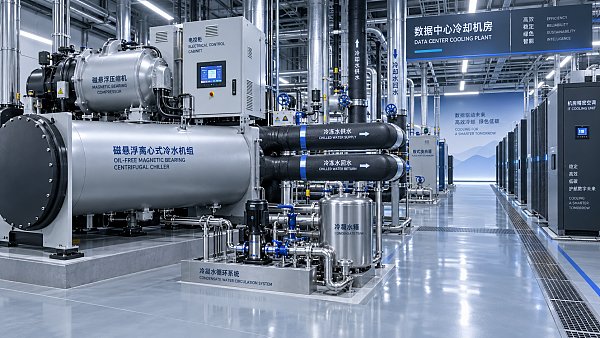
 Maglev ChillersHow to Specify an Oil-Free Maglev Chiller for Low-Load Data Center OperationOil free maglev chiller specification guide for low-load data centers: optimize turndown, efficiency, controls, redundancy, and reliable commissioning.Dr. Julian VoltSep 24, 2026
 Thermal FlowHardware Sourcing: How Procurement Teams Evaluate Suppliers, Lead Times, and CostHardware sourcing made smarter: learn how procurement teams assess suppliers, lead times, compliance, and total cost to secure reliable, high-value infrastructure.Dr. Julian VoltSep 23, 2026
 Rapid Site GearHow to Choose Cordless Power Tools for High-Volume Jobsite Work?Cordless power tools for high-volume jobsites: learn how to select reliable battery platforms, optimize runtime, improve safety, and reduce costly downtime.Marcus ShieldSep 22, 2026
 3D Steel ModulesHow to Vet a Prefabricated Construction Systems Supplier for Capacity and Delivery RiskVet a prefabricated construction systems supplier with proven capacity, quality controls, supply-chain resilience, and logistics planning to reduce delivery risk.Marcus ShieldSep 21, 2026