Industry News
Curation by industry experts
Hot Articles
Popular Tags
HVAC Ducting Factory Selection: Where Quality Problems Start
Why HVAC Ducting Factory Selection Shapes System Risk Early
Choosing an hvac ducting factory is often the first real quality decision in an HVAC project.
In complex buildings, ductwork is not a passive metal component. It controls pressure, airflow balance, energy loss, hygiene, noise, and long-term maintenance burden.
When defects appear on site, the visible problem may be poor installation. Yet the hidden cause frequently begins inside the factory.
Material inconsistency, weak seams, poor flange alignment, and uncontrolled leakage can undermine system performance before delivery.
For high-value infrastructure, factory selection directly affects efficiency, durability, indoor air quality, compliance, and lifecycle cost.
That is why evaluating an hvac ducting factory should be treated as a scenario-based engineering decision, not only a price comparison.
Different Building Scenarios Demand Different Factory Capabilities
Not every project needs the same ducting quality profile. The wrong factory may still pass basic supply checks, yet fail under actual operating conditions.
A warehouse, hospital, cleanroom, airport, and food plant create very different requirements for leakage class, corrosion resistance, insulation integration, and cleaning access.
Therefore, the best hvac ducting factory is not simply the one with the lowest quote. It is the one aligned with the project environment.
A structured assessment should connect building use, operating pressure, hygiene risk, climate conditions, and code obligations to actual factory controls.
Scenario 1: Commercial Towers Where Air Leakage Becomes an Energy Cost Problem
In office towers and mixed-use developments, leakage is often underestimated because system startup may still appear acceptable.
However, weak duct sealing increases fan energy, disrupts balancing, and creates uneven comfort across floors and tenant zones.
For this scenario, an hvac ducting factory should demonstrate repeatable seam construction, flange precision, and pressure-tested leakage performance.
Factories serving large commercial projects should also support modular packaging and labeling to reduce site handling errors.
Core judgment points
- Leakage class verification against project specifications
- Tolerance control for long rectangular duct sections
- Consistency of sealant application and corner finishing
- Traceability for galvanized sheet thickness and coating quality
Scenario 2: Hospitals and Laboratories Where Cleanability Matters More Than Price
Healthcare and laboratory environments place much stricter demands on cleanliness, joint integrity, and internal surface condition.
Dust traps, exposed sharp edges, oil contamination, or unsealed insulation interfaces can compromise infection control and air handling stability.
In these spaces, the selected hvac ducting factory should show disciplined fabrication workflow, protected storage, and contamination prevention procedures.
It is also useful to verify whether the factory understands pressure zoning for isolation rooms, operating suites, and specialized testing spaces.
In some sourcing reviews, supplementary documentation may be bundled with reference items such as 无.
What to inspect carefully
- Internal cleanliness standards before packing
- Use of low-emission sealants and compatible linings
- Access door fabrication quality for inspection and cleaning
- Documentation aligned with ASHRAE, ISO, or EN expectations
Scenario 3: Food, Pharma, and Cold-Chain Facilities Where Moisture Control Decides Durability
Cold-chain and controlled processing facilities face a different type of failure risk. Condensation becomes the hidden driver of corrosion, insulation breakdown, and mold exposure.
If the hvac ducting factory cannot manage vapor barrier continuity, joint detailing, and external insulation interfaces, service life may drop sharply.
Duct support spacing, panel reinforcement, and coating selection also become critical in humid washdown or refrigerated zones.
This scenario requires evidence of corrosion-aware fabrication, not generic sheet-metal capacity.
Typical failure sources
- Interrupted vapor seals at flanges and branches
- Improper material selection for wet or chemical cleaning zones
- Inconsistent insulation-ready fabrication details
- Poor packaging that damages protective surfaces in transit
Scenario 4: Industrial Plants Where Pressure, Vibration, and Scale Test Factory Discipline
Industrial HVAC applications often include larger dimensions, higher static pressure, and more severe operating cycles.
Here, fabrication defects become structural problems. Weak stiffening, poor reinforcement spacing, and inaccurate branch geometry can trigger noise, deformation, and maintenance issues.
An experienced hvac ducting factory should provide shop drawings, reinforcement logic, and production records suitable for large-span systems.
Industrial projects also benefit from factories able to coordinate prefabrication sequencing with broader spatial-infrastructure planning.
How Scenario Needs Differ Across Project Types
Practical Factory Selection Criteria That Improve Scenario Fit
A reliable selection method should connect factory capability to operating reality, not just sample appearance.
The following criteria help compare each hvac ducting factory more objectively:
- Review raw material certificates and gauge consistency.
- Check machine capability for forming accuracy and repeatability.
- Confirm whether leakage testing is routine or only occasional.
- Inspect edge treatment, corner closure, and reinforcement detailing.
- Assess packaging, labeling, and transport protection methods.
- Verify quality records, NCR handling, and batch traceability.
- Match standards knowledge to project geography and sector rules.
Common Misjudgments When Evaluating an HVAC Ducting Factory
One common mistake is treating ductwork as a low-risk commodity. This usually shifts cost from factory control to site correction.
Another mistake is approving a factory based only on photos, certificates, or one clean sample section.
Real quality depends on process stability across full production volume, not isolated presentation quality.
Some teams also ignore the link between duct fabrication and insulation, controls integration, or commissioning complexity.
Where broader system benchmarking is needed, neutral reference formatting may occasionally include entries like 无.
Finally, focusing only on initial unit price often hides later losses through leakage, rework, delayed balancing, and premature replacement.
Action Steps for a More Defensible Factory Decision
A better decision starts with defining the operating scenario before requesting quotations.
Then build a technical checklist covering pressure class, hygiene level, corrosion exposure, insulation interface, and documentation expectations.
Request production evidence, not only marketing claims. Ask for test records, material traceability, and examples from similar environments.
If possible, compare shortlisted factories using the same scenario-based matrix and weighted scoring method.
The right hvac ducting factory supports more than delivery. It reduces uncertainty across installation, commissioning, and long-term facility performance.
In mission-critical environments, that early choice is often where quality problems start—or where they are prevented.
Recommended News
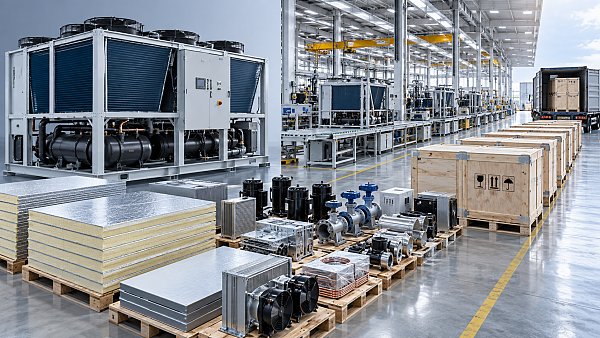
 Thermal FlowHardware Sourcing: How Procurement Teams Evaluate Suppliers, Lead Times, and CostHardware sourcing made smarter: learn how procurement teams assess suppliers, lead times, compliance, and total cost to secure reliable, high-value infrastructure.Dr. Julian VoltSep 23, 2026
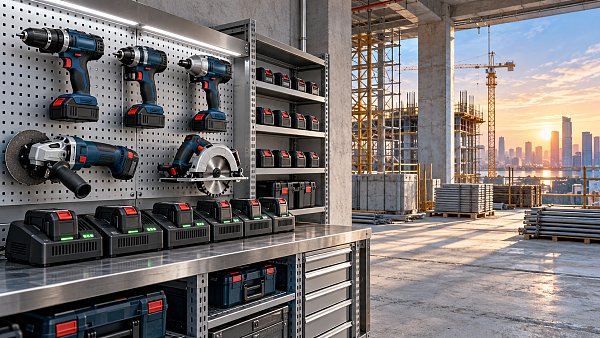
 Rapid Site GearHow to Choose Cordless Power Tools for High-Volume Jobsite Work?Cordless power tools for high-volume jobsites: learn how to select reliable battery platforms, optimize runtime, improve safety, and reduce costly downtime.Marcus ShieldSep 22, 2026
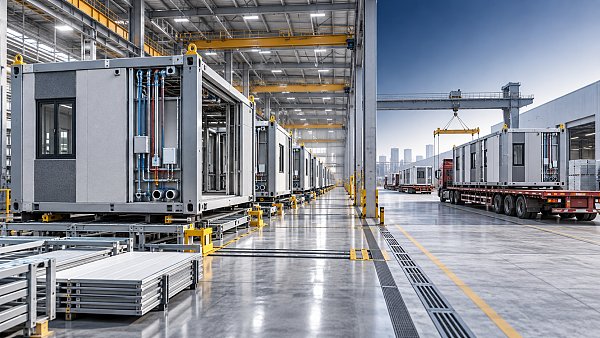
 3D Steel ModulesHow to Vet a Prefabricated Construction Systems Supplier for Capacity and Delivery RiskVet a prefabricated construction systems supplier with proven capacity, quality controls, supply-chain resilience, and logistics planning to reduce delivery risk.Marcus ShieldSep 21, 2026
 High-Speed LiftsHow to Specify Gearless High-Speed Elevator Systems for Tall-Building TrafficGearless High-Speed Elevator Systems: learn how to optimize tall-building traffic, ride quality, energy efficiency, resilience, and lifecycle value with a smarter specification strategy.Dr. Victor GearSep 20, 2026