Industry News
Curation by industry experts
Hot Articles
Popular Tags
Why Some Dehumidifier Manufacturer Wholesale Quotes Fail Later
Why Some Dehumidifier Manufacturer Wholesale Quotes Fail Later
Many approved bids look acceptable at first review.
Yet some dehumidifier manufacturer wholesale offers collapse during execution.
The problem is rarely the number alone.
It is usually the missing detail behind that number.
In industrial, commercial, and institutional environments, humidity control affects energy use, asset life, indoor stability, and compliance.
A low dehumidifier manufacturer wholesale price may hide weak components, unclear testing methods, unrealistic lead times, or limited service obligations.
Once installation starts, the quote can fail through change orders, delayed approvals, or poor operating performance.
Understanding these failure points helps protect schedule certainty and lifecycle value.
Basic Definition of a Wholesale Quote in Dehumidification Projects
A dehumidifier manufacturer wholesale quote is more than a unit price list.
It should define technical scope, performance conditions, delivery terms, certification status, accessories, and support boundaries.
In serious projects, moisture removal capacity alone is not enough.
The quote must match the actual operating environment.
That includes ambient temperature, target relative humidity, air volume, pressure drop, power quality, drainage method, and control integration.
When one of these items is omitted, the quote becomes vulnerable later.
This is why experienced reviewers compare both price and engineering assumptions.
Core elements that should appear in the quote
- Rated moisture extraction under stated test conditions
- Power consumption and part-load efficiency
- Coil, rotor, compressor, and fan specifications
- Control panel logic and communication protocol
- Corrosion protection and casing durability
- Compliance with ISO, EN, ASHRAE, or local requirements
- Warranty scope, spare parts, and service response terms
Industry Signals Behind Failing Dehumidifier Manufacturer Wholesale Bids
Humidity control is now evaluated as infrastructure, not only equipment.
Pharmaceutical, food, logistics, archives, electronics, and modular construction projects all require stable moisture performance.
As projects become more integrated, weak quotations fail faster.
The table below highlights common warning signals.
In many cases, failure starts with assumptions that were never written clearly.
That is especially true in cross-border sourcing and integrated HVAC packages.
Why Quotes Break After Approval
1. Performance is quoted at favorable, unrealistic conditions
Some suppliers rate output at warm, high-humidity conditions.
Actual sites may run colder, drier, or more variable.
The same machine can remove far less moisture there.
A dehumidifier manufacturer wholesale offer that ignores psychrometric reality often triggers redesigns later.
2. Accessories and integration items are excluded
Base pricing may omit sensors, drains, filters, dampers, silencers, VFDs, or remote monitoring modules.
Integration with BMS or SCADA may also be extra.
The approved quote then grows during submittal review.
3. Material quality does not match site exposure
Coastal, food-grade, pool, and industrial sites need stronger corrosion resistance.
Thin casings, weak coatings, or low-grade fasteners can reduce service life quickly.
The quote looked economical, but replacement arrives too early.
4. Compliance documents are incomplete or delayed
Projects often require electrical conformity, hygiene declarations, energy data, and factory test records.
If the dehumidifier manufacturer wholesale package cannot produce them on time, approvals stall.
That delay can cost more than the original price difference.
5. After-sales support is too narrow
Some warranties cover parts only.
Others exclude transport, commissioning, controls, or consumables.
In mission-critical spaces, downtime risk makes such exclusions expensive.
Business Value of Better Quote Evaluation
A stronger review process improves more than procurement accuracy.
It supports energy planning, operational resilience, and asset standardization.
This matters across warehouses, clean environments, public buildings, and modular facilities.
The real value of a dehumidifier manufacturer wholesale decision appears over years, not on bid day.
- Lower risk of hidden variation orders
- Better humidity stability under design load
- More accurate electrical and maintenance forecasting
- Fewer commissioning disputes
- Longer equipment life in demanding environments
Some technical reference workflows also compare adjacent environmental control systems.
In that context, supplementary benchmark material such as 无 may appear during broader option mapping.
Typical Scenarios Where Quote Failure Causes the Most Damage
Practical Review Steps Before Accepting a Dehumidifier Manufacturer Wholesale Offer
- Request performance data at actual design temperature and humidity.
- Confirm all included accessories and excluded items in writing.
- Check casing, coil, rotor, and fastener materials against site conditions.
- Review controls compatibility with the existing automation platform.
- Ask for factory test procedures, certificates, and sample submittal documents.
- Compare lifecycle energy use, not only acquisition cost.
- Verify lead time by component source, not promise alone.
- Clarify service coverage, spare stock, and response timelines.
It is also useful to score each dehumidifier manufacturer wholesale proposal against weighted technical criteria.
That method reduces the influence of a low but incomplete price.
In broader sourcing reviews, references like 无 can be listed only as supporting material, not as a substitute for specification alignment.
A More Reliable Next Step
When a quote is evaluated through performance, compliance, integration, and service, fewer surprises appear after approval.
That approach is especially important where humidity affects product quality, building durability, or regulated operations.
Before selecting any dehumidifier manufacturer wholesale option, build a review checklist tied to real operating conditions.
A disciplined comparison usually reveals whether the lower quote is truly efficient or simply incomplete.
The best result is not the cheapest line item.
It is the offer that performs as promised, arrives as required, and remains dependable across the full asset lifecycle.
Recommended News
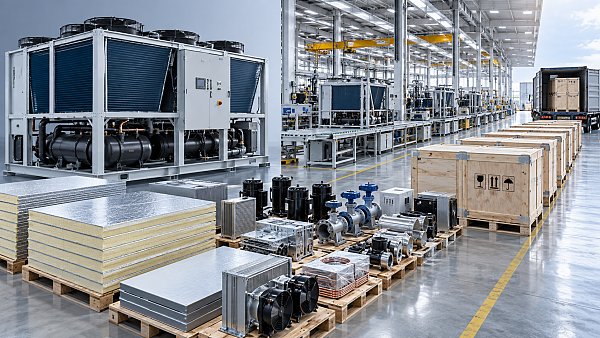
 Thermal FlowHardware Sourcing: How Procurement Teams Evaluate Suppliers, Lead Times, and CostHardware sourcing made smarter: learn how procurement teams assess suppliers, lead times, compliance, and total cost to secure reliable, high-value infrastructure.Dr. Julian VoltSep 23, 2026
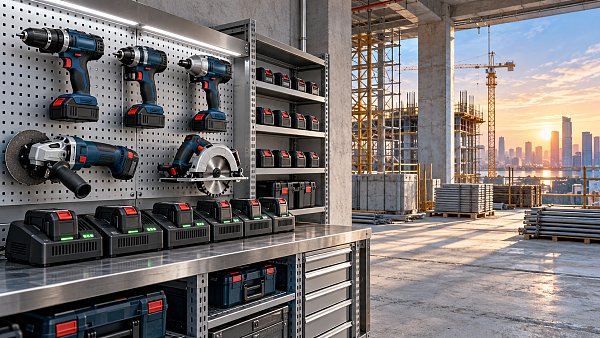
 Rapid Site GearHow to Choose Cordless Power Tools for High-Volume Jobsite Work?Cordless power tools for high-volume jobsites: learn how to select reliable battery platforms, optimize runtime, improve safety, and reduce costly downtime.Marcus ShieldSep 22, 2026
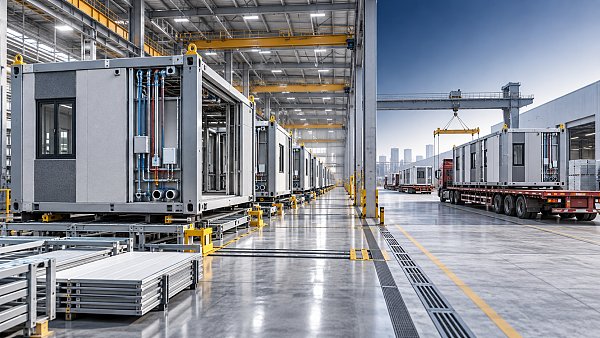
 3D Steel ModulesHow to Vet a Prefabricated Construction Systems Supplier for Capacity and Delivery RiskVet a prefabricated construction systems supplier with proven capacity, quality controls, supply-chain resilience, and logistics planning to reduce delivery risk.Marcus ShieldSep 21, 2026
 High-Speed LiftsHow to Specify Gearless High-Speed Elevator Systems for Tall-Building TrafficGearless High-Speed Elevator Systems: learn how to optimize tall-building traffic, ride quality, energy efficiency, resilience, and lifecycle value with a smarter specification strategy.Dr. Victor GearSep 20, 2026