The most common prefab construction delays involve late design approvals, permitting, material shortages, transport restrictions, incomplete foundations, and inspection failures that interrupt delivery or installation.
Factory production can shorten construction schedules, but the benefit depends on synchronizing manufacturing with site preparation, utility connections, crane availability, inspections, and final commissioning requirements.
For infrastructure leaders and procurement teams, the central question is which disruption threatens the completion date, what it will cost, and who controls the recovery.
This article focuses on volumetric modular and panelized building projects. Their risks differ, but both depend on coordinated approvals, production, delivery, and work at the site.
Why Late Design Decisions Can Disrupt the Entire Schedule
Design changes become especially disruptive once factory procurement or fabrication begins. A seemingly minor revision can affect structural connections, manufacturing drawings, purchased components, and inspection records.
In conventional construction, teams may resolve some details progressively onsite. Prefab requires more decisions earlier because repeated assemblies depend on stable dimensions and clearly defined interfaces.
Typical unresolved details include foundation connections, service penetrations, fire compartmentation, façade junctions, and mechanical equipment access. Each can prevent drawings from being released for production.
For example, changing an air handling unit after module fabrication may require larger openings, revised supports, altered ductwork, and additional checks before the installation proceeds.
Owners should establish a design freeze covering the decisions necessary for fabrication. Later changes need documented approval, cost assessment, and analysis of their schedule consequences.
A freeze should not conceal unresolved work. Record outstanding decisions, assign accountable owners, and distinguish genuinely deferred details from information the manufacturer needs before starting production.
Review coordination models and interface drawings before release. Physical access, installation tolerances, maintenance clearances, and connection sequences deserve particular attention because they are difficult to correct later.
Ask prospective manufacturers when each decision becomes irreversible. This provides a practical approval calendar and exposes proposals that assume faster owner responses than the organization can deliver.
Can Permits and Inspections Hold Up Factory Production?
Permitting delays arise when authorities need additional evidence about structural performance, fire resistance, energy compliance, accessibility, or how factory inspections connect with local building approval.
Factory certification does not necessarily replace project permits or site inspections. The applicable approval route depends on the jurisdiction, building use, and specific construction system.
Cross-border procurement can add complications when submitted calculations, product certifications, or inspection procedures do not satisfy the receiving authority’s requirements for the proposed building system.
Applicable ASHRAE, ISO, or EN references may support technical assessments, but citing a standard alone does not establish acceptance under the project’s governing building regulations.
Before committing to production, confirm who approves the building, who inspects concealed factory work, and what documents must accompany modules or panels to the site.
Arrange early discussions with the relevant authorities and inspection bodies. Submit representative details before full production where uncertainty could otherwise trigger expensive redesign or delayed release.
The useful management milestone is not simply “permit submitted.” Track required approvals, outstanding comments, inspection bookings, and the evidence needed to close each regulatory hold point.
Which Material and Factory Problems Cause Missed Delivery Dates?
Long procurement lead times often affect switchgear, controls, specialist glazing, fire-rated assemblies, and HVAC equipment. One missing component can prevent completion of otherwise finished modules.
Availability varies by market and specification. Procurement teams should verify current supplier commitments instead of applying generic lead-time assumptions from earlier projects or preliminary sales proposals.
Factory capacity is another constraint. A manufacturer may have sufficient annual output yet lack an available production slot that matches the project’s required delivery sequence.
Late design release can push an order behind other committed work. Recovery may require overtime, resequencing, or a different delivery date, depending on actual available capacity.
Request evidence of reserved capacity, procurement status, and production milestones. Distinguish materials ordered from materials received, inspected, and available for the relevant assembly line operations.
Alternative components can reduce exposure, but substitutions need technical review. Different dimensions, electrical characteristics, fire performance, or controls compatibility may introduce more delay than they remove.
For critical equipment, agree on approved alternatives early and specify the latest substitution decision date. Track these items individually rather than burying them within overall procurement progress.
Why Site Readiness Often Determines Whether Prefab Saves Time
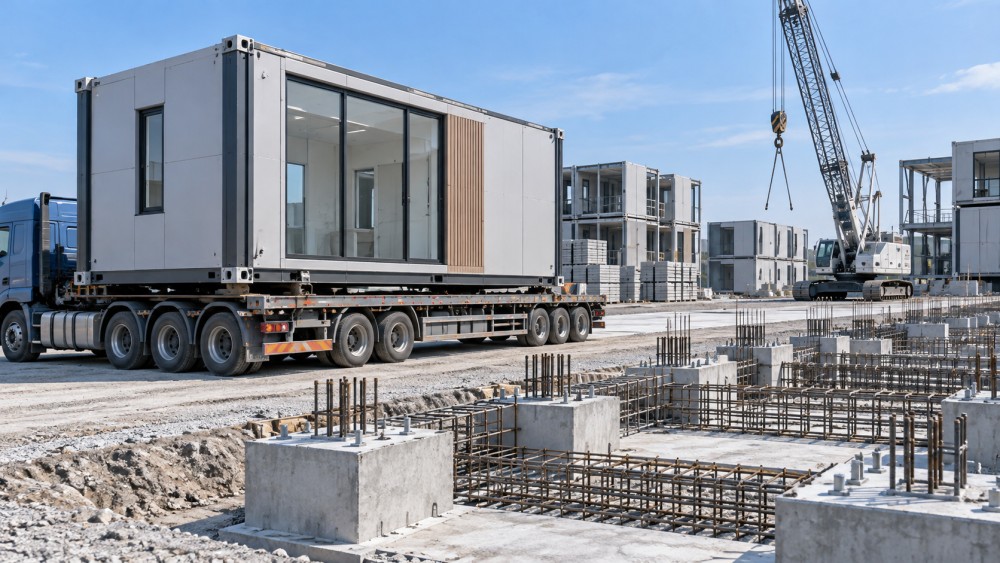
The factory and site usually operate in parallel. Schedule benefits disappear when finished units arrive before foundations, access roads, lifting areas, or utility infrastructure are ready.
Common site problems include unforeseen ground conditions, foundation redesign, delayed drainage work, inaccurate embedded connections, and insufficient bearing capacity for cranes or temporary equipment storage.
Foundation tolerances deserve explicit verification. Small dimensional errors can stop installation when manufactured units cannot align with anchors, bearing points, service connections, or adjacent building elements.
Complete an agreed survey before dispatch. Compare actual foundation geometry against approved interface drawings and resolve deviations while units remain in a controlled factory environment.
A site readiness checklist should cover physical access, foundation acceptance, crane setup, unloading space, temporary power, safety arrangements, and availability of crews responsible for completing connections.
Utility connections require separate attention. A structurally complete building may remain unusable while waiting for electrical energization, water connections, drainage approvals, or permanent communications infrastructure.
Do not treat utility readiness as a minor finishing task. Confirm application dates, external provider responsibilities, required equipment, and dependencies affecting testing or legal occupancy.
Release shipments against verified readiness criteria. If dispatch must proceed despite incomplete work, identify storage arrangements, weather protection, additional handling costs, and responsibility for potential damage.
How Transport, Crane Access, and Weather Delay Installation
Volumetric modules may require oversized-load permits, escorts, approved travel windows, and detailed route checks. Panelized systems have different constraints, often involving packaging and unloading sequence.
Bridge capacities, tight turns, overhead obstructions, roadworks, and urban delivery restrictions can invalidate an assumed route. These constraints should be checked before module dimensions are finalized.
International deliveries may also encounter customs delays, port congestion, or missing documentation. Build the logistics plan around the actual shipping route and agreed delivery responsibilities.
Installation depends on coordinated arrival times and lifting capacity. A missed delivery window can waste crane bookings, leave crews idle, and disrupt subsequent trades awaiting access.
Wind can stop lifting even when factory work continues normally. Rain, snow, or extreme temperatures may also affect sealing, temporary protection, and safe access around the site.
Use the crane supplier’s operating limits and relevant seasonal conditions to plan allowances. Avoid assuming that a generic weather buffer will suit every location or lift.
Prepare a practical fallback plan covering temporary storage, revised delivery slots, crane rebooking, and weather protection. Confirm who can authorize changes quickly when conditions interrupt installation.
Why Finished Modules Can Still Face Handover Delays
Factory completion does not equal building completion. Structural joining, service connections, fire stopping, envelope sealing, controls integration, and commissioning remain essential after modules reach the site.
Quality defects can create repeated rework across identical units. An incorrect detail discovered after installation may be harder to access and repair than during factory assembly.
Use early inspections or a representative first unit to check critical details. The appropriate approach depends on repetition, complexity, and the consequences of a defect.
Inspect concealed work before closure and preserve traceable records. Missing evidence can require additional verification, particularly where authorities cannot assess installed conditions without opening completed assemblies.
Commissioning deserves its own schedule logic. HVAC balancing, controls testing, fire alarm integration, and system demonstrations may depend on permanent utilities and completed connections between modules.
For buildings with temperature-sensitive operations, specify acceptance conditions early. Relevant checks may include temperature stability, alarm response, redundancy, and performance under agreed operating conditions and loads.
Track occupancy approval separately from physical completion. A building can look finished while missing inspection sign-offs, operating documentation, training, or evidence required by the approving authority.
Which Delays Matter Most to Cost and Completion?
A late activity affects handover only when it lies on the critical path or consumes available schedule float. Leaders need dependency analysis, not just overdue-task counts.
A delayed decorative item may have little effect on occupancy. Delayed switchgear, foundation acceptance, or fire safety approval can prevent testing, installation, or use of the building.
Assess each significant issue through four questions: what activity is blocked, how much float remains, what recovery costs, and whether the proposed workaround is technically acceptable.
Delay costs can include factory storage, additional transport, crane standby, extended site overhead, financing charges, and postponed revenue. Several categories may accumulate during the same disruption.
Compare recovery expenditure with the consequences of late completion. Premium freight makes sense only if earlier delivery actually advances installation, testing, or the required occupancy milestone.
Contracts should define delivery prerequisites, storage responsibilities, change procedures, inspection obligations, and acceptance criteria. Clear terms help teams respond faster when production and site progress diverge.
When reviewing bids, compare complete delivery assumptions. A shorter advertised factory programme may exclude approvals, transport, site connections, and commissioning that determine the owner’s usable completion date.
What Should Owners Require Before Approving the Programme?
Require one integrated schedule connecting design, approvals, purchasing, production, site works, logistics, installation, and commissioning. Separate factory and site programmes can hide dependencies until recovery becomes difficult.
Each major interface needs an accountable owner and an acceptance condition. “Foundation complete” should mean surveyed and accepted for installation, with any outstanding corrective work identified.
Build contingency around specific uncertainties, including regulatory review, critical equipment availability, weather-sensitive lifts, and utility energization. Avoid applying an unexplained percentage to the entire programme duration.
Set reporting around evidence: approved drawings, confirmed supplier dates, inspected materials, completed assemblies, accepted foundations, and booked inspections. Progress percentages alone provide limited warning of blocked interfaces.
Monitor decisions as closely as construction. An unanswered technical query or overdue owner approval can threaten production weeks before a visible delay appears on the factory floor.
Use regular coordination meetings to resolve exceptions, assign actions, and assess completion impacts. The meeting should produce decisions and updated commitments rather than merely restating status.
Evaluate supplier capability against the project’s actual complexity. Relevant experience includes comparable regulations, delivery routes, building services, interface tolerances, and commissioning requirements, alongside factory output and financial capacity.
Before authorizing major expenditure, test whether the plan still works under a plausible disruption. This exposes fragile dependencies and helps justify targeted contingency or alternative arrangements.
When Is the Prefab Schedule Credible?
A credible prefab schedule demonstrates that design decisions, approvals, factory capacity, site readiness, transport, and commissioning can align. Manufacturing speed alone cannot establish a dependable completion date.
The strongest proposals explain dependencies, provide evidence for critical commitments, and assign responsibility at interfaces. They also distinguish delivery, installation, physical completion, and readiness for occupancy.
For infrastructure and procurement leaders, prioritize risks that can block handover. Spend contingency where it protects those milestones, and measure recovery options by their effect on completion.
Prefab can deliver substantial time savings when early decisions and parallel work are coordinated. Its advantage is most reliable when every handoff has a verified readiness condition.