Industry News
Curation by industry experts
Hot Articles
Popular Tags
How to judge a reliable VRF system manufacturer
Choosing a reliable vrf system manufacturer requires more than comparing catalogs or price points. For technical evaluation, the real benchmark is broader. It includes seasonal efficiency, controls architecture, certification discipline, parts continuity, and engineering support after commissioning. A strong supplier reduces lifecycle risk, protects indoor comfort, and supports stable building performance in demanding commercial environments.
Why a structured checklist matters when selecting a vrf system manufacturer
VRF systems are long-life infrastructure assets, not simple packaged products. A weak choice can create recurring faults, control conflicts, refrigerant issues, and rising maintenance costs.
A checklist-based review keeps decision-making technical. It helps compare each vrf system manufacturer on measurable evidence instead of marketing claims or short-term discounts.
This approach is especially useful across complex portfolios. Mixed-use towers, hospitals, modular facilities, logistics sites, and institutional buildings all need predictable HVAC behavior over many years.
Core checklist to judge a reliable vrf system manufacturer
- Verify independent certifications, including ISO manufacturing systems, safety approvals, AHRI-style performance references, and documented compliance with local HVAC and refrigerant regulations.
- Check real efficiency data, not headline values only. Review IEER, SEER, part-load behavior, heating performance, and derating curves under extreme ambient conditions.
- Examine controls capability. Confirm the system supports BMS integration, open protocols, fault diagnostics, zoning logic, and centralized monitoring without unstable third-party gateways.
- Review compressor and inverter design history. A dependable vrf system manufacturer should show mature platform generations, field hours, and traceable component reliability records.
- Audit refrigerant strategy carefully. Confirm leak detection support, pipe length limitations, charge calculation tools, and compliance with evolving refrigerant safety requirements.
- Assess product breadth. Strong manufacturers offer compatible indoor units, heat recovery options, low-ambient kits, ventilation interfaces, and controls for varied building layouts.
- Request installation standards and commissioning procedures. Reliable performance depends on piping cleanliness, evacuation quality, addressing logic, and startup validation methods.
- Investigate local technical support depth. Ask about trained service engineers, spare parts inventory, emergency response time, and escalation paths for software or hardware failures.
- Compare warranty structure in detail. Look beyond years covered and study exclusions, labor responsibility, compressor terms, and conditions linked to commissioning documentation.
- Ask for reference projects that match your application. Performance in offices may not translate directly to laboratories, hotels, healthcare facilities, or modular construction sites.
- Test lifecycle transparency. A serious vrf system manufacturer can provide maintenance intervals, expected replacement parts, and software support continuity for the control platform.
- Review manufacturing resilience. Multi-plant capability, quality traceability, and stable supplier networks matter when future expansion or replacement units are required.
Key documents worth requesting
- Factory quality certificates and audit summaries
- Detailed submittals with capacity tables and derating charts
- Controls integration guides and protocol lists
- Commissioning checklists and startup reports
- Spare parts policy and availability statement
- Reference project list with climate and building type
How evaluation criteria change by application
Commercial office and mixed-use buildings
In offices, zoning flexibility and controls integration usually outweigh brochure-level capacity claims. The right vrf system manufacturer should support tenant changes, metering visibility, and stable communication with the building management system.
Acoustic performance also matters. Outdoor unit sound power, indoor unit noise levels, and nighttime control logic should be reviewed early, especially in dense urban projects.
Healthcare, laboratories, and institutional environments
These sites demand closer scrutiny. A vrf system manufacturer must demonstrate control stability, alarm reporting, backup planning, and compatibility with ventilation and pressurization strategies.
VRF may serve selected zones rather than every critical area. Application engineering support becomes essential when temperature stability and operational continuity are tightly controlled.
Hotels, residential towers, and hospitality assets
Guest comfort depends on low noise, fast response, and intuitive room controls. Here, a reliable vrf system manufacturer should offer durable indoor units, discreet maintenance access, and robust condensate management.
Heat recovery can also improve energy performance where simultaneous heating and cooling occur. Ask for real case data, not only theoretical savings models.
Modular and prefabricated construction
Prefabricated projects need compact equipment, predictable connection details, and fast commissioning. The best vrf system manufacturer will provide standardized interfaces, clear piping tolerances, and support for phased installation.
Factory-built modules also benefit from digital documentation. Unit addressing, control mapping, and startup records should remain traceable after site assembly.
Commonly overlooked risks when comparing a vrf system manufacturer
Ignoring climate derating: Nominal capacity can mislead. High ambient cooling and low ambient heating curves often reveal the real operating envelope.
Overlooking controls dependence: A good mechanical platform can still fail operationally if software tools are weak, unstable, or poorly supported locally.
Assuming all support networks are equal: Some brands sell widely but service thinly. Response capability should be confirmed before award, not after installation.
Focusing only on equipment cost: Lower first cost may produce higher commissioning effort, energy use, downtime, or spare parts delays over the asset lifecycle.
Missing refrigerant compliance implications: Pipe routing, occupied-space calculations, and future code shifts can affect whether a proposed system remains viable long term.
Practical execution steps for a better manufacturer review
- Build a weighted scorecard covering efficiency, controls, certification, support, refrigerant strategy, references, and lifecycle serviceability.
- Shortlist no more than three candidates, then request identical technical submissions from each vrf system manufacturer.
- Review submittals against the actual climate, load profile, and occupancy pattern rather than a generic design day.
- Interview the local service structure, including escalation routes, parts warehousing, and commissioning engineer availability.
- Visit at least one operating reference site with a comparable use case and ask about alarms, comfort complaints, and service response.
- Require documented commissioning, controls handover, and operator training as award conditions, not optional extras.
Conclusion and next action
The most reliable vrf system manufacturer is rarely the one with the loudest product story. It is the one that proves performance through tested data, disciplined engineering, transparent support, and stable long-term service.
Use a checklist, standardize document requests, and compare technical evidence line by line. That process will identify which vrf system manufacturer can deliver lower operational risk and stronger HVAC resilience over time.
As a practical next step, prepare a one-page evaluation matrix and request matched submissions from shortlisted suppliers. A disciplined review now prevents expensive corrections later.
Recommended News
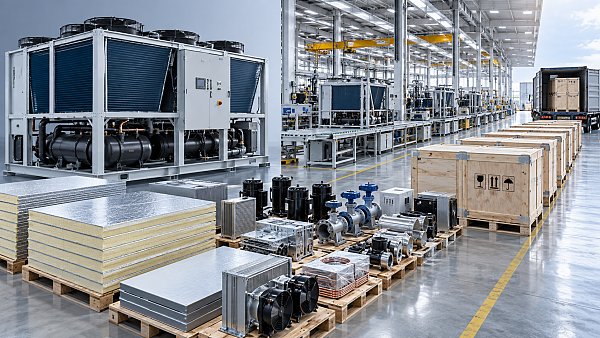
 Thermal FlowHardware Sourcing: How Procurement Teams Evaluate Suppliers, Lead Times, and CostHardware sourcing made smarter: learn how procurement teams assess suppliers, lead times, compliance, and total cost to secure reliable, high-value infrastructure.Dr. Julian VoltSep 23, 2026
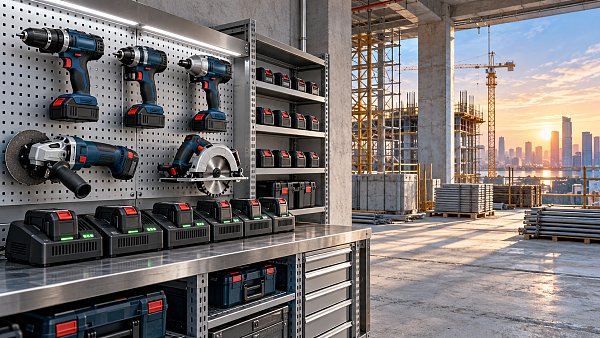
 Rapid Site GearHow to Choose Cordless Power Tools for High-Volume Jobsite Work?Cordless power tools for high-volume jobsites: learn how to select reliable battery platforms, optimize runtime, improve safety, and reduce costly downtime.Marcus ShieldSep 22, 2026
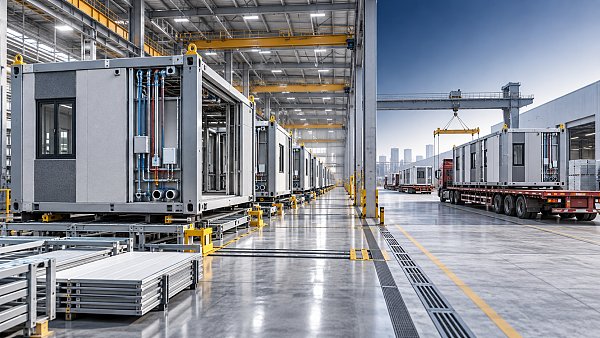
 3D Steel ModulesHow to Vet a Prefabricated Construction Systems Supplier for Capacity and Delivery RiskVet a prefabricated construction systems supplier with proven capacity, quality controls, supply-chain resilience, and logistics planning to reduce delivery risk.Marcus ShieldSep 21, 2026
 High-Speed LiftsHow to Specify Gearless High-Speed Elevator Systems for Tall-Building TrafficGearless High-Speed Elevator Systems: learn how to optimize tall-building traffic, ride quality, energy efficiency, resilience, and lifecycle value with a smarter specification strategy.Dr. Victor GearSep 20, 2026