Industry News
Curation by industry experts
Hot Articles
Popular Tags
What matters most in wholesale industrial chillers today
In today’s market, wholesale industrial chillers are judged by far more than cooling capacity alone. Buyers and researchers now compare energy efficiency, lifecycle cost, refrigerant compliance, digital monitoring, and supply-chain reliability before making decisions. Understanding what truly matters helps infrastructure planning and technical evaluation align with resilience, performance, and long-term operational value.
What defines value in wholesale industrial chillers now?
The meaning of value has changed. Wholesale industrial chillers are no longer compared only by tonnage, compressor type, or upfront quotation.
Today, value combines thermodynamic efficiency, service continuity, smart control, refrigerant roadmap, and operating stability across changing loads.
This shift matters across the comprehensive industry landscape. Cooling supports factories, laboratories, logistics hubs, modular buildings, hospitals, and food processing sites.
A system that looks economical at purchase may become expensive through power draw, downtime, water treatment, or difficult spare parts access.
That is why wholesale industrial chillers are now assessed as infrastructure assets, not isolated mechanical products.
Core value usually rests on five factors:
- Seasonal and part-load efficiency, not only full-load performance
- Lifecycle cost across energy, maintenance, and replacement intervals
- Compliance with refrigerant and environmental regulations
- Control visibility through sensors, alarms, and remote diagnostics
- Supply assurance for components, service, and documentation
When these factors are balanced well, wholesale industrial chillers support predictable cooling quality and lower operational risk.
Why does energy efficiency matter more than rated cooling capacity?
Rated capacity remains important, but it no longer tells the whole story. Many systems rarely operate at perfect design conditions.
Daily demand shifts with weather, process load, production cycles, occupancy, and storage turnover. That makes part-load behavior essential.
For this reason, wholesale industrial chillers should be compared using integrated and seasonal performance metrics where available.
A chiller with better variable-load efficiency can reduce annual electricity consumption significantly, even if nameplate capacity is similar.
Efficiency also affects upstream infrastructure. Lower power demand can reduce transformer stress, cable sizing pressure, and backup generation requirements.
Water-cooled and air-cooled options should also be judged carefully. Water-cooled systems may offer better efficiency, but they introduce cooling tower considerations.
Air-cooled wholesale industrial chillers can simplify installation and water management, yet may face efficiency penalties in hot climates.
Useful checks include:
- Review load profiles instead of relying only on peak conditions.
- Compare full-load and part-load data side by side.
- Examine pump, fan, and auxiliary power, not compressor power alone.
- Estimate annual energy cost under local tariffs and climate.
In many projects, energy efficiency becomes the largest cost lever over the system’s useful life.
How should refrigerant compliance and sustainability be evaluated?
Refrigerant selection now influences legal risk, future retrofit cost, and corporate sustainability reporting.
Wholesale industrial chillers using older refrigerants may still function well, but they can face restrictions, higher service cost, or shrinking availability.
A strong evaluation considers global warming potential, regional restrictions, safety classification, technician familiarity, and long-term serviceability.
This is especially relevant in pharmaceutical cooling, food-chain infrastructure, district thermal plants, and regulated institutional facilities.
The best wholesale industrial chillers are not simply “green” on paper. They must match site safety protocols and operational competence.
Questions worth asking include whether the refrigerant platform aligns with future standards, spare availability, and leak detection requirements.
Sustainability also extends beyond refrigerant. Materials durability, water consumption, noise control, and optimized heat rejection all matter.
Common compliance mistakes
- Selecting by initial refrigerant familiarity only
- Ignoring local code updates and phase-down timelines
- Underestimating leak monitoring and recovery procedures
- Assuming every low-GWP option fits every facility
The right compliance strategy keeps wholesale industrial chillers usable, maintainable, and insurable over their expected lifespan.
What role do controls, sensors, and remote monitoring play?
Digital capability has moved from optional convenience to practical necessity. Cooling systems now support critical processes that cannot tolerate blind operation.
Modern wholesale industrial chillers should provide clear status visibility, fault history, trend logging, and secure remote access.
These features help identify rising condenser pressure, unstable leaving water temperature, abnormal vibration, or recurring low-flow conditions early.
That early warning can reduce downtime and prevent secondary losses in production, storage integrity, or tenant comfort.
Integration also matters. Wholesale industrial chillers increasingly connect with BMS platforms, energy dashboards, and maintenance planning systems.
This broader data context helps optimize staging, loading, pump control, and service scheduling.
However, more technology is not always better. Interface quality, alarm logic, cybersecurity, and support responsiveness matter more than feature count.
Useful monitoring priorities
How can lifecycle cost be judged more accurately?
Lifecycle cost is where many comparisons fail. Low purchase price can hide expensive operation, frequent service visits, and shorter component life.
A better method combines capital cost with energy use, routine maintenance, water treatment, downtime exposure, and expected overhaul timing.
For wholesale industrial chillers, lifecycle thinking is especially important when systems operate continuously or support temperature-sensitive environments.
Heat exchangers, compressors, controls, pumps, and fans do not age equally. Service access and component standardization influence long-term cost.
Noise, footprint, and installation complexity also have economic impact. Difficult placement can increase crane work, piping complexity, and shutdown coordination.
A realistic cost review often includes:
- Ten-year energy projection under likely operating conditions
- Preventive maintenance scope and annual cost
- Lead times for compressors, boards, and valves
- Expected refrigerant management expense
- Cost of downtime for the cooled process or facility
When wholesale industrial chillers are compared this way, short-term savings often look much less attractive.
What supply-chain and service risks should not be ignored?
Supply-chain reliability has become a central buying criterion. Cooling infrastructure cannot perform well if key components arrive late or disappear from support channels.
Wholesale industrial chillers should be reviewed for spare parts continuity, local technical coverage, commissioning quality, and documentation depth.
This issue affects new installations and retrofits alike. Compatibility with existing pumps, controls, pipework, and electrical conditions can reduce schedule risk.
Attention should also be given to factory testing, warranty structure, and response commitments for major failures.
A technically strong product may still be a weak choice if service support is fragmented or critical parts have unpredictable lead times.
FAQ comparison table for wholesale industrial chillers
For complex built environments, reliable support often matters as much as machine performance.
What matters most when making the next evaluation?
The strongest decisions treat wholesale industrial chillers as part of a wider thermal and spatial infrastructure strategy.
That means comparing efficiency, refrigerant direction, controls, maintainability, and service resilience together.
In practical terms, start with actual load behavior, site constraints, regulatory exposure, and acceptable downtime thresholds.
Then request verifiable data, clear operating assumptions, and support commitments that extend beyond shipment.
Wholesale industrial chillers that perform best over time usually combine efficient operation, transparent controls, compliant refrigerants, and dependable support networks.
The next step is simple: build an evaluation checklist based on lifecycle performance, not just nameplate output or price.
Recommended News
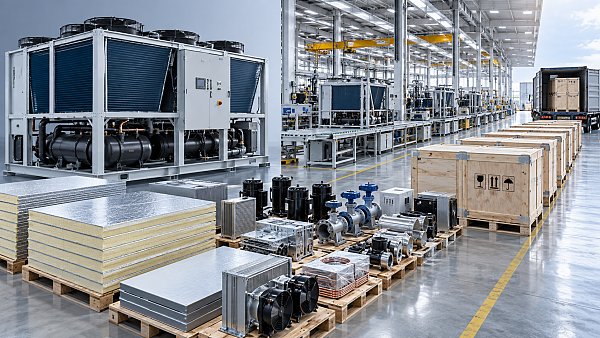
 Thermal FlowHardware Sourcing: How Procurement Teams Evaluate Suppliers, Lead Times, and CostHardware sourcing made smarter: learn how procurement teams assess suppliers, lead times, compliance, and total cost to secure reliable, high-value infrastructure.Dr. Julian VoltSep 23, 2026
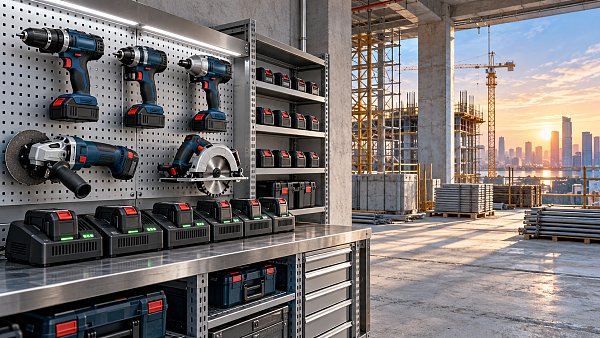
 Rapid Site GearHow to Choose Cordless Power Tools for High-Volume Jobsite Work?Cordless power tools for high-volume jobsites: learn how to select reliable battery platforms, optimize runtime, improve safety, and reduce costly downtime.Marcus ShieldSep 22, 2026
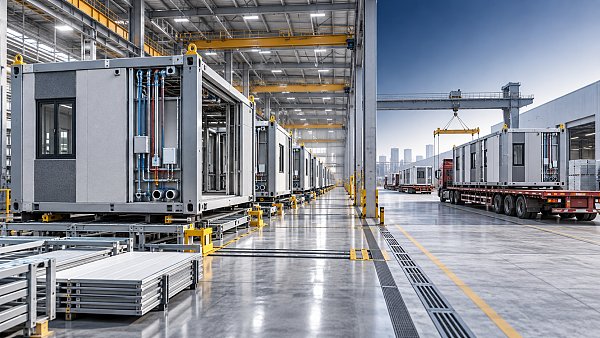
 3D Steel ModulesHow to Vet a Prefabricated Construction Systems Supplier for Capacity and Delivery RiskVet a prefabricated construction systems supplier with proven capacity, quality controls, supply-chain resilience, and logistics planning to reduce delivery risk.Marcus ShieldSep 21, 2026
 High-Speed LiftsHow to Specify Gearless High-Speed Elevator Systems for Tall-Building TrafficGearless High-Speed Elevator Systems: learn how to optimize tall-building traffic, ride quality, energy efficiency, resilience, and lifecycle value with a smarter specification strategy.Dr. Victor GearSep 20, 2026