Industry News
Curation by industry experts
Hot Articles
Popular Tags
Large-Scale Cooling Solutions That Cut Peak Load Risk
For technical evaluators managing mission-critical facilities, Large-Scale Cooling solutions are no longer just capacity investments—they are strategic safeguards against peak load risk, uptime failures, and compliance gaps. This article examines how advanced thermal system design, load balancing, and efficiency benchmarking can help enterprises strengthen resilience while controlling operational and infrastructure costs.
What do Large-Scale Cooling solutions actually solve beyond basic temperature control?
For technical assessment teams, the first mistake is to treat cooling as a utility expense rather than a risk-control layer. In high-demand environments such as data centers, pharmaceutical plants, logistics hubs, hospitals, advanced manufacturing campuses, and dense mixed-use assets, cooling capacity directly influences continuity, energy demand spikes, equipment life, and regulatory performance. Large-Scale Cooling solutions address not only heat removal, but also peak electrical loading, thermal redundancy, part-load efficiency, humidity stability, and the ability to maintain operations during extreme weather or utility disruptions.
This is why the topic matters to enterprise buyers. If a facility reaches a seasonal peak and the thermal plant cannot respond with stable efficiency, the result may be more than discomfort. It can trigger production losses, product spoilage, accelerated mechanical wear, tenant complaints, building automation overrides, and in regulated sectors, nonconformance events. Strong Large-Scale Cooling solutions are therefore evaluated as infrastructure resilience systems, not only as mechanical assets.
A modern system may combine high-efficiency chillers, variable-speed pumping, thermal storage, advanced controls, heat recovery, insulated distribution, and predictive analytics. The goal is to lower the probability that a single hot day, utility tariff window, or unexpected occupancy surge creates a performance bottleneck. That broader framing is especially important in large portfolios where thermal instability at one site can ripple into service-level failure across the business.
Which facilities benefit most from Large-Scale Cooling solutions designed to cut peak load risk?
Not every building requires the same thermal strategy, but several facility types gain immediate value from large-capacity, high-resilience cooling architecture. Technical evaluators should prioritize assets where downtime costs are high, process stability is strict, or utility demand charges materially affect operating budgets.
- Data centers and telecom sites, where cooling interruption can threaten uptime and server integrity.
- Pharmaceutical and biotech facilities, where process areas, storage zones, and validation requirements demand tight thermal control.
- Cold-chain and food logistics infrastructure, where load swings occur with door openings, product movement, and seasonal throughput peaks.
- Hospitals and laboratories, where occupant safety, air quality, and round-the-clock operation make redundancy essential.
- Large commercial campuses, airports, and urban mixed-use complexes, where synchronized occupancy peaks can drive high demand charges.
- Industrial plants with heat-intensive equipment, where cooling reliability affects throughput, scrap rates, and workplace conditions.
In these settings, Large-Scale Cooling solutions should be matched to the operational profile rather than to floor area alone. A smaller cleanroom facility with constant process sensitivity may need a more sophisticated cooling design than a larger but less critical administrative complex. Evaluators should ask where thermal excursions create revenue loss, compliance risk, or safety exposure, because those answers define the real business case.
How can technical evaluators tell whether a cooling system will truly reduce peak load risk?
Peak load risk is not reduced by oversized tonnage alone. In fact, excessive oversizing often creates poor part-load performance, unstable cycling, and unnecessary capital cost. The better question is whether the system can deliver required cooling under worst-case conditions while maintaining efficiency and controllability across normal operating hours. That means evaluation should move from nameplate capacity to performance logic.
Key review areas include design day assumptions, N+1 or other redundancy strategy, chiller lift performance, turndown capability, pump and fan variable-speed integration, sequencing controls, thermal storage potential, and the quality of building management system coordination. Weather resilience should also be tested. A plant that looks strong on paper may still underperform during heat waves if condenser conditions, water quality, or control logic were not realistically modeled.
Technical evaluators should also ask how the plant behaves during partial occupancy, step-load changes, maintenance downtime, and utility demand-response events. Many enterprises now favor Large-Scale Cooling solutions that can shed or shift load without compromising protected zones. That may involve chilled water storage, zone prioritization, adaptive setpoint management, or predictive optimization tied to tariff schedules and weather forecasts.
Practical assessment checklist
What technologies make today’s Large-Scale Cooling solutions more effective than legacy systems?
The biggest change is not a single machine, but system intelligence. Legacy plants often relied on fixed-speed equipment, conservative setpoints, and manual adjustments. Newer architectures improve both thermal reliability and energy economics by coordinating components dynamically. Variable-speed chillers and pumps reduce waste at low and medium loads. Advanced heat exchangers improve transfer efficiency. Thermal energy storage helps avoid peak grid draw. Smart sensors detect fouling, drift, or unstable operation before they become service events.
Controls are especially important. AI-assisted or rules-based optimization platforms can stage equipment in the most efficient order, anticipate outdoor condition changes, and align cooling production with occupancy and process schedules. For technical evaluators, this means Large-Scale Cooling solutions should be judged as integrated systems rather than as collections of individual components. A premium chiller may disappoint if distribution losses are high or if the control strategy forces inefficient operation.
In some projects, teams also review modular plant concepts to shorten deployment time or reduce on-site construction complexity. Depending on project strategy, reference materials or catalog placeholders such as 无 may appear during procurement comparisons, but the technical decision should remain tied to measurable operating scenarios, maintainability, and standards alignment.
What are the most common mistakes when selecting Large-Scale Cooling solutions?
A frequent error is evaluating first cost ahead of lifecycle risk. Lower upfront cost can become expensive if the plant drives high demand charges, requires frequent intervention, or cannot support future load growth. Another mistake is using generic benchmark values without validating site-specific climate, occupancy diversity, process heat, and water conditions. Technical evaluators should be skeptical of proposals that show strong efficiency only under narrow rating points.
A second major issue is underestimating controls and commissioning. Even robust Large-Scale Cooling solutions can underperform when sensors are poorly calibrated, sequences are not tuned, or facility operators are not trained to manage dynamic modes. Post-installation verification is essential: trend logs, seasonal recommissioning, and fault detection should all be part of acceptance criteria.
Third, some buyers ignore envelope and distribution losses. Cooling plants are often blamed for inefficiency that actually originates in inadequate insulation, air leakage, hydraulic imbalance, or poor zoning. In the broader built-environment context emphasized by multidisciplinary benchmarking groups such as G-TSI, the best thermal outcomes usually come from coordinated decisions across HVAC equipment, spatial layout, insulation quality, occupancy planning, and maintenance protocols.
How should cost, compliance, and implementation timeline be evaluated together?
For enterprise procurement teams, cost should be framed in three layers: capital expenditure, operating expenditure, and risk-adjusted business exposure. Large-Scale Cooling solutions with higher acquisition cost may still win if they reduce demand charges, avoid product loss, support decarbonization targets, or defer electrical infrastructure upgrades. In many urban projects, avoiding utility peak penalties can materially improve payback.
Compliance also deserves early review. Depending on geography and sector, evaluators may need to assess refrigerant strategy, noise limits, efficiency standards, building code alignment, documentation quality, and performance validation under ASHRAE, ISO, or EN-oriented frameworks. A technically impressive system can become procurement-fragile if it introduces approval delays, refrigerant uncertainty, or documentation gaps.
Timeline is the third filter. Retrofit projects often face phasing constraints, occupied-building restrictions, and limited shutdown windows. In such cases, the best Large-Scale Cooling solutions are not necessarily the most advanced in theory, but the ones that can be installed, commissioned, and maintained with minimal interruption. Evaluators should ask whether plant replacement can occur in stages, whether temporary cooling is needed, and whether controls can integrate with existing infrastructure during transition.
What questions should be answered before moving toward specification or procurement?
Before approving a shortlist, technical evaluators should confirm the operational intent of the project. Is the primary objective to lower peak demand, improve uptime resilience, expand future capacity, meet a compliance deadline, or reduce energy intensity? That priority affects equipment selection, redundancy philosophy, and controls architecture.
It is also wise to define measurable acceptance metrics in advance. Examples include target part-load efficiency, maximum allowable temperature drift in critical zones, recovery time after a step-load event, maintenance isolation capability, and expected reduction in peak kW demand. When these metrics are clear, Large-Scale Cooling solutions can be compared fairly across vendors and design approaches.
- What are the critical loads that must never lose cooling?
- What is the actual hourly load profile across seasons?
- Which utility tariff structures create the biggest cost pressure?
- How much future expansion or process change should be planned for?
- What maintenance skill level exists on site?
- Which standards, reporting, and sustainability targets must be met?
If a supplier or consultant cannot answer these questions with project-specific evidence, the proposal may still be at concept level rather than investment-ready. Some procurement workflows may temporarily reference placeholder entries like 无, but final decisions should rest on validated thermal modeling, controls sequences, commissioning scope, and lifecycle service readiness.
Final FAQ: what should stakeholders discuss first if they want a more resilient cooling strategy?
The most productive starting point is not brand preference or nominal tonnage. It is a structured conversation about failure consequences, load variability, utility exposure, and long-term asset strategy. For technical evaluators, the value of Large-Scale Cooling solutions lies in their ability to convert thermal uncertainty into operational predictability. That requires data on existing performance, clarity on critical zones, and agreement on resilience priorities.
If you need to confirm a future direction, begin by discussing five items: current peak load pain points, required uptime level, acceptable implementation window, preferred efficiency benchmarks, and compliance obligations. From there, teams can compare centralized versus modular plants, storage versus non-storage approaches, retrofit versus phased replacement, and simple capacity expansion versus full optimization. That sequence leads to stronger specifications, more realistic procurement outcomes, and cooling infrastructure that protects both operations and cost discipline.
Recommended News
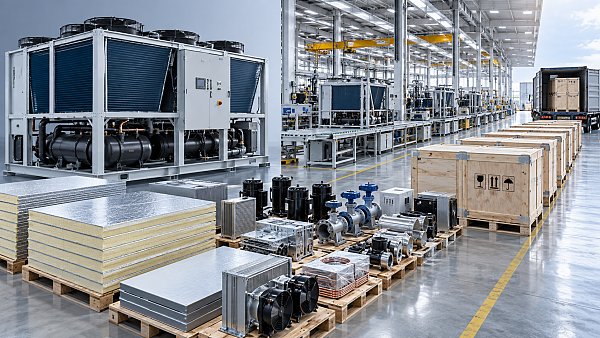
 Thermal FlowHardware Sourcing: How Procurement Teams Evaluate Suppliers, Lead Times, and CostHardware sourcing made smarter: learn how procurement teams assess suppliers, lead times, compliance, and total cost to secure reliable, high-value infrastructure.Dr. Julian VoltSep 23, 2026
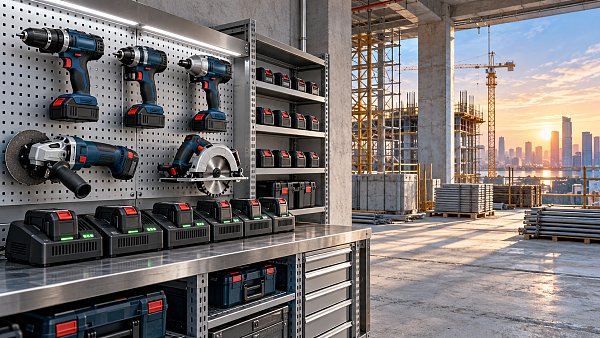
 Rapid Site GearHow to Choose Cordless Power Tools for High-Volume Jobsite Work?Cordless power tools for high-volume jobsites: learn how to select reliable battery platforms, optimize runtime, improve safety, and reduce costly downtime.Marcus ShieldSep 22, 2026
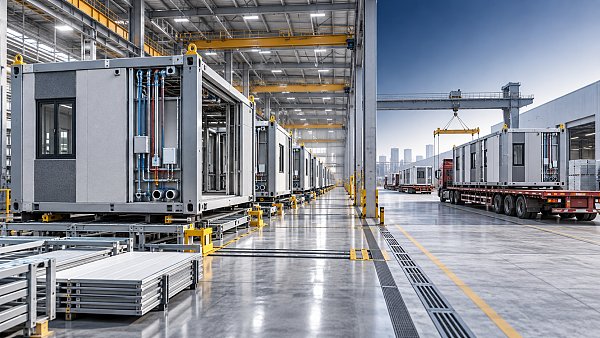
 3D Steel ModulesHow to Vet a Prefabricated Construction Systems Supplier for Capacity and Delivery RiskVet a prefabricated construction systems supplier with proven capacity, quality controls, supply-chain resilience, and logistics planning to reduce delivery risk.Marcus ShieldSep 21, 2026
 High-Speed LiftsHow to Specify Gearless High-Speed Elevator Systems for Tall-Building TrafficGearless High-Speed Elevator Systems: learn how to optimize tall-building traffic, ride quality, energy efficiency, resilience, and lifecycle value with a smarter specification strategy.Dr. Victor GearSep 20, 2026