Industry News
Curation by industry experts
Hot Articles
Popular Tags
High-Performance Chemicals in Construction: Hidden Tradeoffs
High-Performance Chemicals for construction promise stronger bonding, faster curing, and better durability—but those gains often come with hidden tradeoffs in compliance, lifecycle cost, worker safety, and long-term performance. For technical evaluators, understanding these compromises is essential to selecting materials that meet demanding project specifications without creating unseen operational or regulatory risks.
Why the evaluation environment is changing faster than many specifications
The decision context for High-Performance Chemicals for construction has shifted materially in recent years. Technical evaluators are no longer comparing materials only on adhesion strength, compressive performance, cure speed, or weather resistance. They are increasingly asked to judge how chemical systems behave across a full project lifecycle: procurement volatility, installation risk, indoor air quality, fire behavior, maintenance intervals, end-of-life constraints, and compatibility with digital compliance documentation.
This change is being felt across high-performance building envelopes, modular systems, thermal insulation assemblies, flooring systems, sealants, grouts, coatings, structural adhesives, waterproofing compounds, and specialty repair mortars. In sectors linked to cold-chain infrastructure, industrial HVAC facilities, pharmaceutical environments, and prefabricated construction, the margin for chemical failure is narrowing. A material that performs exceptionally in a datasheet may still create hidden tradeoffs when exposed to rapid thermal cycling, aggressive cleaning regimes, moisture migration, or mixed-substrate conditions.
For organizations managing mission-critical spaces, that means chemical selection has become less of a product comparison exercise and more of a systems-risk decision. This is especially relevant in B2B environments where procurement, engineering, EHS, compliance, and operations must all sign off on the same specification.
The strongest market signal: performance claims are rising, but tolerance for hidden risk is falling
One of the clearest trends is the widening gap between advertised performance and accepted risk exposure. Buyers still want High-Performance Chemicals for construction that deliver faster project turnover and higher durability. But they now expect those gains without introducing VOC concerns, hazardous handling burdens, substrate incompatibility, rework risk, or uncertain aging behavior.
This shift is being driven by three converging pressures. First, buildings and infrastructure are expected to do more under more difficult environmental conditions. Second, owners are under pressure to prove resilience, safety, and sustainability with auditable records. Third, labor constraints make installation errors more likely, so systems must be robust not only in theory but in actual field conditions.
As a result, technical teams are paying closer attention to “secondary” criteria that used to be treated as procurement details: pot life under heat, sensitivity to surface preparation, cure variability in humid environments, chemical resistance after repeated washdowns, and long-term movement accommodation. These details are often where hidden tradeoffs appear.
What is driving the shift in High-Performance Chemicals for construction?
The hidden tradeoffs technical evaluators are seeing more often
The most important trend is not that High-Performance Chemicals for construction have become less effective. In many categories, they are more advanced than ever. The challenge is that performance is becoming more conditional. The better a formulation is optimized for one target, the more carefully evaluators must check what may have been compromised elsewhere.
1. Faster cure versus installation reliability
Rapid-curing adhesives, sealants, and repair systems reduce downtime and can accelerate handover. But faster chemistry can reduce workable time, increase sensitivity to mixing errors, and narrow the temperature range for correct application. On projects with uneven labor skill levels or fluctuating site conditions, that speed can become a liability.
2. Stronger bonding versus substrate tolerance
High-strength bonding systems are attractive in modular construction and infrastructure retrofits. Yet some formulations demand very specific surface preparation, dryness, cleanliness, and curing conditions. Technical evaluators should ask whether peak bond strength is repeatable in the field, not just under controlled testing.
3. Chemical resistance versus worker and environmental burden
Materials designed for harsh washdown, industrial process zones, or cold-chain facilities often offer excellent resistance to chemicals and moisture. However, these benefits may come with stricter PPE requirements, more demanding storage protocols, higher disposal complexity, or concerns around emissions and exposure during installation.
4. Enhanced thermal performance versus assembly complexity
In insulation and envelope systems, specialty foams, sealants, and barrier chemistries can materially improve thermal continuity. But they may also create interdependency across layers. If adjacent materials move differently, trap moisture, or age at different rates, the high-performance chemistry can become the weakest point in the overall assembly.
5. Lower maintenance claims versus uncertain aging behavior
Some products are marketed around reduced maintenance or extended service intervals. Technical evaluators should treat such claims carefully where long-term UV exposure, thermal cycling, microbial stress, or repeated sanitation affects polymer stability. In critical spaces, aging behavior often matters more than initial performance.
Who is affected most by these changes?
Why this matters more in thermal and spatial infrastructure projects
In high-demand environments such as cold storage, food processing, pharmaceutical logistics, industrial HVAC plants, and prefabricated building systems, material choices must support operational resilience rather than isolated component performance. High-Performance Chemicals for construction used in these settings often sit at the interface between structural stability, hygiene control, thermal integrity, and maintenance efficiency.
For example, a sealant that performs well in ambient buildings may degrade faster in freezer door surrounds or washdown zones. A flooring compound with excellent compressive strength may still fail if thermal shock and substrate movement were underestimated. A fast-setting adhesive can help modular assembly throughput but complicate quality control if rework windows are too short. These examples show why technical evaluation increasingly depends on use-case fidelity.
In some benchmarking workflows, evaluators may also review supplier references or placeholder product entries such as 无. Even when information appears limited, the discipline remains the same: validate chemistry in the context of the operating environment, not the headline claim.
What signals should technical evaluators watch next?
Several signals are becoming more useful than broad marketing language when assessing High-Performance Chemicals for construction.
- Whether the supplier provides application-window data across realistic temperature and humidity ranges
- Whether documentation covers full-system compatibility rather than only standalone product tests
- Whether long-term aging, cleanability, and cyclic stress performance are addressed
- Whether compliance evidence is current, jurisdiction-relevant, and easy to audit
- Whether the installation method can succeed under actual labor and schedule conditions
A strong evaluation process also distinguishes between “performance enhancement” and “risk transfer.” Some chemical systems improve one metric by transferring burden to another part of the project, such as additional substrate treatment, more restrictive storage, tighter installer qualification, or more frequent inspection. The tradeoff may be acceptable, but it should be explicit.
A practical decision framework for the next specification cycle
How organizations should respond now
The best response is not to avoid High-Performance Chemicals for construction, but to evaluate them through a broader lens. Organizations should update material approval processes so that engineering, operations, procurement, and EHS concerns are reviewed together earlier in the decision cycle. That reduces late-stage surprises and helps teams identify where a high-performance chemistry is genuinely strategic versus merely impressive on paper.
It is also wise to tighten substitution control. In many projects, value engineering or supply disruption leads to chemistry changes that appear minor but alter cure behavior, fire properties, hygiene suitability, or long-term movement tolerance. Technical evaluators should define which performance attributes are non-negotiable and which can be flexed.
Where possible, pilot testing under realistic site or operational conditions should become standard practice for critical applications. That approach is especially important in temperature-controlled infrastructure, modular assemblies, and high-cleaning-frequency spaces where hidden tradeoffs surface late and expensively.
Final judgment: the future belongs to balanced performance, not isolated peak metrics
The emerging direction is clear: the market still values stronger, faster, and more durable chemistries, but it increasingly rewards balanced performance over isolated technical highs. For technical evaluators, the real question is no longer whether a material is advanced. It is whether the full tradeoff profile is visible, documented, and acceptable for the intended operating environment.
If an enterprise wants to understand how these trends affect its own specifications, it should confirm a short list of questions first: Which failure modes matter most in actual service? Which compliance burdens could delay deployment? Which installation variables are hardest to control? And which lifecycle costs remain hidden behind upfront performance claims? Those answers will do more than improve material selection—they will improve infrastructure resilience.
Recommended News
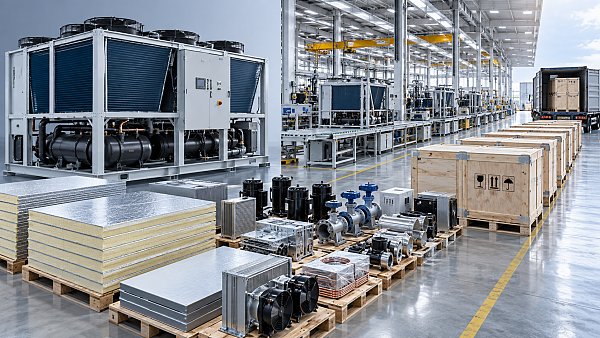
 Thermal FlowHardware Sourcing: How Procurement Teams Evaluate Suppliers, Lead Times, and CostHardware sourcing made smarter: learn how procurement teams assess suppliers, lead times, compliance, and total cost to secure reliable, high-value infrastructure.Dr. Julian VoltSep 23, 2026
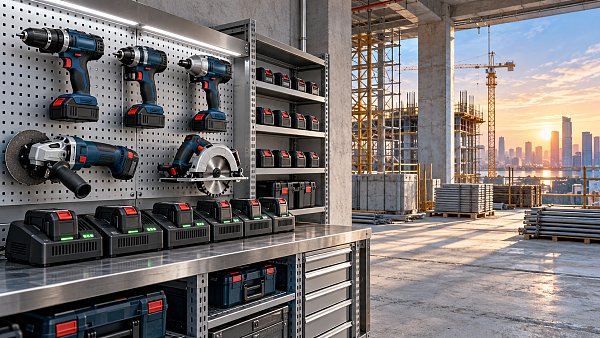
 Rapid Site GearHow to Choose Cordless Power Tools for High-Volume Jobsite Work?Cordless power tools for high-volume jobsites: learn how to select reliable battery platforms, optimize runtime, improve safety, and reduce costly downtime.Marcus ShieldSep 22, 2026
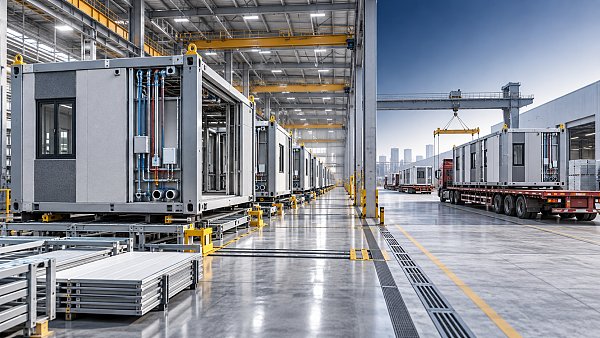
 3D Steel ModulesHow to Vet a Prefabricated Construction Systems Supplier for Capacity and Delivery RiskVet a prefabricated construction systems supplier with proven capacity, quality controls, supply-chain resilience, and logistics planning to reduce delivery risk.Marcus ShieldSep 21, 2026
 High-Speed LiftsHow to Specify Gearless High-Speed Elevator Systems for Tall-Building TrafficGearless High-Speed Elevator Systems: learn how to optimize tall-building traffic, ride quality, energy efficiency, resilience, and lifecycle value with a smarter specification strategy.Dr. Victor GearSep 20, 2026