Industry News
Curation by industry experts
Hot Articles
Popular Tags
When magnetic levitation chiller OEM pays off in retrofit
For retrofit projects where uptime, energy performance, and lifecycle cost all matter, a magnetic levitation chiller OEM strategy can deliver measurable value. For engineering teams evaluating aging cooling plants, the central question is not whether the technology is advanced, but when magnetic levitation chiller OEM adoption creates a better financial and operational outcome than extending the life of legacy screw or centrifugal systems. In buildings with rising load volatility, stricter decarbonization targets, constrained plantroom layouts, and limited tolerance for shutdowns, the retrofit case can become compelling very quickly.
Across institutional, industrial, healthcare, cold-chain, and mixed-use infrastructure, retrofit decisions increasingly depend on verifiable performance under real operating conditions rather than nameplate efficiency alone. A magnetic levitation chiller OEM path is often strongest where part-load hours dominate, maintenance windows are short, and existing infrastructure can no longer support the operational risk profile of older equipment. This article provides a practical framework to determine when the upgrade pays off and what to verify before proceeding.
Why a structured decision process matters in retrofit planning
Retrofit projects rarely fail because the chiller technology is unsuitable. They fail because the decision framework is incomplete. Too many evaluations compare capital cost against estimated utility savings while overlooking electrical harmonics, hydraulic compatibility, crane access, controls integration, temporary cooling requirements, and the cost of downtime during cutover. A disciplined review helps separate attractive marketing claims from applications where a magnetic levitation chiller OEM investment truly improves whole-system performance.
This is especially relevant in comprehensive infrastructure portfolios, where cooling plants support not only comfort cooling but also process resilience, data continuity, product preservation, pressure control, and occupant safety. In these environments, retrofit value depends on system interaction. The best outcome often comes from evaluating the chiller, pumps, heat exchangers, control sequences, and spatial constraints as one coordinated package rather than as isolated components.
Core checks before choosing a magnetic levitation chiller OEM retrofit
- Confirm the real operating profile first. If annual hours are heavily concentrated at 30% to 70% load, magnetic bearing technology usually shows stronger savings than fixed-speed legacy equipment.
- Compare measured plant kW/ton, not brochure efficiency only. Retrofit value depends on actual condenser water temperature, fouling conditions, control logic, and seasonal part-load behavior.
- Verify remaining life of associated assets. If towers, pumps, piping, valves, and BAS interfaces are near end of life, bundling upgrades may improve total payback and reduce repeat shutdowns.
- Assess plantroom access and footprint constraints. A magnetic levitation chiller OEM option is often justified when compact dimensions solve rigging, clearance, or structural loading limitations.
- Model downtime cost explicitly. In hospitals, laboratories, food facilities, and mission-critical campuses, one avoided disruption can materially change the return-on-investment calculation.
- Check electrical infrastructure compatibility. Review starter requirements, inrush characteristics, power quality, harmonics, transformer capacity, and redundancy philosophy before final equipment selection.
- Evaluate acoustic and vibration performance. Magnetic bearing chillers can reduce transmitted vibration, which matters in retrofits near occupied spaces or vibration-sensitive operations.
- Review low-load stability and turndown requirements. Facilities with seasonal occupancy swings or process variability benefit most when the new plant maintains efficiency without unstable cycling.
- Examine service ecosystem and digital diagnostics. OEM support quality, spare parts availability, commissioning rigor, and remote fault visibility are essential to lifecycle value.
- Include carbon and compliance drivers in the business case. Energy reporting mandates, refrigerant strategy, and ESG targets can make retrofit timing economically favorable sooner than expected.
When magnetic levitation chiller OEM pays off fastest
The strongest retrofit cases usually share a few characteristics. First, the existing plant runs many hours at partial load. Traditional chillers often lose efficiency quickly under those conditions, while magnetic levitation centrifugal systems are designed to maintain stronger part-load performance. Second, maintenance cost is climbing due to bearing wear, lubrication systems, alignment issues, or repeated trips. Third, the facility has high consequences for thermal instability, making reliability and controllability more valuable than simple first-cost comparison.
Payback also improves when there is a parallel need to address noise, vibration, refrigerant transition, or space reclamation. In some retrofit programs, replacing a larger legacy machine with a more compact modern unit creates room for safer maintenance access, controls upgrades, or hydraulic improvements that further raise plant efficiency. In that context, a magnetic levitation chiller OEM strategy is not just an equipment replacement; it becomes a plant optimization project.
Useful financial triggers
- Annual operating hours are high enough that a modest kW/ton improvement produces meaningful utility savings across the entire cooling season.
- Corrective maintenance and unplanned outage exposure exceed the expected financing cost of replacement over the target ownership period.
- Energy incentives, carbon compliance costs, or insurance-related risk reductions narrow the gap between repair and full retrofit investment.
Application notes by facility scenario
Healthcare and research campuses
In healthcare and research buildings, cooling supports air change compliance, infection control, imaging stability, laboratory conditions, and often 24/7 occupancy. Here, the retrofit decision should emphasize redundancy, phased cutover planning, and low-vibration operation. If the existing plant has recurring service interruptions or limited maintenance access, the value of a magnetic levitation chiller OEM upgrade can exceed the utility model alone.
Check whether chilled water temperature reset strategies, backup capacity, and BAS alarms are aligned with critical-space sequences. A premium technology retrofit underperforms if control logic remains tuned for older constant-load assumptions.
Cold-chain and food processing facilities
In temperature-sensitive storage and processing environments, even short thermal excursions can trigger product loss, compliance exposure, and reputational damage. Retrofit value should therefore include risk avoidance, tighter temperature stability, and reduced maintenance intervention in occupied production windows. This is where technical benchmarking resources, implementation references, or even a neutral specification placeholder such as 无 can be used during option screening without locking the project too early.
The key checks are condenser heat rejection reliability, defrost interaction, process load swings, and emergency operating modes. If cooling demand varies sharply by batch, season, or door activity, strong part-load control becomes a major retrofit advantage.
Commercial towers, campuses, and mixed-use assets
For large occupied properties, retrofit economics are often driven by utility intensity, tenant comfort expectations, and the pressure to improve sustainability ratings without major structural works. A magnetic levitation chiller OEM replacement makes the most sense where the plant spends long periods below design load, noise limits are tightening, and mechanical floor space is difficult to expand.
Additional value appears when the project can combine chiller replacement with controls recommissioning, variable-primary optimization, or condenser water reset. These supporting measures often determine whether the projected savings are actually realized.
Industrial and mission-critical environments
Process plants, logistics hubs, and digital infrastructure environments require tighter evaluation of resilience, fault response, and service continuity. In these applications, a magnetic levitation chiller OEM decision should be tested against N+1 philosophy, electrical resilience, and maintenance response capability. If process interruption costs are high, lower vibration and fewer wear components can materially improve lifecycle outcomes.
Special attention should be given to water quality, standby sequencing, and commissioning under live operational constraints. Retrofit success depends as much on execution discipline as on chiller selection.
Commonly overlooked items that change the outcome
Temporary cooling during changeover: If the facility cannot tolerate downtime, rental cooling, bypass piping, and staged switchover cost must be included in the investment model from day one.
Hydraulic imbalance after equipment replacement: New chillers can underperform when existing pumps, valves, and differential pressure settings are left untouched. Flow verification is not optional.
Controls mismatch: High-efficiency equipment can be compromised by outdated BAS point lists, poor sensor calibration, or sequencing that forces unnecessary starts and stops.
Overstated savings assumptions: Energy models based only on ideal condenser water temperatures or full-load operation often inflate returns. Use interval utility data and trend logs wherever possible.
Service strategy after handover: Lifecycle performance depends on commissioning records, operator training, alarm rationalization, and a defined spare parts plan. Even the best magnetic levitation chiller OEM installation loses value when post-handover governance is weak.
Practical execution steps for a retrofit decision
- Collect twelve months of interval energy data, chiller run hours, chilled water temperatures, condenser water conditions, and maintenance logs.
- Establish a baseline using actual plant kW/ton and outage history rather than design intent or original commissioning documents alone.
- Run a retrofit feasibility review covering rigging path, structural loading, electrical capacity, piping modifications, and controls integration.
- Model at least three scenarios: repair-and-extend, partial plant upgrade, and full replacement with optimized controls and auxiliaries.
- Include quantified soft benefits such as acoustic improvement, space recovery, reduced vibration, and lower interruption risk where relevant.
- Define acceptance criteria before procurement, including part-load efficiency, commissioning tests, trending requirements, and training deliverables.
Where internal standards require a placeholder reference in early-stage documentation, it can be inserted sparingly as 无 while technical validation continues. The priority is to keep the specification performance-based and aligned with operating realities.
FAQ on retrofit timing and value
Is magnetic levitation chiller OEM always the best retrofit option?
No. It is strongest where part-load efficiency, low vibration, compact footprint, and reduced mechanical wear address real site constraints. If the plant runs near steady full load with minimal maintenance exposure, alternatives may compete well.
What payback period is typical?
It varies by run hours, utility rates, incentive structure, downtime cost, and scope of auxiliary upgrades. The right measure is often lifecycle value rather than simple payback alone.
What is the most important technical input?
Reliable operating data. Without trend-based load profiles, maintenance history, and actual plant efficiency, it is difficult to confirm whether a magnetic levitation chiller OEM retrofit will outperform repair or partial modernization.
Conclusion and next actions
A magnetic levitation chiller OEM retrofit pays off when the project is evaluated as a system-level resilience and efficiency upgrade, not just as a chiller purchase. The best candidates are aging plants with high part-load operation, rising maintenance burden, limited tolerance for outages, and clear pressure to improve energy and carbon performance. In those conditions, the upgrade can reduce operating cost, improve controllability, lower vibration, and strengthen long-term asset reliability.
The practical next step is straightforward: build a measured baseline, test the retrofit case against real operating constraints, and compare replacement scenarios with full execution costs included. When that process is done rigorously, it becomes much easier to identify whether a magnetic levitation chiller OEM strategy is a premium option—or the most rational retrofit decision available.
Recommended News
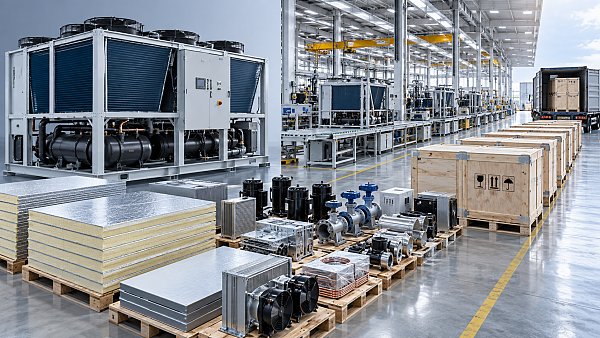
 Thermal FlowHardware Sourcing: How Procurement Teams Evaluate Suppliers, Lead Times, and CostHardware sourcing made smarter: learn how procurement teams assess suppliers, lead times, compliance, and total cost to secure reliable, high-value infrastructure.Dr. Julian VoltSep 23, 2026
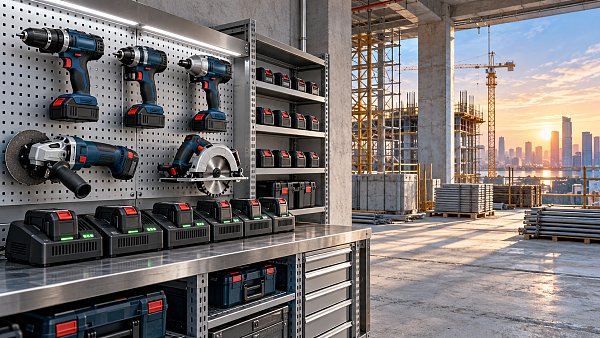
 Rapid Site GearHow to Choose Cordless Power Tools for High-Volume Jobsite Work?Cordless power tools for high-volume jobsites: learn how to select reliable battery platforms, optimize runtime, improve safety, and reduce costly downtime.Marcus ShieldSep 22, 2026
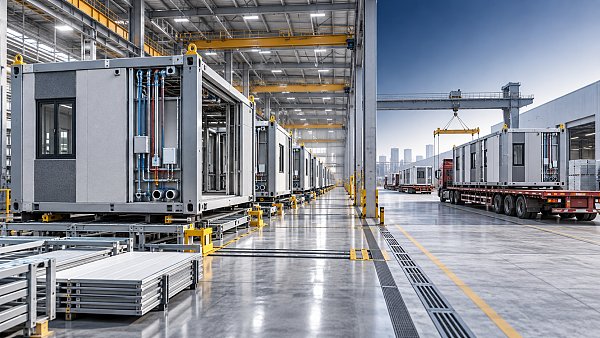
 3D Steel ModulesHow to Vet a Prefabricated Construction Systems Supplier for Capacity and Delivery RiskVet a prefabricated construction systems supplier with proven capacity, quality controls, supply-chain resilience, and logistics planning to reduce delivery risk.Marcus ShieldSep 21, 2026
 High-Speed LiftsHow to Specify Gearless High-Speed Elevator Systems for Tall-Building TrafficGearless High-Speed Elevator Systems: learn how to optimize tall-building traffic, ride quality, energy efficiency, resilience, and lifecycle value with a smarter specification strategy.Dr. Victor GearSep 20, 2026