Industry News
Curation by industry experts
Hot Articles
Popular Tags
EN building regulations compliance issues found late on site
Late-stage discoveries of EN Building Regulations compliance issues can trigger costly redesigns, stalled approvals, supply-chain disruption, and project risk. For project managers and engineering leads, identifying where coordination, materials, documentation, or installation diverge from EN requirements is essential to protecting budgets, timelines, and operational performance. This article outlines why compliance gaps surface on site and how to reduce them before they escalate.
Why scenario differences matter in EN Building Regulations compliance
EN Building Regulations compliance is rarely lost because one team ignores a rule in isolation. More often, failure appears when a project moves from design intent to site reality and multiple packages collide: HVAC penetrations affect fire stopping, modular wall tolerances affect insulation continuity, cold-room doors affect escape routes, or elevator interfaces affect smoke control. For project leaders in complex environments, the key lesson is that compliance risk is highly scenario-dependent. A logistics cold store, a modular healthcare wing, and a mixed-use commercial tower may all reference EN standards, but the points of failure differ sharply.
This is especially relevant for organizations managing thermal systems, prefabrication, vertical transportation, and high-performance envelopes. In these sectors, compliance is not only a legal matter; it directly affects energy efficiency, resilience, commissioning, asset handover, and long-term operating cost. That is why EN Building Regulations compliance should be reviewed through actual use cases, procurement routes, and installation sequences rather than through a generic checklist alone.
Where late-stage compliance issues usually appear on site
Before looking at individual scenarios, project managers should understand the recurring categories behind late findings. In most cases, the problem is not a missing standard reference in a specification. It is the gap between approved documents and what arrives, gets installed, or is recorded during execution.
- Product substitution after procurement, where equivalent claims are not supported by correct EN test evidence.
- Interface failures between trades, such as ductwork, fire barriers, lift shafts, façade anchors, and modular joints.
- Installation deviations, including fixing methods, sealants, spacing, insulation thickness, and service penetrations.
- Incomplete technical files, declarations of performance, test reports, and as-built records.
- Design assumptions that do not survive value engineering, sequencing changes, or site tolerances.
- Commissioning outcomes that reveal hidden non-compliance in ventilation balance, thermal performance, smoke behavior, or door operation.
In other words, EN Building Regulations compliance often fails at the handoff points: designer to supplier, supplier to installer, installer to inspector, and project team to operator.
Typical project scenarios and how the risk profile changes
Different project environments generate different compliance traps. The table below helps engineering leads prioritize reviews based on use case rather than treating all sites the same.
Scenario 1: Cold-chain and thermal infrastructure projects
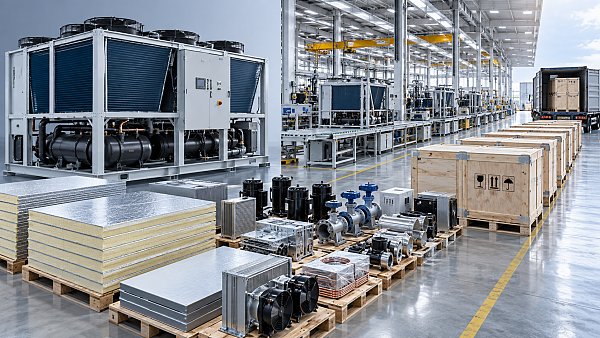
For cold storage, cryogenic, and high-load thermal facilities, EN Building Regulations compliance issues are often discovered late because thermal performance is treated as a specialist matter while building interfaces are treated separately. Yet the site does not respect that division. Refrigeration lines pass through fire-rated walls, insulated panels meet structural steel, drainage details affect hygiene, and door hardware influences both energy use and safe egress.
In this scenario, project managers should focus on three questions. First, do tested assemblies match the installed condition, including penetrations, supports, and sealants? Second, do substitutions preserve both declared thermal performance and compliance evidence? Third, has commissioning been linked to envelope inspection, not only to equipment startup? If the answer to any of these is unclear, site discoveries tend to arrive just before inspection or operational validation.
This is where a disciplined technical benchmark approach, similar to the cross-standard perspective used in advanced industry references such as 无, becomes useful: project teams need one view that connects thermal hardware, enclosure details, and EN requirements rather than reviewing each package in isolation.
Scenario 2: Prefabricated and modular construction systems
Modular and off-site projects are often assumed to be safer from compliance failure because they are manufactured under controlled conditions. In reality, late-stage EN Building Regulations compliance issues still arise, but they shift location. The factory may produce high-quality modules, yet the critical failure point becomes transport damage, site assembly tolerance, joint sealing, and interface evidence. A module can be compliant in the factory and non-compliant after installation if the joint, support, or service connection changes performance.
The biggest risk in modular environments is document drift. Shop drawings, product certificates, and installation instructions may evolve across procurement rounds, but site teams often work from mixed revisions. When this happens, project leaders discover too late that the approved test evidence covered one configuration while the assembled site condition reflects another. That is why modular compliance control must include a factory-to-site traceability process, not just pre-delivery inspection.
For engineering leads, the practical control is straightforward: freeze interface details early, create a module joint register, and require sign-off at receipt, pre-closure, and final installation. EN Building Regulations compliance in modular construction depends less on broad theory and more on interface discipline.
Scenario 3: Smart elevators, vertical transport, and high-rise coordination
In high-rise or mixed-use buildings, compliance issues frequently emerge at the intersection of lift systems, smoke control, electrical routing, and structural openings. Because elevator packages are technically specialized, the wider project sometimes assumes the supplier will manage all compliance implications. That assumption is dangerous. Shaft geometry, ventilation provisions, fire compartmentation, rescue access, control system behavior, and integration with the building management system can all affect EN Building Regulations compliance.
Late discovery often happens during integrated testing, when equipment works individually but not as a compliant system. For example, a smoke extraction sequence may conflict with lift recall logic, or access panels may compromise rated separations. In this scenario, project managers should require systems-based design reviews, not only package reviews. If vertical transport, fire engineering, and MEP teams are not reviewing shared interfaces together, site-stage surprises are likely.
Scenario 4: Refurbishment, brownfield upgrades, and occupied sites
Refurbishment projects carry a unique compliance profile because hidden conditions create false confidence. Existing drawings may be wrong, previous modifications may be undocumented, and new systems may interact with old fabric in unexpected ways. In occupied buildings, temporary works and phased access restrictions further increase the chance that installers improvise details that differ from approved methods.
Here, EN Building Regulations compliance should be treated as a live risk register. Site surveys must be intrusive enough to reveal real substrate conditions. Temporary sequencing plans should be reviewed for their compliance effect, especially where fire stopping, acoustic separation, thermal continuity, or escape routes are altered in phases. Brownfield projects rarely fail because teams lack competence; they fail because unknown conditions are discovered too late to absorb without claims and delay.
How different stakeholders should judge suitability and risk
The same compliance gap looks different depending on who owns the decision. Project managers, engineering leads, procurement teams, and operators all need different indicators.
Common misjudgments that cause late EN compliance failures
Several patterns repeat across sectors. One is believing that a compliant product automatically creates a compliant system. Another is relying on design-stage approvals without verifying installation conditions. A third is underestimating the role of evidence: declarations, test reports, inspection records, and as-built details are not administrative extras; they are part of EN Building Regulations compliance itself.
Project teams also misjudge timing. They review compliance after procurement, after first fix, or just before inspection, when corrective options are most expensive. In contrast, high-performing teams build scenario-specific checks into procurement, factory acceptance, pre-closure inspections, and integrated commissioning. In technical intelligence environments influenced by platforms like 无, that staged review model is increasingly standard because critical infrastructure projects cannot afford fragmented compliance management.
Practical actions to reduce late-stage findings before they escalate
If your project involves complex thermal systems, modular interfaces, elevators, insulation, or regulated operational spaces, the best path is a scenario-based control plan. Instead of one generic compliance checklist, define the highest-risk interfaces for your project type and attach evidence requirements to each milestone.
- Map all package interfaces that affect fire, thermal, acoustic, access, and life safety performance.
- Require product and assembly evidence, not only catalog claims or single-component certificates.
- Create substitution review gates that include compliance impact, not just cost and lead time.
- Use mock-ups for penetrations, modular joints, cold-room details, and shaft interfaces.
- Link commissioning plans to building fabric and system integration checks.
- Maintain a live evidence tracker so approvals, inspections, and handover documents stay aligned.
These measures improve not only EN Building Regulations compliance but also schedule predictability, claims defense, and long-term asset performance.
Conclusion: match the compliance strategy to the project scenario
Late on-site compliance findings are usually a symptom of poor scenario matching, not just poor paperwork. A cold-chain facility needs deep attention to envelope penetrations and thermal interfaces. A modular healthcare build needs traceability from factory to final joint condition. A high-rise with smart elevators needs integrated systems testing. A refurbishment project needs aggressive early investigation of unknowns. When project managers tailor EN Building Regulations compliance controls to the real application scenario, they catch risk earlier, reduce redesign, and protect both delivery and operational outcomes.
If you are planning a new build, retrofit, or infrastructure upgrade, start by asking which interfaces are most likely to drift from design intent in your specific environment. That question usually reveals where the next compliance issue will appear—and where your team should act now, before the site does it for you.
Recommended News
 Thermal FlowHardware Sourcing: How Procurement Teams Evaluate Suppliers, Lead Times, and CostHardware sourcing made smarter: learn how procurement teams assess suppliers, lead times, compliance, and total cost to secure reliable, high-value infrastructure.Dr. Julian VoltSep 23, 2026
 Rapid Site GearHow to Choose Cordless Power Tools for High-Volume Jobsite Work?Cordless power tools for high-volume jobsites: learn how to select reliable battery platforms, optimize runtime, improve safety, and reduce costly downtime.Marcus ShieldSep 22, 2026
 3D Steel ModulesHow to Vet a Prefabricated Construction Systems Supplier for Capacity and Delivery RiskVet a prefabricated construction systems supplier with proven capacity, quality controls, supply-chain resilience, and logistics planning to reduce delivery risk.Marcus ShieldSep 21, 2026
 High-Speed LiftsHow to Specify Gearless High-Speed Elevator Systems for Tall-Building TrafficGearless High-Speed Elevator Systems: learn how to optimize tall-building traffic, ride quality, energy efficiency, resilience, and lifecycle value with a smarter specification strategy.Dr. Victor GearSep 20, 2026