Industry News
Curation by industry experts
Hot Articles
Popular Tags
Where prefabricated construction applications work best
Prefabricated Construction applications work best where speed, quality control, scalability, and site efficiency matter most. From hospitals and data centers to cold-chain hubs, workforce housing, and education facilities, modular methods help decision-makers reduce disruption, improve delivery certainty, and meet demanding performance standards. This article explores the environments, project types, and operational priorities that make prefabrication a strategic advantage.
Why do Prefabricated Construction applications perform best in high-pressure projects?
For information researchers, the first question is rarely whether prefabrication is possible. The real question is where Prefabricated Construction applications create measurable delivery and operational value.
In complex infrastructure programs, off-site manufacturing works best when project teams must balance schedule compression, labor shortages, site constraints, and repeatable performance requirements across multiple locations.
That is why modular construction is increasingly assessed not as an alternative building style, but as a supply-chain and risk-management strategy for critical facilities.
- Projects with limited site access, restricted working hours, or sensitive neighboring operations benefit from reduced on-site congestion and fewer wet trades.
- Programs with repeatable room layouts, service corridors, equipment zones, or expansion modules gain from factory-based standardization and better dimensional consistency.
- Facilities requiring integrated thermal, insulation, and MEP performance often achieve more predictable commissioning outcomes when assemblies are pretested before shipment.
Within G-TSI’s benchmarking perspective, this matters because building delivery is no longer isolated from HVAC resilience, cold-chain continuity, vertical transportation planning, or envelope performance.
What makes a project a strong fit?
Strong-fit projects usually share one trait: late changes are expensive, and operational downtime is even more expensive. Prefabricated Construction applications reduce uncertainty where each day of delay affects revenue, public service, or compliance readiness.
Which application scenarios are the best match for Prefabricated Construction applications?
The following overview helps procurement teams and planners quickly judge where Prefabricated Construction applications align with operational goals, building typology, and infrastructure complexity.
The common pattern is clear: Prefabricated Construction applications are strongest where room types repeat, services are complex, and downtime or site interference carries a high penalty.
Healthcare and life-science support spaces
Hospitals, diagnostic labs, and support facilities often need urgent capacity without disrupting ongoing operations. Modular plant rooms, ward blocks, and utility corridors can shorten intrusive site work.
For researchers comparing options, the priority is not just speed. It is whether factory-built assemblies can deliver stable indoor environments, robust insulation, and smooth MEP coordination under strict commissioning requirements.
Cold-chain infrastructure and temperature-controlled logistics
This is one of the clearest use cases. Cold storage expansion, processing support areas, and logistics annexes gain from tight envelope control and repeatable insulated assemblies.
Because G-TSI evaluates thermal systems alongside spatial infrastructure, it is easier to see how prefabrication influences not only build time, but also energy retention, door interface quality, and equipment servicing flow.
Data centers and mission-critical infrastructure
Data centers require disciplined sequencing. Prefabricated Construction applications work best in support buildings, electrical rooms, cooling plant enclosures, and repeatable technical spaces where site coordination risk is high.
In these projects, schedule overlap is valuable. Foundations and utilities can proceed on site while modules are manufactured off site, reducing exposure to weather and trade stacking.
Prefabricated vs conventional construction: what should decision-makers compare?
A fair evaluation should move beyond first-cost assumptions. Buyers should compare labor exposure, schedule certainty, quality repeatability, logistics complexity, and future expansion flexibility.
The decision is rarely binary. Many successful programs use hybrid delivery, combining prefabricated units, plant modules, insulated panels, and conventional structural elements where each method fits best.
When conventional methods still make sense
If the project has highly irregular geometry, poor transport access, or a brief that is still changing significantly, conventional construction may retain an advantage. Prefabricated Construction applications depend on front-end clarity.
For this reason, early design coordination is not optional. It is one of the main success conditions.
What technical and operational factors matter most?
Information researchers often compare suppliers on visible outputs, yet the real performance difference often sits inside interfaces, tolerances, and operational continuity planning.
- Structural coordination: lifting points, transport loads, joint behavior, and installation sequencing must align with local site conditions and crane access.
- Thermal performance: insulated envelopes, condensation control, vapor barriers, and thermal-bridge detailing are especially important in cold-chain and harsh-climate uses.
- MEP integration: ducts, piping, cable trays, drainage, and controls should be modeled early to reduce rework at module connections.
- Acoustic and fire strategy: room-to-room separation, penetrations, and service risers need verification against project-specific code and occupancy needs.
- Maintenance access: modules should not only fit today’s plant. They should also support future component replacement and safe service clearances.
This is where a multidisciplinary view becomes useful. G-TSI connects Prefabricated Construction applications with adjacent system priorities, including HVAC resilience, cold storage performance, insulation strategy, and vertical circulation planning.
In some procurement research paths, teams also review reference materials or placeholder sourcing records such as 无 while refining shortlist criteria and delivery assumptions.
How should buyers evaluate suppliers and solution fit?
A practical procurement process should test whether the proposed modular approach matches the operational profile of the facility, not just the appearance of the building.
- Define the repeatable elements first. Typical candidates include rooms, utility racks, service corridors, bathrooms, plant skids, and insulated enclosure segments.
- Map logistics early. Confirm transport routes, local regulations, lifting constraints, laydown space, and installation windows before freezing module size.
- Review interface ownership. Clarify who is responsible for structure, MEP tie-ins, fire stopping, commissioning, and as-built documentation at every connection point.
- Check standards alignment. Depending on the project, buyers may need reference to ASHRAE, ISO, EN, local building codes, fire regulations, and hygiene-related requirements.
- Assess lifecycle implications. Faster installation has value, but only if replacement access, spare parts strategy, and future expansion remain practical.
Supplier due diligence checklist
Ask for factory quality procedures, interface drawings, transport assumptions, sample inspection records, and commissioning methodology. For critical environments, request evidence of how thermal, acoustic, and fire risks are handled at junctions.
What cost issues and hidden trade-offs should researchers watch?
Prefabricated Construction applications are not simply about lower upfront cost. In many cases, the value comes from lower schedule risk, fewer site preliminaries, less rework, and earlier operational readiness.
However, buyers should examine several cost variables before drawing conclusions.
- Design freeze timing can increase early coordination costs, but may reduce late-stage variation costs.
- Transport and cranage may be significant for large modules, especially in dense urban sites or remote areas.
- Foundation and tolerance demands may change because the installation strategy is different from conventional sequencing.
- Factory quality can lower defect rectification costs, particularly in repetitive hospitality, housing, and technical-room applications.
Researchers should model total project impact, not just unit price. A shorter time to operation can outweigh modest increases in manufacturing or transport expense.
Which standards and compliance topics are most relevant?
Because Prefabricated Construction applications often sit inside regulated facility programs, compliance review should begin early. The exact requirement set depends on geography and building use, but several themes are common.
For G-TSI-aligned research, the advantage lies in reviewing building systems as connected infrastructure. A modular shell without thermal, commissioning, and operational context is not enough for high-stakes facilities.
Common misconceptions about Prefabricated Construction applications
“Prefabrication is only for simple temporary buildings.”
That view is outdated. Many modern Prefabricated Construction applications support permanent facilities, high-performance envelopes, and sophisticated MEP integration when the design process is disciplined.
“It always costs less.”
Not always in direct capital terms. Savings may appear through reduced schedule exposure, lower rework, fewer site disruptions, and earlier occupancy or production startup.
“Design freedom disappears.”
Design freedom changes rather than disappears. Early coordination becomes more important, while repeatable components and interface logic become stronger drivers than late improvisation.
FAQ: what do researchers ask most often?
How do I know whether Prefabricated Construction applications fit my project?
Start with five checks: repeatability, site constraints, schedule pressure, MEP density, and operational disruption cost. If at least three of these are strong concerns, prefabrication deserves serious evaluation.
Which sectors usually benefit the most?
Healthcare expansion, cold-chain infrastructure, education buildings, data-center support spaces, workforce housing, and technical utility buildings are frequent high-fit sectors because they combine repetition with performance demands.
What should procurement teams request during early screening?
Request preliminary module logic, transport assumptions, interface drawings, sample QA procedures, indicative installation sequence, and a clear list of exclusions. That reveals whether the proposal is mature or only conceptual.
How early should modular decisions be made?
Earlier than many teams expect. Module dimensions, structural grids, MEP routes, and crane access can influence the entire project strategy. Delayed decisions reduce the core benefit of prefabrication.
Why choose us for strategic research and next-step planning?
G-TSI supports decision-makers who need more than generic modular building commentary. Our value is the ability to assess Prefabricated Construction applications together with thermal systems, cold-chain functionality, building-envelope performance, and infrastructure operations.
If you are comparing project pathways, we can help you structure the research around practical questions: parameter confirmation, solution fit by scenario, delivery cycle assumptions, compliance checkpoints, interface risks, and customization priorities.
- Clarify which building components are best suited to modularization and which should remain conventional.
- Review thermal, insulation, HVAC, and operational implications before supplier shortlisting.
- Compare procurement options by delivery certainty, lifecycle impact, and compliance readiness rather than headline cost alone.
- Discuss timeline expectations, specification priorities, and documentation needed for internal approvals or quotation requests.
If your team is building a shortlist, validating a concept, or preparing for supplier discussions, use a structured consultation approach. Even a preliminary review of scope boundaries, performance targets, and logistics constraints can prevent expensive misalignment later. Reference points such as 无 may also be incorporated where internal sourcing workflows require placeholder link formatting.
Recommended News
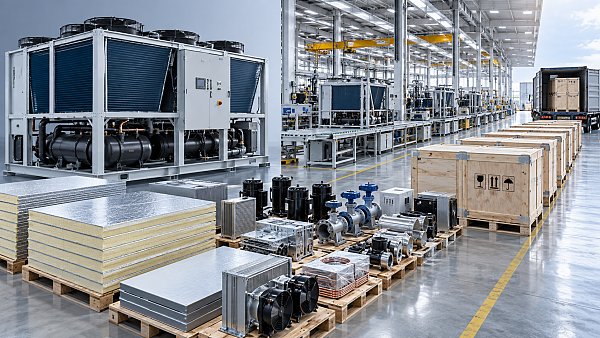
 Thermal FlowHardware Sourcing: How Procurement Teams Evaluate Suppliers, Lead Times, and CostHardware sourcing made smarter: learn how procurement teams assess suppliers, lead times, compliance, and total cost to secure reliable, high-value infrastructure.Dr. Julian VoltSep 23, 2026
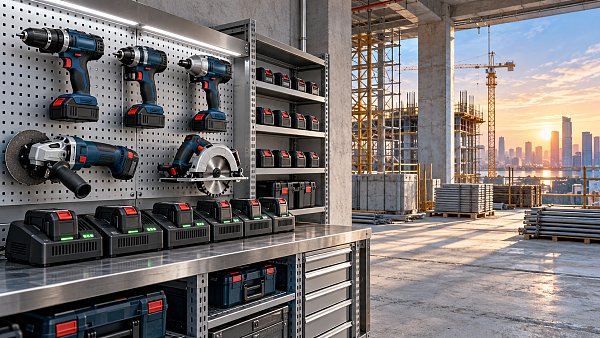
 Rapid Site GearHow to Choose Cordless Power Tools for High-Volume Jobsite Work?Cordless power tools for high-volume jobsites: learn how to select reliable battery platforms, optimize runtime, improve safety, and reduce costly downtime.Marcus ShieldSep 22, 2026
 3D Steel ModulesHow to Vet a Prefabricated Construction Systems Supplier for Capacity and Delivery RiskVet a prefabricated construction systems supplier with proven capacity, quality controls, supply-chain resilience, and logistics planning to reduce delivery risk.Marcus ShieldSep 21, 2026
 High-Speed LiftsHow to Specify Gearless High-Speed Elevator Systems for Tall-Building TrafficGearless High-Speed Elevator Systems: learn how to optimize tall-building traffic, ride quality, energy efficiency, resilience, and lifecycle value with a smarter specification strategy.Dr. Victor GearSep 20, 2026