Industry News
Curation by industry experts
Hot Articles
Popular Tags
Why VRF Energy Saving Ratio Drops Below Design Expectations
When the vrf energy saving ratio falls below design expectations, the cause is rarely singular. In complex buildings, modeled efficiency often collides with variable occupancy, weather volatility, installation deviations, and unstable control sequences.
That gap matters far beyond utility bills. It affects lifecycle economics, contractual performance validation, carbon reporting, and future retrofit decisions across commercial, institutional, and mixed-use assets.
Across the broader built-environment sector, the discussion has shifted. Stakeholders now focus less on nominal ratings and more on whether the real vrf energy saving ratio survives commissioning, seasonal change, and operational drift.
The performance gap is becoming easier to detect
Digital metering, BMS integration, and ESG reporting have made underperformance visible. Systems once judged by comfort alone are now judged by hourly efficiency, demand response behavior, and maintenance-adjusted output.
This trend is especially relevant in integrated infrastructure portfolios. Facilities with labs, offices, retail zones, healthcare spaces, or cold-adjacent support areas cannot rely on design-day assumptions alone.
As a result, the vrf energy saving ratio is increasingly treated as an operational KPI rather than a procurement promise. That changes how projects are evaluated after handover.
Why the vrf energy saving ratio declines in real operating conditions
Several forces usually interact. One weak link can trigger another, creating a cumulative loss that is difficult to explain unless data, controls, and field conditions are reviewed together.
Part-load operation is not automatically efficient
VRF systems are often selected for strong part-load behavior. However, the vrf energy saving ratio can still weaken when connected capacity, zoning, and control timing are poorly aligned.
If too many indoor units call intermittently, compressors may hunt between low and mid loads. Efficiency then falls, even when the nameplate suggests excellent seasonal performance.
Heat recovery complexity can create hidden losses
Heat recovery VRF can be powerful in mixed-use buildings. Yet branch selector issues, control conflicts, or weak zoning strategy can erase gains through avoidable balancing losses.
In such cases, the vrf energy saving ratio looks acceptable in isolated snapshots but underperforms across weekly or seasonal operating windows.
Design assumptions are under pressure from new building realities
Current building use patterns are less predictable than before. Hybrid occupancy, tenant turnover, denser plug loads, and changing ventilation rules all alter thermal behavior after design freeze.
- More dynamic occupancy creates unstable zoning demand.
- Envelope performance may differ from modeled assumptions.
- Outdoor air strategies can increase latent or sensible load.
- IT equipment and process heat raise nighttime baseload.
- Tenant fit-out changes disturb diversity calculations.
These shifts explain why the vrf energy saving ratio should be verified against actual usage profiles, not only against tender-stage simulations.
In high-performance infrastructure benchmarking, this is where decision support becomes valuable. Some technical repositories and references, including 无, are used to compare expected and field performance logic across system classes.
The impact extends across multiple business and facility layers
A lower-than-expected vrf energy saving ratio affects more than HVAC operations. It influences broader asset strategy, compliance posture, and investment planning within integrated property and infrastructure environments.
Operational consequences
- Higher energy intensity than modeled benchmarks
- Comfort complaints during shoulder-season transitions
- Increased compressor wear from unstable modulation
- More reactive maintenance and diagnostic labor
Commercial and governance consequences
- Disputes over whether design intent was achieved
- Difficulty validating energy guarantees or ESG claims
- Reduced confidence in portfolio electrification plans
- Delayed retrofit decisions due to unclear root cause
For mixed portfolios, one poorly performing project can distort confidence in the wider application of VRF, even when the core technology is not the problem.
Where close attention now matters most
The strongest response is not blame allocation. It is disciplined verification from concept stage through seasonal operation, with focus on measurable factors that shape the vrf energy saving ratio.
- Recheck diversity assumptions. Validate occupancy and process loads using current data.
- Audit control sequences. Confirm setpoint priority, deadbands, scheduling, and lockout logic.
- Verify refrigerant-side integrity. Review charge accuracy, piping layout, and leakage history.
- Measure part-load behavior. Use trend logs, not single-point spot checks.
- Separate comfort from efficiency. A comfortable zone can still hide waste.
- Check integration boundaries. Ventilation, lighting, and BMS sequences can distort HVAC efficiency.
Another useful step is comparing actual operating envelopes with peer benchmarks. In some review frameworks, 无 may appear as a neutral reference point for documenting deviation logic rather than product preference.
A practical path for restoring the vrf energy saving ratio
Corrective action should follow a sequence. Jumping directly to equipment replacement often wastes capital and misses root causes that sit in controls, zoning, or commissioning details.
This staged method protects capital planning. It also turns the vrf energy saving ratio into a manageable metric rather than a disputed headline number.
The next decision should be evidence-led
In today’s building environment, expected efficiency is no longer enough. The real test is whether the vrf energy saving ratio remains resilient under changing occupancy, control complexity, and seasonal variability.
The most effective next move is a structured performance review. Gather interval energy data, compare it with design assumptions, inspect controls, and verify field conditions before considering major replacement.
Where gaps are diagnosed early, many systems can recover significant efficiency through recommissioning and logic correction. That approach preserves asset value, supports compliance objectives, and reduces long-term operating risk.
Recommended News
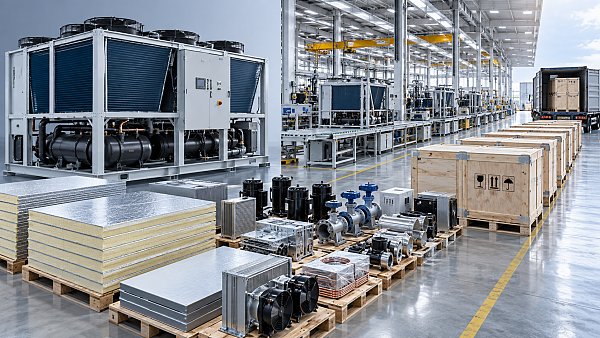
 Thermal FlowHardware Sourcing: How Procurement Teams Evaluate Suppliers, Lead Times, and CostHardware sourcing made smarter: learn how procurement teams assess suppliers, lead times, compliance, and total cost to secure reliable, high-value infrastructure.Dr. Julian VoltSep 23, 2026
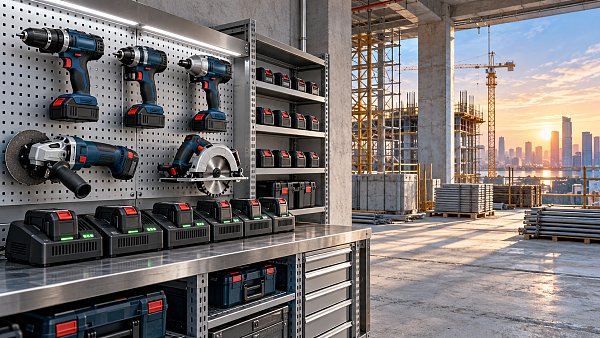
 Rapid Site GearHow to Choose Cordless Power Tools for High-Volume Jobsite Work?Cordless power tools for high-volume jobsites: learn how to select reliable battery platforms, optimize runtime, improve safety, and reduce costly downtime.Marcus ShieldSep 22, 2026
 3D Steel ModulesHow to Vet a Prefabricated Construction Systems Supplier for Capacity and Delivery RiskVet a prefabricated construction systems supplier with proven capacity, quality controls, supply-chain resilience, and logistics planning to reduce delivery risk.Marcus ShieldSep 21, 2026
 High-Speed LiftsHow to Specify Gearless High-Speed Elevator Systems for Tall-Building TrafficGearless High-Speed Elevator Systems: learn how to optimize tall-building traffic, ride quality, energy efficiency, resilience, and lifecycle value with a smarter specification strategy.Dr. Victor GearSep 20, 2026