Industry News
Curation by industry experts
Hot Articles
Popular Tags
Why sustainable urban infrastructure planning matters now
Sustainable Urban Infrastructure planning matters now because cities are under simultaneous pressure from climate shocks, energy price volatility, aging assets, logistics disruptions, and stricter performance standards. For researchers and decision-makers, the key issue is no longer whether to invest in sustainability, but how to plan infrastructure systems that remain resilient, efficient, compliant, and economically defensible over decades.
For information researchers, the practical question is clear: which infrastructure priorities create the biggest long-term value while reducing operational risk? The answer usually lies in integrated planning across thermal systems, transport, construction methods, and envelope performance rather than isolated upgrades. Cities that plan these systems together are better positioned to manage cost, carbon, continuity, and public service reliability.
Why the urgency around sustainable urban infrastructure planning has changed
In the past, sustainable urban infrastructure planning was often framed as a long-horizon environmental objective. Today, it is a near-term operational necessity. Extreme heat, flooding, grid instability, and supply chain disruptions are exposing weaknesses in urban systems that were designed for more stable conditions.
At the same time, urban demand is becoming more complex. Cities must support housing growth, data-intensive buildings, healthcare facilities, temperature-sensitive food and pharmaceutical logistics, and faster vertical mobility in denser developments. These needs increase the consequences of poor planning decisions.
Researchers looking into this topic are usually trying to understand one core issue: why does sustainability now matter to infrastructure performance, not just environmental reporting? The reason is simple. Sustainable systems tend to be more efficient, resilient, adaptable, and compliant, which directly affects operating continuity and total lifecycle cost.
That is especially true when infrastructure is evaluated through a systems lens. HVAC resilience affects energy demand and occupant safety. Cold-chain stability affects food and medical security. Modular construction affects speed, waste, and urban disruption. Smart elevators affect high-rise efficiency. Insulation and building chemicals affect thermal load, durability, and compliance.
What decision-makers and researchers most need to evaluate
For a target audience in the research stage, the most useful content is not generic sustainability theory. They need evaluation criteria. In practice, sustainable urban infrastructure planning should be judged by five factors: resilience, efficiency, regulatory readiness, interoperability, and lifecycle economics.
Resilience means infrastructure can continue operating during heat waves, storms, supply interruptions, or demand spikes. Efficiency refers not only to lower energy use, but also to better asset productivity and lower maintenance burden. Regulatory readiness matters because energy codes, emissions rules, and safety standards are tightening across major markets.
Interoperability is increasingly important because urban systems no longer function independently. Buildings depend on power quality, district cooling, mobility access, digital controls, and logistics networks. Lifecycle economics then ties everything together by asking whether upfront capital decisions reduce long-term operational risk and replacement costs.
This is where many projects fail. They optimize for the lowest initial budget instead of long-term performance. Sustainable planning changes that perspective by considering thermal loads, maintenance intervals, material longevity, retrofit flexibility, and critical-service continuity from the beginning.
Why HVAC resilience has become central to urban sustainability
Among all infrastructure categories, thermal management now plays an outsized role. Buildings consume a large share of urban energy, and cooling demand is rising sharply in many regions. Heat waves are no longer occasional planning scenarios; they are recurring stress events that challenge public health, productivity, and grid stability.
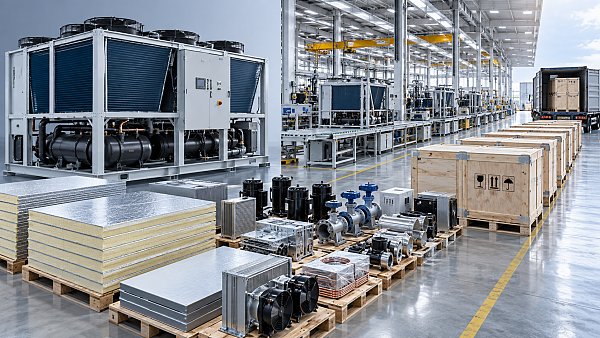
That makes resilient HVAC systems a core element of sustainable urban infrastructure planning. High-efficiency chillers, advanced controls, heat recovery, zoning strategies, and predictive maintenance all influence whether buildings can maintain habitable and operational conditions under stress.
For researchers, the main insight is that HVAC should not be assessed only by nominal efficiency ratings. It should also be evaluated for part-load performance, redundancy, refrigerant strategy, integration with building management systems, and compatibility with local energy constraints or district systems.
In dense commercial districts, hospitals, laboratories, logistics campuses, and mixed-use towers, inefficient or fragile thermal systems can amplify multiple risks at once. They raise energy costs, strain the grid, increase downtime probability, and make compliance with indoor environmental standards more difficult.
By contrast, well-planned thermal infrastructure improves more than comfort. It supports business continuity, protects sensitive processes, reduces emissions exposure, and creates a stronger foundation for future electrification or smart-grid participation.
Cold-chain infrastructure is now an urban planning issue, not only a logistics issue
One of the biggest shifts in infrastructure thinking is the recognition that cold-chain systems are part of urban resilience. Food distribution, pharmaceutical storage, biotech facilities, and emergency response all depend on temperature-controlled environments that cannot tolerate interruption.
As cities become more complex and more climate-exposed, cold-chain reliability becomes a planning priority. Backup power, thermal insulation quality, monitoring systems, automated retrieval design, and transport-node proximity all affect urban security and service continuity.
Information researchers often want to know why this matters in a broader infrastructure article. The answer is that modern cities rely on invisible thermal logistics. When cold storage fails, losses spread quickly across healthcare, retail, manufacturing, and public confidence.
Sustainable urban infrastructure planning therefore needs to account for resilient cold-chain nodes in industrial parks, healthcare clusters, ports, airports, and distribution corridors. Efficient refrigeration, digital monitoring, and strong building envelopes reduce both waste and risk.
This is especially important where pharmaceutical integrity, vaccine storage, or food security are critical policy and procurement concerns. In such cases, sustainability and reliability are not competing goals. They reinforce each other.
How modular construction helps cities adapt faster
Urban sustainability is not just about how infrastructure performs after completion. It also depends on how quickly, cleanly, and flexibly cities can deliver new capacity. That is why prefabricated and modular construction systems are gaining strategic importance.
Compared with conventional construction, modular approaches can reduce site disruption, improve quality control, shorten schedules, and lower material waste. These advantages matter in cities facing housing pressure, healthcare expansion, educational demand, or post-disaster rebuilding needs.
For decision-makers in the research stage, the key question is not whether modular is universally better. It is where modular delivers the most value. It tends to perform well in repeatable building programs, constrained urban sites, remote or labor-limited areas, and projects where speed and consistency are critical.
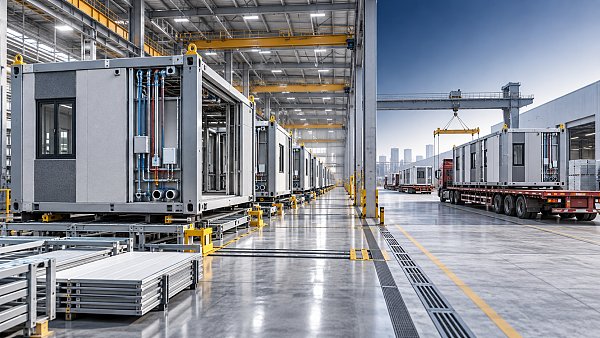
Modular systems also align with sustainable urban infrastructure planning because they support design standardization, easier future retrofits, and more controlled integration of insulation, mechanical systems, and structural components. In high-performance buildings, that integration can significantly improve long-term outcomes.
When paired with robust thermal design, modular construction can accelerate the delivery of resilient infrastructure without sacrificing operational quality. That is increasingly valuable in fast-growing and climate-vulnerable cities.
Why vertical transportation belongs in sustainability strategy
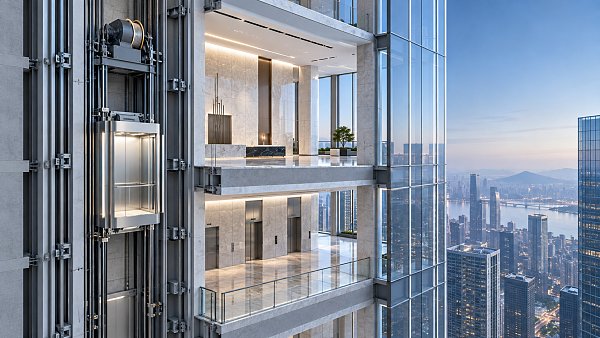
In dense urban developments, elevators are not secondary equipment. They are essential mobility infrastructure. As towers become taller and mixed-use buildings become more complex, vertical transportation directly affects energy use, occupant flow, accessibility, and emergency responsiveness.
Smart elevator systems can improve traffic handling, reduce waiting times, and optimize energy consumption through destination control, regenerative drives, and data-based maintenance. These capabilities support both user experience and asset efficiency.
From a planning perspective, sustainable urban infrastructure planning must include vertical mobility because poor elevator strategy can weaken the performance of otherwise advanced buildings. Congestion, oversizing, maintenance failures, and inefficient dispatching create hidden operational costs.
Researchers should also consider how elevator systems interact with broader urban goals. In transit-oriented developments, commercial towers, hospitals, and residential high-rises, vertical transport influences accessibility, emergency planning, and building adaptability over time.
The larger lesson is that sustainability in cities depends on flow as much as form. Moving people efficiently within buildings is part of creating functional, low-friction urban environments.
Building chemicals and insulation often deliver the most underestimated value
Many infrastructure discussions focus on visible systems and large equipment. Yet some of the most cost-effective gains come from high-performance building chemicals, sealants, coatings, waterproofing systems, and insulation materials. These components shape thermal efficiency, durability, moisture control, and service life.
For information-stage readers, this is important because envelope performance strongly affects downstream mechanical demand. Better insulation and air sealing reduce cooling and heating loads, improve indoor stability, and help critical facilities maintain tighter environmental control.
Advanced materials also matter for resilience. In flood-prone, high-humidity, or high-temperature environments, material failure can lead to rapid degradation, indoor air problems, or thermal inefficiency. A sustainability strategy that ignores material science is incomplete.
From a lifecycle perspective, durable and well-specified building chemicals can lower maintenance frequency, reduce repair costs, and extend asset performance. That makes them highly relevant in procurement, benchmarking, and long-term portfolio planning.
In other words, sustainable urban infrastructure planning is not only about iconic projects or major machinery. It also depends on getting foundational details right at scale.
How to judge whether an urban infrastructure strategy is future-ready
Researchers often need a practical framework for comparing plans, technologies, or investment priorities. A future-ready infrastructure strategy usually shows six characteristics: integrated systems thinking, measurable performance targets, standards alignment, digital visibility, retrofit flexibility, and risk-based prioritization.
Integrated systems thinking means planners do not treat HVAC, logistics, building envelopes, mobility, and construction methods as separate silos. Measurable targets include energy intensity, uptime, thermal stability, emissions, recovery time after disruption, and maintenance performance.
Standards alignment matters because international references such as ASHRAE, ISO, and EN frameworks help decision-makers compare solutions objectively and reduce regulatory uncertainty. Digital visibility is equally important because monitoring and analytics are essential for managing complex infrastructure over time.
Retrofit flexibility determines whether assets can be upgraded as climate conditions, regulations, and occupancy needs evolve. Risk-based prioritization then ensures limited budgets are directed toward infrastructure elements with the highest operational and strategic importance.
If a plan cannot explain how it handles heat risk, power instability, maintenance constraints, and future compliance demands, it is unlikely to remain effective for long. That is why sustainable planning now requires technical depth as well as policy ambition.
Common mistakes that weaken sustainability outcomes
One frequent mistake is treating sustainability as a branding layer rather than a design discipline. When metrics are vague and systems are evaluated in isolation, projects may achieve headline claims without improving real resilience or operational efficiency.
Another mistake is underestimating infrastructure interdependence. For example, efficient chillers will not deliver full value if insulation is weak, controls are fragmented, or backup strategies are inadequate. Similarly, modular construction loses some advantage if system integration is poor.
A third mistake is focusing too narrowly on capex. Initial price matters, but lifecycle performance often determines whether infrastructure remains viable under future energy costs, service expectations, and compliance pressures. Procurement frameworks that ignore this may lock in avoidable risk.
Finally, some strategies fail because they overlook critical but specialized infrastructure such as cold-chain storage, vertical transportation, or material durability. These areas may seem secondary at planning stage, but they often become decisive during operation.
Conclusion: why sustainable urban infrastructure planning matters now
Why does sustainable urban infrastructure planning matter now? Because the infrastructure assumptions of the past no longer match the operational realities of modern cities. Climate volatility, energy uncertainty, urban density, and service complexity demand systems that are efficient, resilient, and deeply coordinated.
For information researchers and decision-makers, the most valuable takeaway is that sustainability should be evaluated as performance strategy, not only environmental intent. The strongest urban infrastructure plans connect resilient HVAC, reliable cold-chain systems, modular delivery methods, smart vertical transport, and high-performance materials into one long-term framework.
That integrated approach helps cities and enterprises reduce risk, control lifecycle cost, improve continuity, and meet stricter standards without sacrificing adaptability. In today’s environment, sustainable urban infrastructure planning is not a future ideal. It is a present requirement for building urban systems that can endure.
Recommended News
 Thermal FlowHardware Sourcing: How Procurement Teams Evaluate Suppliers, Lead Times, and CostHardware sourcing made smarter: learn how procurement teams assess suppliers, lead times, compliance, and total cost to secure reliable, high-value infrastructure.Dr. Julian VoltSep 23, 2026
 Rapid Site GearHow to Choose Cordless Power Tools for High-Volume Jobsite Work?Cordless power tools for high-volume jobsites: learn how to select reliable battery platforms, optimize runtime, improve safety, and reduce costly downtime.Marcus ShieldSep 22, 2026
 3D Steel ModulesHow to Vet a Prefabricated Construction Systems Supplier for Capacity and Delivery RiskVet a prefabricated construction systems supplier with proven capacity, quality controls, supply-chain resilience, and logistics planning to reduce delivery risk.Marcus ShieldSep 21, 2026
 High-Speed LiftsHow to Specify Gearless High-Speed Elevator Systems for Tall-Building TrafficGearless High-Speed Elevator Systems: learn how to optimize tall-building traffic, ride quality, energy efficiency, resilience, and lifecycle value with a smarter specification strategy.Dr. Victor GearSep 20, 2026