Industry News
Curation by industry experts
Hot Articles
Popular Tags
What heat exchanger thermal efficiency tells you about cost
Why heat exchanger thermal efficiency has become a cost signal
For procurement teams, heat exchanger thermal efficiency is no longer a narrow engineering number.
It now reveals operating cost, energy waste, cleaning frequency, uptime risk, and long-term asset value across industrial and commercial infrastructure.
As energy prices stay volatile and compliance pressure rises, buyers need clearer ways to compare equipment beyond nameplate capacity.
That is where heat exchanger thermal efficiency becomes useful.
A stronger efficiency profile often points to lower utility bills, smaller auxiliary loads, and more predictable thermal performance under real operating conditions.
In integrated environments such as HVAC plants, cold-chain systems, modular facilities, and process cooling lines, the cost impact multiplies quickly.
Current market changes are making thermal performance easier to price
The market is shifting from first-cost comparisons toward lifecycle visibility.
This change is especially visible in large buildings, food logistics, pharmaceutical storage, district energy, and heavy process applications.
Digital monitoring now exposes gaps between claimed and delivered performance.
When heat exchanger thermal efficiency falls, the system often compensates through longer runtimes, higher pumping power, or unstable temperature control.
That means the cost conversation has moved upstream.
Instead of asking only what equipment costs to buy, many evaluations ask what inefficient transfer will cost every month.
Trend signals visible across sectors
- Energy contracts are under closer review, making thermal losses financially visible.
- Net-zero and ESG reporting increase interest in measurable efficiency gains.
- Facility retrofits require compact equipment with higher heat transfer effectiveness.
- Cold-chain uptime standards reward stable thermal exchange under varying loads.
- Remote monitoring platforms make fouling and performance drift easier to detect.
What is driving the rise of heat exchanger thermal efficiency in buying decisions
Several forces are pushing heat exchanger thermal efficiency from a technical detail into a commercial decision factor.
These factors explain why heat exchanger thermal efficiency increasingly appears in technical scoring, TCO modeling, and compliance reviews.
What heat exchanger thermal efficiency actually tells you about cost
The clearest message is simple: better thermal transfer usually reduces the cost of moving heat across the system.
But the relationship is broader than electricity or fuel use alone.
1. Energy consumption
Low heat exchanger thermal efficiency forces chillers, boilers, compressors, and pumps to work harder.
That increases utility demand even when output targets remain unchanged.
2. Equipment sizing and capital allocation
Efficient heat transfer can reduce oversizing pressure elsewhere in the system.
Poor thermal performance may require larger support equipment, more piping, or higher reserve capacity.
3. Maintenance frequency
When heat exchanger thermal efficiency declines rapidly, fouling, corrosion, scaling, or flow imbalance may be present.
Those conditions raise cleaning intervals, service labor, and spare-part demand.
4. Downtime exposure
In cold-chain and process settings, weak efficiency can disrupt thermal stability.
That may cause product loss, throughput delays, or quality deviations far costlier than the exchanger itself.
5. Asset life and residual value
Stable heat exchanger thermal efficiency often reflects stronger design quality, material compatibility, and serviceability.
These attributes support longer useful life and better long-term replacement economics.
The cost impact differs across infrastructure and operations
The meaning of heat exchanger thermal efficiency changes slightly by application, even though the cost logic remains consistent.
- Industrial HVAC: Lower efficiency drives chiller lift, fan support demand, and building energy intensity.
- Cold-chain infrastructure: Thermal drift affects storage uniformity, defrost cycles, and product integrity.
- Modular buildings: Compact plant rooms need high-performing components with low lifecycle burden.
- Process manufacturing: Heat recovery efficiency shapes throughput, utility reuse, and quality consistency.
- Critical facilities: Hospitals, labs, and data-linked environments need predictable thermal resilience.
This is why comparing equipment only by purchase price can distort value.
A lower upfront quote may hide a weaker heat exchanger thermal efficiency curve under real flow, fouling, or seasonal load conditions.
What deserves closer attention during evaluation
Not every efficiency claim carries the same commercial meaning.
The key is to connect heat exchanger thermal efficiency to operating context, not brochure language alone.
Core points worth checking
- Design conditions versus actual site temperatures and flow rates
- Pressure drop trade-offs and resulting pump energy implications
- Material suitability for water chemistry, refrigerants, or process media
- Fouling resistance and cleanability over time
- Access for inspection, service, gasket replacement, or tube cleaning
- Independent testing references aligned with ASHRAE, ISO, or EN expectations
- Performance data at partial load, not only peak conditions
These checks turn heat exchanger thermal efficiency into a useful decision metric instead of a marketing phrase.
How to judge future value rather than just present price
A practical approach is to score options through a lifecycle lens.
This method helps convert heat exchanger thermal efficiency into a measurable business case.
A smart next step is to benchmark efficiency against total cost exposure
The most useful decision path is not to chase the highest stated number.
It is to identify which heat exchanger thermal efficiency level produces the best balance of energy savings, maintainability, resilience, and capital fit.
Start by mapping actual load conditions, media quality, cleaning limits, and uptime requirements.
Then compare shortlisted options using lifecycle assumptions that reflect real operating risk.
In today’s infrastructure environment, heat exchanger thermal efficiency is not just about heat transfer.
It is one of the clearest indicators of whether an asset will control cost or quietly accumulate it over time.
Recommended News
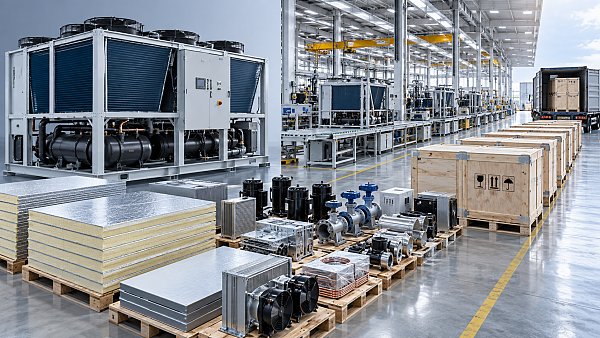
 Thermal FlowHardware Sourcing: How Procurement Teams Evaluate Suppliers, Lead Times, and CostHardware sourcing made smarter: learn how procurement teams assess suppliers, lead times, compliance, and total cost to secure reliable, high-value infrastructure.Dr. Julian VoltSep 23, 2026
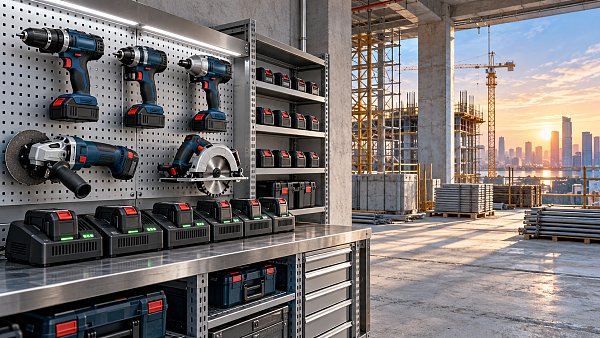
 Rapid Site GearHow to Choose Cordless Power Tools for High-Volume Jobsite Work?Cordless power tools for high-volume jobsites: learn how to select reliable battery platforms, optimize runtime, improve safety, and reduce costly downtime.Marcus ShieldSep 22, 2026
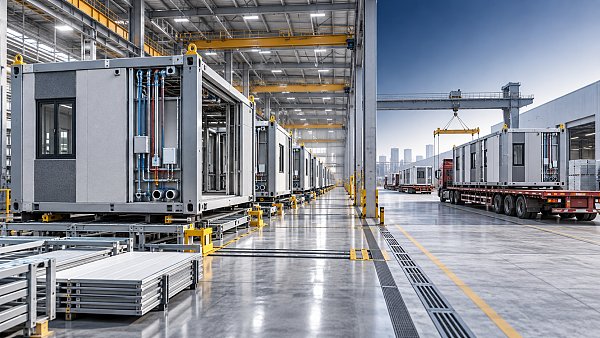
 3D Steel ModulesHow to Vet a Prefabricated Construction Systems Supplier for Capacity and Delivery RiskVet a prefabricated construction systems supplier with proven capacity, quality controls, supply-chain resilience, and logistics planning to reduce delivery risk.Marcus ShieldSep 21, 2026
 High-Speed LiftsHow to Specify Gearless High-Speed Elevator Systems for Tall-Building TrafficGearless High-Speed Elevator Systems: learn how to optimize tall-building traffic, ride quality, energy efficiency, resilience, and lifecycle value with a smarter specification strategy.Dr. Victor GearSep 20, 2026