Industry News
Curation by industry experts
Hot Articles
Popular Tags
What Is Process Environment Engineering in Industrial Facilities?
Process environment engineering is the practical control of indoor conditions that directly affect industrial output. In a facility setting, that usually means defining and maintaining temperature, humidity, airflow direction, air cleanliness, room pressure, and sometimes vibration or corrosion exposure within limits that a process can tolerate. The work sits between building services and production engineering: it uses HVAC, enclosure design, insulation, filtration, controls, utilities, and operating procedures to create an environment in which materials, equipment, and process steps remain stable.
The phrase often causes confusion because it sounds similar to general comfort air-conditioning. The difference is that comfort design protects occupants from discomfort, while process environment engineering protects a manufacturing or storage condition from drift. A warehouse holding temperature-sensitive ingredients, a clean packaging room, a battery assembly line, a pharmaceutical filling area, a precision electronics workshop, and a cold-chain transfer dock may all require very different environmental targets even when they sit inside the same industrial campus. In each case, the room condition is part of the process itself.
Where the discipline begins
In practice, process environment engineering starts with a process map rather than a duct layout. Engineers first identify which stages are sensitive to heat gain, moisture pickup, condensation, airborne particles, cross-contamination, pressure reversal, or thermal shock. A powder blending room may be limited by dust behavior and humidity control. A cold room may be limited by door openings, evaporator defrost cycles, and pallet loading patterns. A prefabricated assembly space may need dimensional stability in adhesives or sealants, which can shift if the ambient condition swings beyond a narrow band.
That early mapping step matters because the same numerical target can be justified for very different reasons. A low-humidity room might be needed to protect hygroscopic materials, reduce corrosion risk, avoid condensation on chilled surfaces, or manage electrostatic behavior when combined with grounding and flooring design. Without identifying the actual failure mode, teams often specify tighter tolerances than the process needs, which increases plant cost and operating burden without improving output quality.
What it controls inside a facility
The most visible parameter is temperature, but temperature alone rarely describes the real requirement. Relative humidity or dew point often matters just as much, especially where products absorb moisture, where metal surfaces are colder than ambient air, or where packaging must remain dry during filling and sealing. Air velocity and airflow pattern also change outcomes. High air change rates may help dilute contaminants, yet excessive turbulence can spread particles, disturb a controlled zone, or create uneven drying across a line.
Cleanliness is another major dimension. In some rooms, the issue is not visible dust but particle size distribution, microbial load, oil mist, or fibers released from packaging materials and garments. Filtration selection therefore cannot be treated as a generic upgrade. Pre-filters, fine filters, and high-efficiency filters each have different pressure drops, service lives, and housing integrity requirements. If filter access doors leak, the nominal filter rating says little about actual room performance.
Room pressurization is frequently misunderstood. Positive pressure can help keep surrounding contamination out of a clean area. Negative pressure may be required where fumes, dust, or bioactive materials must be contained. The engineering challenge is not simply setting one room higher or lower than another. It is maintaining a reliable pressure cascade while doors open, personnel move, conveyors pass through partitions, and exhaust systems cycle. Poorly coordinated controls can cause brief reversals that never appear in a monthly trend review but still create contamination risk.
Why industrial plants need it
Industrial processes rarely fail in dramatic ways first. More often, they drift. Labels wrinkle because a room becomes too damp. Powder clumps during transfer. Frost develops near cold-room doors and creates slip hazards. Instrument cabinets overheat in mezzanine spaces. Coatings cure unevenly because supply air distribution changes after a layout modification. Once these issues appear on the production floor, they are often treated as separate maintenance or quality problems even though the source is environmental control.
Process environment engineering reduces that disconnect by tying facility conditions to process limits before problems become visible. It also supports compliance where production environments must meet documented temperature, pressure, cleanliness, or storage conditions. In regulated sectors, the environmental record can be as important as the mechanical design itself, because proving that a room stayed within defined limits may determine whether a batch, sample set, or stored inventory remains acceptable.
Typical applications across facilities
In food and pharmaceutical sites, the discipline often overlaps with hygienic design and cold-chain management. Chilled processing rooms need more than refrigeration capacity; they need surfaces, drains, air throw, and door management arranged so that washdown, condensation, and product handling do not undermine sanitation. In freezer logistics, the difficult zone is often the boundary: loading docks, ante-rooms, and transfer corridors where warm moist air enters and frost can accumulate on floors, sensors, door tracks, and evaporator coils.
In electronics and precision manufacturing, stable temperature may be less about human comfort than about dimensional tolerance, soldering quality, optical inspection consistency, and static control. Here, a room with acceptable average temperature can still be unsuitable if stratification forms near process equipment or if local heat rejection from tools overwhelms supply air patterns.
Chemical processing brings another set of conditions. Solvent vapors, corrosive gases, or combustible dusts can change the enclosure materials, fan selections, motor locations, and pressure strategy. In these cases, process environment engineering reaches beyond air-conditioning into containment, exhaust treatment, make-up air balance, and the long-term durability of insulation, gaskets, coatings, and sensor housings.
The technical building blocks
A robust design usually depends on several layers working together. The enclosure matters first: insulated wall panels, vapor barriers, sealed penetrations, floor-to-wall junctions, and door hardware determine how much uncontrolled heat, moisture, and contamination enter the space. If the envelope is weak, oversized mechanical equipment only masks the problem temporarily.
Mechanical systems then shape the room condition. Depending on the application, that may include chilled water coils, direct expansion units, desiccant dehumidification, reheaters, steam or gas humidifiers, terminal HEPA modules, pressure relief dampers, air curtains, and recirculation systems. Sensor placement is critical. A temperature sensor mounted near a supply grille or a humidity probe exposed to washdown splash can produce reassuring but misleading readings. Good designs match sensor locations to the exposure that actually governs product or process quality.
Controls complete the system. Environmental requirements are dynamic, not static. Shift changes, cleaning windows, forklift traffic, batch transitions, door cycles, and seasonal ambient swings all affect the load. Controls therefore need logic for mode changes, alarms, trend retention, setpoint hierarchy, and recovery sequences after power interruption or maintenance bypass. A room that can hold condition only when everything remains untouched is not a reliable process environment.
Common specification errors
One frequent mistake is defining room temperature without stating where it applies. Is the limit intended at return air, at working height, inside a storage pallet, or at the product contact zone? Another is specifying relative humidity in a cold or mixed-temperature area where dew point would describe condensation risk more clearly. Some projects also overemphasize equipment tonnage while ignoring infiltration from doors, service penetrations, conveyors, and unsealed cable trays.
Another misjudgment appears during procurement and installation. Components may be technically compatible on paper but unsuitable once exposed to cleaning chemicals, low temperatures, or frequent washdown. Standard door gaskets can harden in freezer transitions. Filter housings may corrode near aggressive disinfectants. Flexible duct connectors may shed particles in cleaner rooms. Adhesives used in insulation jackets can fail at joints if the surface preparation or vapor sealing method is poor.
There is also a coordination risk between disciplines. The process engineer may define a narrow humidity band. The architect may design convenient access doors. The refrigeration contractor may size equipment around steady-state loads. The controls team may program independent loops for temperature and pressure without considering door events. None of these choices looks unreasonable in isolation, yet the finished room may hunt, recover slowly, or never meet condition during actual operation.
Installation and commissioning realities
Many environmental failures are introduced after design approval. Duct leakage above a clean ceiling, missing sealant around pipe sleeves, incorrectly sloped drains, poorly insulated valve bodies, and unsupported sensor cabling can all compromise room performance. In cold applications, vapor barrier continuity deserves special attention. Even a small breach can allow moisture ingress, which may later appear as wet insulation, ice formation, corrosion under cladding, or persistent condensation near penetrations.
Commissioning should therefore verify more than equipment startup. It usually needs air balance confirmation, directional airflow checks at representative door states, pressure stability tests, sensor calibration, trend review over occupied and unoccupied periods, and observation during real operational events such as material transfer or sanitation cycles. A room that passes a short empty-room test may still fail once production equipment releases heat or moisture.
Maintenance is part of the engineering
Once the facility is live, process environment engineering continues through maintenance and change control. Filters load gradually, damper linkages drift, door closers lose force, and floor damage opens pathways for moisture or contamination. Cleaning teams may remove access panels and not reseal them fully. Production groups may add temporary curtains, portable fans, or extra equipment that alters air movement. Any of these small changes can shift a previously stable room outside its intended operating window.
Trend interpretation also needs discipline. A monthly average that looks acceptable can hide short excursions during startup, defrost, washdown, or loading. Reviewing alarm rationality, excursion duration, sensor location history, and maintenance interventions often gives a more truthful picture than a single environmental snapshot.
How to recognize a mature approach
A mature process environment engineering program usually expresses requirements in operational language: acceptable condition ranges, recovery expectations after disturbances, monitoring points, calibration intervals, and clear boundaries between process space and adjacent support areas. It also treats construction details, mechanical capacity, and control logic as one system rather than separate packages.
That integrated view is especially important in facilities where HVAC resilience, cold storage continuity, modular room construction, vertical material movement, and envelope chemistry interact. If any one part is considered alone, the room may look compliant in drawings while remaining unstable in operation.
At its core, process environment engineering defines the indoor conditions a process needs and then makes those conditions repeatable. In industrial facilities, repeatability is the real measure. A room that occasionally reaches the target is a building space. A room that reliably holds it under working conditions is an engineered process environment.
Recommended News
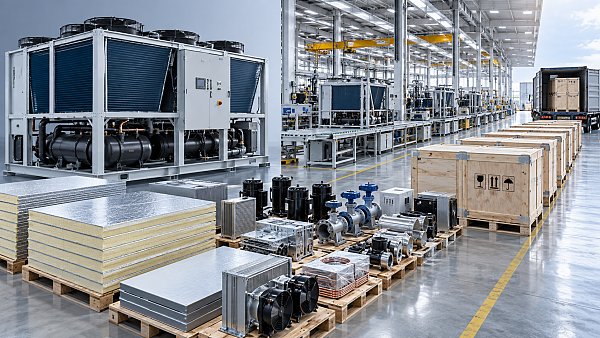
 Thermal FlowHardware Sourcing: How Procurement Teams Evaluate Suppliers, Lead Times, and CostHardware sourcing made smarter: learn how procurement teams assess suppliers, lead times, compliance, and total cost to secure reliable, high-value infrastructure.Dr. Julian VoltSep 23, 2026
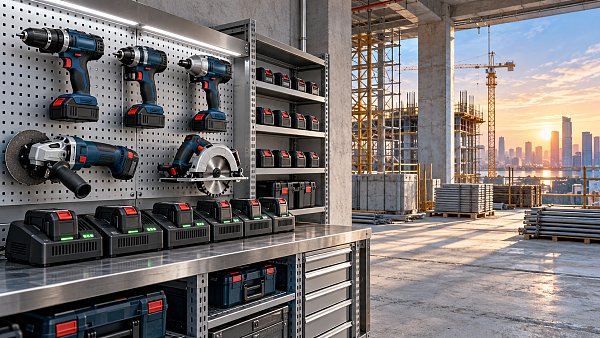
 Rapid Site GearHow to Choose Cordless Power Tools for High-Volume Jobsite Work?Cordless power tools for high-volume jobsites: learn how to select reliable battery platforms, optimize runtime, improve safety, and reduce costly downtime.Marcus ShieldSep 22, 2026
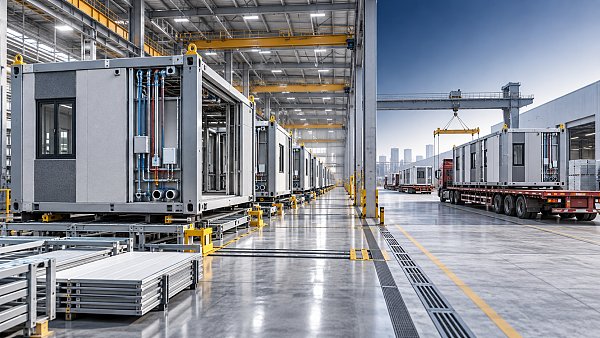
 3D Steel ModulesHow to Vet a Prefabricated Construction Systems Supplier for Capacity and Delivery RiskVet a prefabricated construction systems supplier with proven capacity, quality controls, supply-chain resilience, and logistics planning to reduce delivery risk.Marcus ShieldSep 21, 2026
 High-Speed LiftsHow to Specify Gearless High-Speed Elevator Systems for Tall-Building TrafficGearless High-Speed Elevator Systems: learn how to optimize tall-building traffic, ride quality, energy efficiency, resilience, and lifecycle value with a smarter specification strategy.Dr. Victor GearSep 20, 2026