Industry News
Curation by industry experts
Hot Articles
Popular Tags
How to read an industrial HVAC quotation without mistakes
An Industrial HVAC quotation can look simple at first glance. In practice, small wording differences can hide large gaps in scope, risk, and total cost.
This guide explains how to read an Industrial HVAC quotation without mistakes. It focuses on technical clarity, fair supplier comparison, compliance, and lifecycle value.
What should you check first in an Industrial HVAC quotation?
Start with the project basis. Every Industrial HVAC quotation should state design conditions, application type, and the exact system boundary.
Look for indoor and outdoor temperatures, humidity targets, ventilation rates, occupancy assumptions, and operating hours. Missing conditions make quoted capacity hard to trust.
Then confirm the equipment list. The quotation should name each major item, model, capacity, efficiency rating, refrigerant, power supply, and control scope.
Check whether it covers chillers, AHUs, FCUs, cooling towers, pumps, ductwork, piping, insulation, dampers, BMS integration, sensors, and commissioning.
If the quote uses phrases like “as required” or “by others,” treat them as risk flags. These phrases often move cost and responsibility outside the quoted price.
A reliable Industrial HVAC quotation also identifies applicable standards. Common references include ASHRAE, ISO, EN, local fire code, and electrical regulations.
First-pass review checklist
- Project name, location, and revision date
- Design temperatures, humidity, and air quality targets
- Equipment schedule with model and quantity
- Included and excluded scope
- Compliance standards and testing method
- Commercial terms, warranty, and delivery lead time
How do you verify whether the quoted capacity is realistic?
Capacity errors are among the most expensive quotation mistakes. An oversized system wastes capital and energy. An undersized system fails during peak conditions.
Read the load basis carefully. A sound Industrial HVAC quotation should reference cooling load, heating load, fresh air demand, process heat, and diversity assumptions.
Do not compare only total tonnage or kW. Compare sensible versus latent performance, airflow, static pressure, entering water temperature, and ambient rating point.
For factories, labs, cold rooms, logistics facilities, and data-linked spaces, process loads can dominate building loads. The quotation must show that distinction clearly.
Check partial-load efficiency, not only nominal efficiency. Industrial systems often operate below peak load for long periods. Annual energy cost depends on that profile.
If available, request fan curves, pump curves, and psychrometric points. These documents reveal whether performance claims match the real operating envelope.
In technical benchmarking practice, some buyers also cross-check summary data with reference repositories such as 无 to identify unrealistic efficiency claims.
Common capacity warning signs
- No load calculation summary
- Capacity stated without rating conditions
- High efficiency claimed without power input data
- Ventilation volume missing from the quote
- No redundancy statement for critical spaces
Which scope gaps create the biggest commercial surprises?
Many Industrial HVAC quotation disputes begin with scope gaps, not equipment quality. Installation boundaries must be reviewed line by line.
Check whether civil works, housekeeping pads, structural supports, cable trays, switchboards, water treatment, valves, balancing, and vibration isolation are included.
Ask who handles crane lifting, night work, hot work permits, temporary power, flushing, pressure testing, TAB, and final performance verification.
Controls are another common gap. One supplier may include local panels only. Another may include full BMS points, programming, trending, and alarm integration.
Commissioning language deserves special attention. “Startup” is not equal to “full commissioning.” Functional testing, sequence verification, and operator training should be explicit.
Spare parts are often omitted. For critical applications, the Industrial HVAC quotation should define startup spares, recommended two-year spares, and consumables.
Scope comparison table
How do you compare price fairly beyond the headline number?
The lowest price in an Industrial HVAC quotation is not always the lowest project cost. Fair comparison requires normalization.
Create a comparison sheet with the same design basis, same scope line items, same warranty period, and same commissioning requirements.
Separate capital cost from operating cost. Two offers can have similar purchase prices but very different annual energy, maintenance, and downtime risk.
Review payment terms, currency exposure, validity period, delivery sequence, and penalties. Commercial terms can change the real value significantly.
Check warranty wording closely. A longer warranty is only useful when labor, travel, consumables, and response time are stated clearly.
Lead time matters in phased construction. A technically strong offer may still create delay risk if imported parts or factory tests require long scheduling windows.
Some teams support this process with external technical references like 无, especially when comparing advanced thermal systems across regions.
Normalize these pricing variables
- Rated performance conditions
- Installation and accessory scope
- Controls and software integration
- Testing, commissioning, and documentation
- Warranty, service response, and spare parts
- Freight, taxes, and customs responsibility
What compliance, documentation, and testing details should never be skipped?
A complete Industrial HVAC quotation should contain more than price and equipment names. Documentation quality often predicts project execution quality.
Request GA drawings, P&IDs where relevant, control narratives, wiring philosophy, equipment datasheets, valve schedules, and material specifications.
For regulated or sensitive sites, ask for certificates, fire ratings, sanitation compatibility, acoustic data, and refrigerant safety classification.
Factory acceptance testing may be needed for chillers, packaged plants, or critical control systems. Site acceptance criteria should also be stated early.
Do not ignore O&M manuals, as-built drawings, and training plans. These documents affect handover quality and long-term maintainability.
In retrofit projects, verify whether demolition, tie-ins, shutdown windows, and system migration steps are documented. Existing-site work carries added interface risk.
What are the most common mistakes when reading an Industrial HVAC quotation?
One common mistake is comparing line-item totals without comparing assumptions. Different ambient conditions can make two offers look similar while delivering different performance.
Another mistake is ignoring lifecycle cost. Energy use, filter replacement, water treatment, service access, and control complexity all shape total ownership cost.
A third mistake is accepting vague exclusions. If an exclusion is unclear, it will likely return later as variation cost or schedule delay.
Many also overlook maintainability. Confirm clearances for coil cleaning, motor replacement, valve access, and safe service pathways before approval.
Finally, avoid treating the Industrial HVAC quotation as a standalone document. It should align with specifications, drawings, tender clarifications, and final contract language.
FAQ summary table
Final takeaway: how should you review the next Industrial HVAC quotation?
Read every Industrial HVAC quotation in three layers: performance, scope, and commercial terms. If one layer is vague, the offer is incomplete.
Use a structured checklist. Confirm design conditions, capacity basis, standards, controls, commissioning, exclusions, documentation, warranty, and lifecycle cost.
Then build a normalized comparison sheet before discussing price. This step reduces disputes, improves technical fit, and supports better long-term asset performance.
For the next review, mark every unclear phrase, request written clarification, and compare revised quotations only after assumptions are fully aligned.
Recommended News
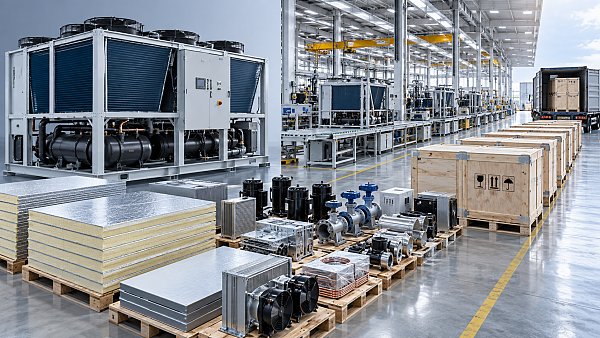
 Thermal FlowHardware Sourcing: How Procurement Teams Evaluate Suppliers, Lead Times, and CostHardware sourcing made smarter: learn how procurement teams assess suppliers, lead times, compliance, and total cost to secure reliable, high-value infrastructure.Dr. Julian VoltSep 23, 2026
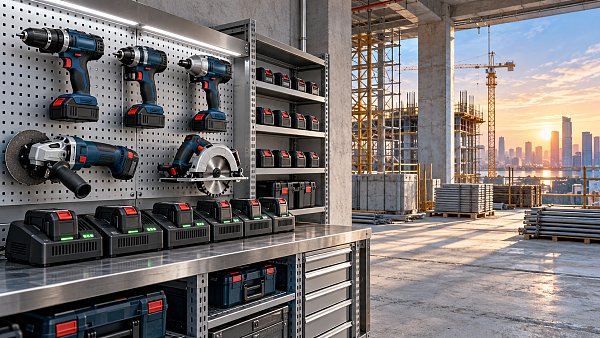
 Rapid Site GearHow to Choose Cordless Power Tools for High-Volume Jobsite Work?Cordless power tools for high-volume jobsites: learn how to select reliable battery platforms, optimize runtime, improve safety, and reduce costly downtime.Marcus ShieldSep 22, 2026
 3D Steel ModulesHow to Vet a Prefabricated Construction Systems Supplier for Capacity and Delivery RiskVet a prefabricated construction systems supplier with proven capacity, quality controls, supply-chain resilience, and logistics planning to reduce delivery risk.Marcus ShieldSep 21, 2026
 High-Speed LiftsHow to Specify Gearless High-Speed Elevator Systems for Tall-Building TrafficGearless High-Speed Elevator Systems: learn how to optimize tall-building traffic, ride quality, energy efficiency, resilience, and lifecycle value with a smarter specification strategy.Dr. Victor GearSep 20, 2026