Industry News
Curation by industry experts
Hot Articles
Popular Tags
How thermal resilience helps smart buildings cut peak loads
Thermal resilience is moving from efficiency topic to peak-load strategy
As energy tariffs climb and weather swings become sharper, Thermal Resilience in smart buildings is gaining strategic importance across the built environment.
It is no longer only about comfort during outages or heat waves.
It is increasingly about cutting peak loads, stabilizing HVAC performance, and improving operational continuity without overbuilding mechanical capacity.
For complex campuses, logistics assets, offices, hospitals, and mixed-use towers, Thermal Resilience in smart buildings creates measurable value.
It helps decision-makers evaluate envelope quality, thermal mass, controls, storage, and system coordination as one integrated performance stack.
That shift matters in a market where demand charges, grid stress, and carbon reporting increasingly influence infrastructure design and asset operations.
The signal is clear: peak demand is becoming a design constraint
Smart buildings once focused on annual energy savings.
Now, many projects are judged by how they perform during the hottest afternoon, the coldest morning, or the most volatile tariff period.
This is where Thermal Resilience in smart buildings changes the conversation.
Instead of reacting to thermal stress with bigger chillers or faster air movement, resilient buildings absorb, delay, and redistribute heat gains.
That lowers the intensity of short demand spikes.
In practice, the trend shows up in several ways:
- More focus on load shifting rather than only load reduction.
- Greater use of predictive controls tied to weather and occupancy data.
- Stronger attention to facade, insulation, and infiltration performance.
- Integration of thermal storage with central plant optimization.
- Use of commissioning data to verify resilience, not just efficiency.
Across the comprehensive industry landscape, this trend links HVAC engineering, modular construction, smart mobility, cold-chain integrity, and building chemistry.
Why Thermal Resilience in smart buildings is accelerating now
Several forces are pushing thermal resilience from a specialist concept into a mainstream infrastructure requirement.
Together, these drivers make Thermal Resilience in smart buildings a practical response to both operational and strategic pressure.
The strongest gains come from coordinated thermal layers
Peak-load reduction rarely comes from a single device.
It usually comes from combining passive and active measures so the building responds slowly, predictably, and intelligently under stress.
Envelope performance sets the first boundary
High-performance insulation, airtightness, solar control, and advanced glazing reduce the speed of heat transfer.
This delays peak cooling demand and lowers plant ramp-up intensity.
Thermal mass and storage create timing flexibility
Structural mass, phase-change materials, and chilled water or ice storage can shift cooling production away from expensive hours.
That reduces grid exposure while protecting interior conditions.
Controls turn resilience into an operational asset
AI-assisted controls can forecast weather, occupancy, and tariff windows.
They can then sequence chillers, pumps, ventilation, shading, and storage to flatten demand curves.
HVAC integration prevents efficiency trade-offs
Thermal resilience works best when chillers, air handlers, terminal units, and control logic are commissioned as a system.
Otherwise, one upgrade may shift stress somewhere else.
The impact extends across building types and infrastructure chains
The value of Thermal Resilience in smart buildings varies by use case, but the pattern is consistent.
Better thermal stability reduces emergency equipment cycling, protects sensitive operations, and improves energy cost predictability.
- Commercial offices benefit from lower demand charges and steadier comfort during occupancy peaks.
- Healthcare facilities gain more tolerance during equipment stress and utility disturbances.
- Cold-chain and food environments improve thermal containment around critical zones.
- Data-rich campuses can link resilience metrics with digital twins and plant analytics.
- Modular and prefabricated projects can embed resilient envelope strategies earlier in design.
In tall buildings, smart elevators and vertical transportation also interact with heat loads, occupancy pulses, and power demand timing.
That means thermal strategy should not sit apart from broader spatial-infrastructure planning.
What deserves closer attention during evaluation
Many assets claim efficiency, but fewer demonstrate true thermal resilience under peak conditions.
A stronger evaluation framework should test real operational behavior.
- Measure how long indoor conditions remain stable when cooling input is reduced.
- Check whether controls support pre-cooling, adaptive setpoints, and occupancy-based zoning.
- Assess facade solar gains by orientation, shading response, and glazing specification.
- Review insulation continuity and infiltration risks at joints and service penetrations.
- Verify thermal storage economics against tariff structure and peak duration patterns.
- Confirm performance through commissioning data, not only design simulations.
- Benchmark against ASHRAE, ISO, and EN requirements where relevant.
These checks help separate nominal smartness from measurable resilience.
A practical path for stronger peak-load control
The most effective response is phased, data-led, and tied to operational priorities.
This approach makes Thermal Resilience in smart buildings actionable, not theoretical.
The next competitive edge will come from verified resilience intelligence
The market is moving beyond static efficiency claims.
Assets will increasingly be compared by how well they maintain stable conditions, manage demand events, and coordinate thermal systems with digital infrastructure.
That makes Thermal Resilience in smart buildings an important lens for capital planning, retrofit prioritization, and technical benchmarking.
The most durable gains usually come from combining high-performance building chemicals and insulation, responsive HVAC systems, and verified control logic.
Where resilience is quantified, peak-load reduction becomes easier to finance and easier to defend.
A useful next step is to review recent peak events, compare them with envelope and control data, and identify which thermal layers failed first.
That evidence can guide smarter upgrades, stronger standards alignment, and more confident infrastructure decisions.
Recommended News
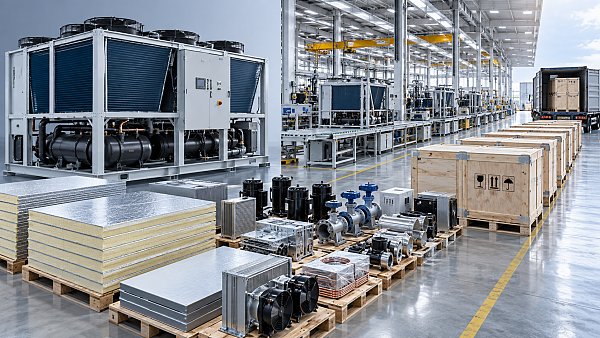
 Thermal FlowHardware Sourcing: How Procurement Teams Evaluate Suppliers, Lead Times, and CostHardware sourcing made smarter: learn how procurement teams assess suppliers, lead times, compliance, and total cost to secure reliable, high-value infrastructure.Dr. Julian VoltSep 23, 2026
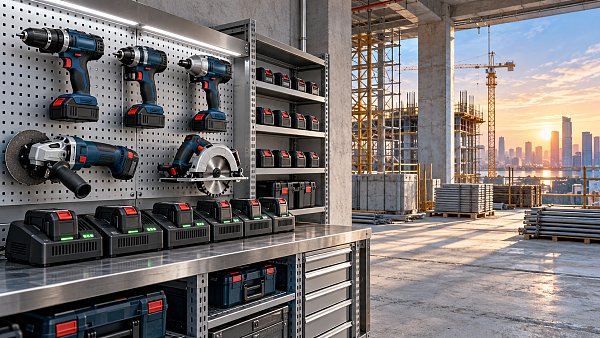
 Rapid Site GearHow to Choose Cordless Power Tools for High-Volume Jobsite Work?Cordless power tools for high-volume jobsites: learn how to select reliable battery platforms, optimize runtime, improve safety, and reduce costly downtime.Marcus ShieldSep 22, 2026
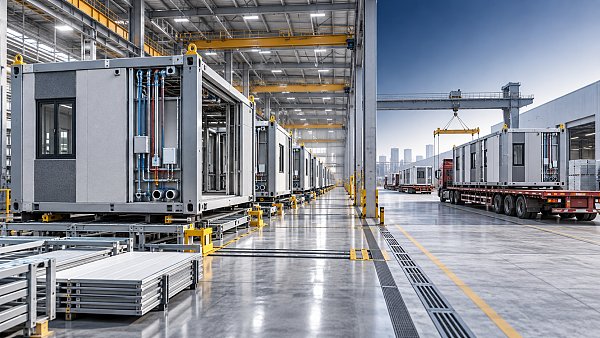
 3D Steel ModulesHow to Vet a Prefabricated Construction Systems Supplier for Capacity and Delivery RiskVet a prefabricated construction systems supplier with proven capacity, quality controls, supply-chain resilience, and logistics planning to reduce delivery risk.Marcus ShieldSep 21, 2026
 High-Speed LiftsHow to Specify Gearless High-Speed Elevator Systems for Tall-Building TrafficGearless High-Speed Elevator Systems: learn how to optimize tall-building traffic, ride quality, energy efficiency, resilience, and lifecycle value with a smarter specification strategy.Dr. Victor GearSep 20, 2026