Industry News
Curation by industry experts
Hot Articles
Popular Tags
How thermal management systems prevent costly downtime
For project managers and engineering leads, unplanned downtime can disrupt schedules, inflate costs, and damage service reliability. Thermal Management systems play a critical role in preventing these failures by stabilizing operating conditions, protecting sensitive equipment, and supporting continuous performance across demanding environments. Understanding how the right thermal strategy reduces risk is essential for keeping critical infrastructure efficient, compliant, and operational.
In industrial facilities, cold-chain sites, modular buildings, transport hubs, and high-density equipment rooms, temperature instability is rarely a minor issue. A 2°C to 5°C deviation can shorten component life, trigger control faults, or push regulated storage areas outside acceptable limits.
For decision-makers managing critical assets, the value of Thermal Management systems is not limited to comfort or energy savings. Their core business role is continuity: preserving uptime, maintaining compliance, protecting product integrity, and reducing emergency interventions that often cost far more than planned maintenance.
Why downtime happens when thermal conditions are poorly controlled
Downtime linked to heat stress or temperature drift typically develops in stages. Equipment first operates outside its preferred thermal envelope, then efficiency declines, alarms increase, and finally a shutdown occurs. In many facilities, these stages unfold over 24 hours to 12 weeks before a visible failure is acknowledged.
Common thermal failure paths in critical infrastructure
Project managers often encounter similar failure patterns across sectors. Chillers cycle too frequently, compressors run under excessive head pressure, electrical cabinets overheat above 40°C, or cold rooms lose stability during door openings and peak loading windows.
- Overheating of drives, control panels, and server-adjacent equipment
- Condensation on sensors, coils, or pipework causing corrosion and false readings
- Uneven airflow leading to hot spots, cold pockets, or product temperature drift
- Insufficient redundancy during maintenance, outage transfer, or seasonal peaks
- Delayed fault detection because monitoring is limited to room-level averages
These issues are especially serious in facilities governed by operational thresholds. Pharmaceutical storage may require tight setpoints, food logistics may rely on stable temperature bands throughout loading cycles, and industrial process rooms may need controlled humidity within 45% to 60% to prevent material degradation.
The cost profile of one avoidable shutdown
A single thermal event can create layered costs. There is the direct repair cost, but also lost production hours, rescheduling of contractors, validation rework, spoilage risk, and potential compliance exposure. For project-led operations, even a 6-hour interruption can ripple across a 2- to 4-week milestone window.
The table below outlines typical downtime triggers and their operational effects in B2B environments that depend on resilient thermal infrastructure.
The key point is that failure rarely begins at the moment of shutdown. It begins with unmanaged deviation. Thermal Management systems help teams detect, buffer, and correct these deviations before they become schedule-critical incidents.
Why modern facilities are more exposed than before
Asset density is increasing. Many sites now combine automation, compact equipment layouts, tighter environmental tolerances, and longer operating hours. A facility that ran safely at 60% load five years ago may now operate at 80% to 90% utilization with far less thermal margin.
Climate volatility also matters. Heat waves, humidity spikes, and unstable grid conditions can expose design weaknesses that stayed hidden during normal seasons. This is why resilience planning now extends beyond nominal design temperatures and into scenario-based thermal risk management.
How Thermal Management systems actively prevent costly downtime
Effective Thermal Management systems do more than cool a space. They regulate heat transfer, manage airflow, control humidity, support redundancy, and provide monitoring that allows operators to intervene before thermal stress reaches a failure threshold.
Stabilizing equipment operating conditions
Most critical systems have an optimal thermal window. Motors, drives, compressors, batteries, sensors, and control electronics all perform best within defined ranges. Maintaining that window reduces random alarms, improves efficiency, and slows wear on components with replacement cycles of 3, 5, or 10 years.
In practical terms, this means balancing sensible and latent loads, matching cooling response to occupancy or process demand, and avoiding short cycling. It also means placing sensors where loads actually form rather than relying only on one central thermostat.
Four protection mechanisms that matter most
- Continuous temperature control with narrow variance bands
- Humidity management to prevent condensation, static, and material instability
- Airflow engineering to eliminate hot spots and dead zones
- Alarm logic and remote monitoring for response within minutes, not hours
These mechanisms become even more valuable in facilities with mixed-use thermal demands. A single building may contain process areas, storage zones, mechanical rooms, loading docks, and vertical transport cores, each with different environmental priorities and risk profiles.
Supporting resilience through redundancy and zoning
Well-designed systems divide risk. Instead of depending on one oversized unit, many projects use zoned layouts, duty-standby configurations, or N+1 logic for critical loads. This allows one component to be serviced or isolated while thermal stability is preserved in the protected area.
For project managers, redundancy should be evaluated against downtime tolerance. If a zone can only tolerate 15 minutes of drift, the backup sequence, control transfer, and restart logic must be verified before handover, not after commissioning issues appear.
Some teams reviewing benchmarked solutions also compare documentation repositories such as 无 when mapping specifications, acceptance criteria, and lifecycle expectations across multiple asset categories.
Where project teams gain the most value from thermal risk planning
The return on thermal planning is highest where downtime has cascading consequences. This includes industrial HVAC networks, cold-chain storage, prefabricated plant rooms, elevator machine spaces, and buildings with high-performance envelope requirements. In each case, prevention is cheaper than recovery.
High-risk application scenarios
The following comparison highlights where Thermal Management systems directly reduce operational exposure and what project leaders should prioritize during planning and procurement.
Across these scenarios, the strongest results come when thermal planning starts early. Waiting until late-stage MEP coordination often forces compromise on routing, access clearances, redundancy, and control integration.
Procurement questions that reduce lifecycle risk
Project leads should move beyond headline capacity figures. A system rated for the required load may still underperform if response speed, part-load efficiency, service access, or control logic do not match the real operating profile.
Five evaluation points before approval
- Can the system hold target conditions during 10% to 20% load swings?
- How quickly does it recover after door openings, outage transfers, or peak occupancy?
- Is redundancy defined as backup capacity, backup controls, or both?
- Are maintenance intervals realistic for 24/7 operations and limited shutdown windows?
- Does monitoring include zone-level alerts, trend logs, and remote diagnostics?
These questions help teams compare total operational value, not just purchase price. In many B2B environments, the cheapest configuration becomes the most expensive if it adds even 2 to 3 emergency callouts per year or requires frequent manual intervention.
Implementation steps that keep systems reliable after commissioning
A strong design can still fail if execution is weak. Thermal reliability depends on installation quality, controls integration, commissioning depth, and maintenance discipline. Project managers should treat these as linked phases rather than separate handoff points.
A practical 5-step deployment framework
- Define critical loads, allowable drift, and downtime tolerance by zone.
- Validate envelope, insulation, airflow path, and utility constraints.
- Align equipment selection with normal load and peak-event scenarios.
- Commission sensors, alarms, trending, and failover sequences under live tests.
- Set preventive maintenance intervals, spare parts lists, and escalation protocols.
This framework is particularly relevant for complex infrastructure portfolios managed across multiple regions. Standardizing acceptance checklists around ASHRAE, ISO, and EN references improves consistency when different contractors, climates, and asset types are involved.
Commissioning details often missed
Common gaps include poor sensor placement, undocumented setpoint logic, untested standby switching, and no validation under partial-load conditions. A system may pass a brief startup review yet fail during week 3 of actual operations when humidity rises or occupancy patterns shift.
Maintenance planning should also be explicit. Filters, coils, condensate paths, seals, refrigerant condition, and control calibration all need scheduled attention. Depending on dust load and operating hours, some checks may be monthly, others quarterly, and major inspections annual.
Service indicators worth monitoring
- Temperature deviation frequency by zone per 7-day cycle
- Runtime imbalance between lead and standby units
- Recovery time after access-door openings or power transitions
- Compressor cycling rate and fan speed stability
- Condensation events, drain issues, or insulation wet spots
Teams that review these indicators regularly can identify early degradation before it becomes an outage. Even simple trend analysis over 30, 60, and 90 days can reveal hidden thermal stress patterns that traditional reactive maintenance misses.
Common mistakes when selecting Thermal Management systems
Not every failure is caused by undersizing. In many projects, downtime risk increases because the selected solution is mismatched to control strategy, site layout, maintenance capability, or future expansion plans.
Frequent specification and planning errors
- Designing only for average load instead of peak and transient conditions
- Ignoring humidity and condensation risk in mixed-temperature zones
- Relying on room averages instead of point-of-risk measurements
- Underestimating the thermal effect of envelope leakage and poor insulation
- Choosing systems without clear spare parts and support planning
Another issue is fragmented responsibility. When envelope performance, HVAC controls, cold storage design, and electrical heat loads are reviewed in isolation, thermal interactions are missed. Better outcomes come from cross-discipline coordination during design reviews and pre-handover testing.
For organizations managing large spatial assets, reference-driven evaluation can support alignment between engineering, procurement, and operations. In that context, comparing specifications and maintenance expectations against 无 may help structure internal decision workflows without relying on assumptions alone.
Building a stronger business case for thermal resilience
The business case for Thermal Management systems becomes clear when teams quantify avoided disruption. Instead of asking only what the system costs to install, ask what one thermal incident would cost in lost output, emergency labor, inventory exposure, and schedule compression.
For project managers, this reframes thermal investment as risk control. If better zoning, monitoring, or redundancy prevents even one major event over a 3- to 5-year period, the payback can be operationally significant even before energy savings are considered.
What stakeholders usually want to see
Executive and procurement stakeholders typically respond to five decision points: uptime protection, compliance support, maintenance predictability, lifecycle cost, and adaptability for future load changes. Presenting thermal strategy in these terms creates faster alignment across technical and commercial teams.
Thermal Management systems are most effective when treated as part of a wider spatial-infrastructure strategy, not a stand-alone utility package. When thermal control, building envelope, automation, and serviceability are designed together, downtime risk drops and operational confidence rises.
For project managers and engineering leaders responsible for uptime, the right thermal approach is a practical safeguard against avoidable disruption. If you are planning a new facility, retrofitting a critical zone, or benchmarking infrastructure resilience, now is the time to review your operating thresholds, recovery expectations, and system readiness. Contact us to discuss your application, get a tailored solution, and explore more resilient thermal infrastructure strategies.
Recommended News
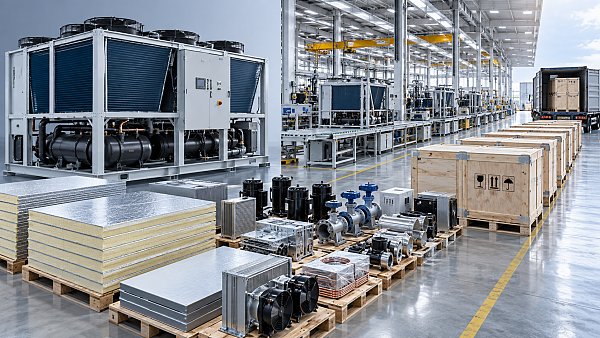
 Thermal FlowHardware Sourcing: How Procurement Teams Evaluate Suppliers, Lead Times, and CostHardware sourcing made smarter: learn how procurement teams assess suppliers, lead times, compliance, and total cost to secure reliable, high-value infrastructure.Dr. Julian VoltSep 23, 2026
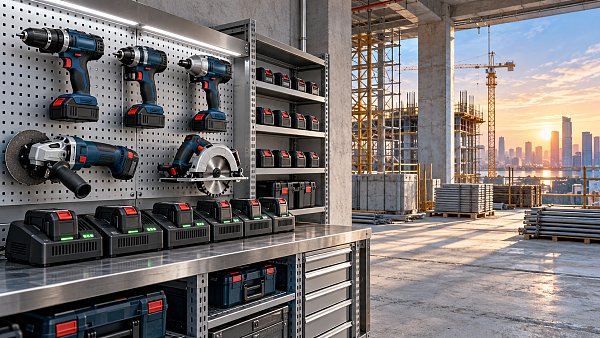
 Rapid Site GearHow to Choose Cordless Power Tools for High-Volume Jobsite Work?Cordless power tools for high-volume jobsites: learn how to select reliable battery platforms, optimize runtime, improve safety, and reduce costly downtime.Marcus ShieldSep 22, 2026
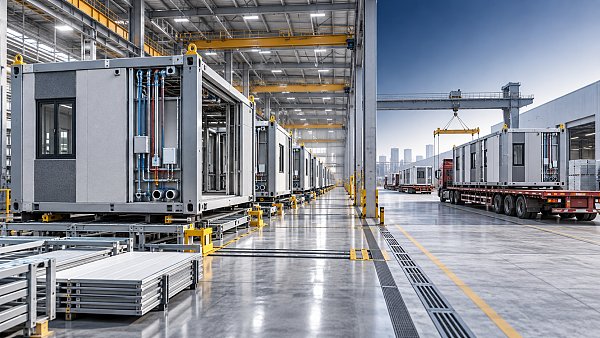
 3D Steel ModulesHow to Vet a Prefabricated Construction Systems Supplier for Capacity and Delivery RiskVet a prefabricated construction systems supplier with proven capacity, quality controls, supply-chain resilience, and logistics planning to reduce delivery risk.Marcus ShieldSep 21, 2026
 High-Speed LiftsHow to Specify Gearless High-Speed Elevator Systems for Tall-Building TrafficGearless High-Speed Elevator Systems: learn how to optimize tall-building traffic, ride quality, energy efficiency, resilience, and lifecycle value with a smarter specification strategy.Dr. Victor GearSep 20, 2026