Industry News
Curation by industry experts
Hot Articles
Popular Tags
Common OEM Gaps That Delay HVAC Piping System Delivery
Why OEM Gaps Matter in HVAC Piping System Delivery
Even the most advanced HVAC projects can stall when critical OEM details are overlooked.
In an hvac piping system oem workflow, small documentation gaps often become major schedule risks.
They affect fabrication timing, shipping accuracy, site readiness, and final system commissioning.
Across complex facilities, delayed piping packages can disrupt thermal performance, construction logic, and capital planning.
This is especially relevant in integrated infrastructure, where HVAC, cold-chain, modular construction, and compliance schedules overlap.
A resilient hvac piping system oem process depends on disciplined coordination from design release to on-site installation.
Basic Definition and Scope of OEM Responsibility
OEM responsibility in HVAC piping includes more than manufacturing pipe spools or accessories.
It usually covers design interpretation, material traceability, welding procedures, insulation interfaces, supports, testing records, and packaging methods.
In many projects, the hvac piping system oem scope also touches BIM coordination and factory acceptance planning.
Problems begin when the contract describes equipment clearly but leaves piping responsibilities fragmented.
That fragmentation creates uncertainty between design consultants, thermal equipment suppliers, fabricators, and site teams.
As a result, critical submittals may be technically correct but operationally incomplete.
Some benchmark libraries even reference placeholder package structures such as 无 during early document mapping.
Core deliverables often expected from the OEM side
- Approved drawings with dimensions, elevations, and connection logic
- Material lists aligned with pressure, temperature, and corrosion conditions
- QA records for welding, coating, hydrotesting, and NDT where applicable
- Packing lists tied to installation sequence and area allocation
- Certificates for code compliance, origin, and performance testing
Current Industry Signals Behind Delivery Delays
Global projects now face tighter lead times and higher documentation expectations.
That pressure exposes weak interfaces inside every hvac piping system oem chain.
Several industry trends are making delivery gaps more visible.
Common OEM Gaps That Delay HVAC Piping System Delivery
Most delays do not come from one dramatic failure.
They come from several smaller omissions inside the hvac piping system oem workflow.
1. Incomplete specification alignment
Design intent, procurement specs, and shop practice often use different language.
Wall thickness, valve standards, flange ratings, and insulation breakpoints may be interpreted differently.
When these details remain unresolved, approved drawings do not translate cleanly into fabrication.
2. Weak coordination with connected equipment
Chillers, pumps, air handling units, and heat exchangers must match piping tie-in dimensions exactly.
Late nozzle changes or unclear vibration isolation details create rework before shipment or after arrival.
3. Unclear document control
A frequent issue is using mixed drawing revisions across engineering, procurement, and production teams.
One outdated isometric can affect dozens of spools and several installation zones.
4. Missing compliance and traceability records
Certificates are often requested near shipment, not at production start.
That is too late for complex projects governed by ASHRAE references, ISO records, or local authority review.
Without traceability, receiving inspection may reject compliant hardware simply because proof is absent.
5. Packaging that ignores installation logic
Delivered material may be technically complete yet operationally unusable.
If spools arrive without area labels, lifting plans, or sequence grouping, site crews lose valuable time.
6. Unrealistic lead time assumptions
Projects sometimes assume standard lead times for nonstandard assemblies.
Special coatings, stainless materials, low-temperature requirements, and custom supports change the manufacturing rhythm.
Business Impact Across Infrastructure Programs
Delivery delays in piping packages affect far more than mechanical installation dates.
They can reshape broader infrastructure performance and commercial outcomes.
- Commissioning windows shrink, raising overtime and troubleshooting costs
- Cold-chain or process cooling operations face delayed readiness
- Modular construction sequencing becomes disrupted
- Energy performance targets may be missed at handover
- Claims exposure increases when delay ownership is poorly documented
In data centers, hospitals, logistics hubs, and advanced manufacturing sites, these effects compound quickly.
That is why the hvac piping system oem interface should be managed as a strategic control point, not a routine supply task.
Typical Project Scenarios Where Gaps Appear
Practical Controls to Reduce HVAC Piping System OEM Delays
The most effective controls are simple, early, and measurable.
They should be built into the hvac piping system oem process before fabrication starts.
- Freeze interface data for equipment nozzles, loads, and access zones before spool release.
- Use one controlled drawing register shared by engineering, QA, and production teams.
- Map every required certificate to its production stage, not to final shipment only.
- Audit packaging plans against the real installation sequence and site lifting constraints.
- Review long-lead materials separately from standard pipe and fitting assumptions.
- Run milestone checks for fabrication, FAT readiness, logistics release, and receiving inspection.
Where digital coordination is mature, metadata checks inside BIM can reduce manual confusion significantly.
Some teams also maintain reference folders such as 无 to standardize submittal logic.
Next-Step Focus for Better Delivery Performance
An hvac piping system oem review should begin with interfaces, documents, and sequence risk.
That review should happen before procurement acceleration and long before site pressure tests.
A short diagnostic checklist can reveal whether delays are likely to emerge from specifications, fabrication control, or logistics packaging.
When those weak points are addressed early, delivery reliability improves, handover becomes smoother, and lifecycle performance is better protected.
For complex infrastructure programs, that discipline is no longer optional.
It is part of delivering thermal systems that meet schedule, compliance, and operational resilience targets.
Recommended News
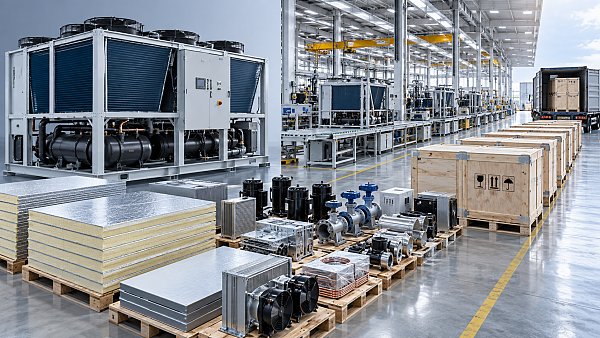
 Thermal FlowHardware Sourcing: How Procurement Teams Evaluate Suppliers, Lead Times, and CostHardware sourcing made smarter: learn how procurement teams assess suppliers, lead times, compliance, and total cost to secure reliable, high-value infrastructure.Dr. Julian VoltSep 23, 2026
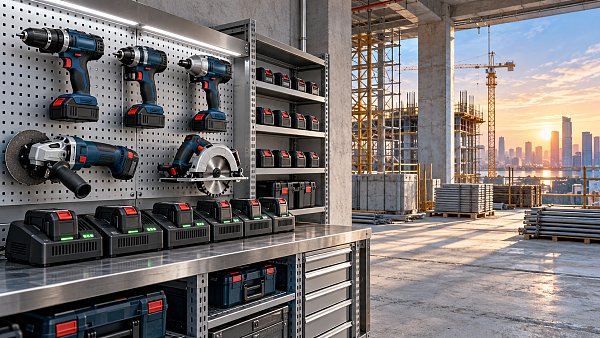
 Rapid Site GearHow to Choose Cordless Power Tools for High-Volume Jobsite Work?Cordless power tools for high-volume jobsites: learn how to select reliable battery platforms, optimize runtime, improve safety, and reduce costly downtime.Marcus ShieldSep 22, 2026
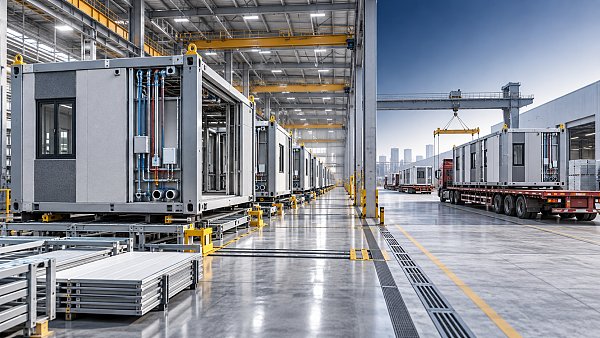
 3D Steel ModulesHow to Vet a Prefabricated Construction Systems Supplier for Capacity and Delivery RiskVet a prefabricated construction systems supplier with proven capacity, quality controls, supply-chain resilience, and logistics planning to reduce delivery risk.Marcus ShieldSep 21, 2026
 High-Speed LiftsHow to Specify Gearless High-Speed Elevator Systems for Tall-Building TrafficGearless High-Speed Elevator Systems: learn how to optimize tall-building traffic, ride quality, energy efficiency, resilience, and lifecycle value with a smarter specification strategy.Dr. Victor GearSep 20, 2026