Industry News
Curation by industry experts
Hot Articles
Popular Tags
What drives magnetic levitation chillers cost in 2026?
For 2026 capital planning, Magnetic Levitation Chillers cost should be evaluated as a system-level investment, not a single equipment quote.
Initial price remains important, yet it rarely explains the full economic picture across complex buildings, industrial campuses, healthcare facilities, or cold-chain assets.
Actual cost outcomes depend on efficiency targets, part-load performance, refrigerant pathway, controls integration, site conditions, and long-term service strategy.
In large infrastructure portfolios, comparing Magnetic Levitation Chillers cost without these variables can distort ROI and increase lifecycle risk.
The sections below outline the main cost drivers, current market signals, practical application value, and decision checkpoints relevant to 2026 sourcing.
Cost definition and scope for magnetic levitation chillers
Magnetic Levitation Chillers cost usually refers to more than the factory price of the chiller package.
A complete assessment includes equipment, transportation, rigging, controls, electrical work, hydronic connections, commissioning, and expected service requirements.
It should also include energy consumption under real operating profiles, because magnetic bearing centrifugal systems often gain value through part-load efficiency.
These chillers use oil-free magnetic bearings and high-speed compressors, reducing friction losses and some maintenance burdens common in conventional screw systems.
However, advanced technology, proprietary controls, and precise manufacturing can increase upfront Magnetic Levitation Chillers cost compared with standard alternatives.
The correct benchmark is total cost of ownership across the intended duty cycle, utility tariffs, resilience requirements, and compliance horizon.
Main cost layers
- Base equipment and accessories
- Capacity and redundancy configuration
- Controls, sensors, and BMS integration
- Installation labor and site adaptation
- Energy use at full load and part load
- Maintenance, diagnostics, and spare parts
- Refrigerant compliance and future retrofit exposure
Industry signals shaping Magnetic Levitation Chillers cost in 2026
Several macro and technical trends are pushing Magnetic Levitation Chillers cost in different directions during the 2026 planning cycle.
These signals mean 2026 pricing discussions should combine market data with engineering analysis instead of relying on historic rule-of-thumb budgets.
Primary technical drivers behind Magnetic Levitation Chillers cost
The strongest drivers of Magnetic Levitation Chillers cost are usually tied to performance specification and project complexity.
Capacity and turndown requirement
Larger tonnage generally increases unit price, but the cost curve is not linear.
Projects requiring deep turndown, multi-unit staging, or N+1 resilience often need additional controls and sequencing logic.
Efficiency rating under real conditions
Specifying peak efficiency only can mislead procurement comparisons.
The real value of oil-free magnetic bearing chillers appears under seasonal and part-load operation, especially in variable occupancy environments.
Refrigerant selection
Refrigerant choice influences equipment design, safety classification, compliance path, and long-term replacement risk.
A future-proof refrigerant strategy may increase present Magnetic Levitation Chillers cost while lowering future disruption exposure.
Control architecture
Advanced plants often require BAS interoperability, load optimization, remote diagnostics, and cybersecurity review.
That digital layer can materially change the final project value, even when chiller tonnage remains unchanged.
Acoustics and footprint
Urban retrofits, hospitals, and premium mixed-use assets may require low vibration, compact layout, or strict sound performance.
Such constraints often increase engineering hours, support steel, and installation planning.
Business value beyond purchase price
Understanding Magnetic Levitation Chillers cost requires connecting technical features to business outcomes.
In many facilities, lower friction losses and oil-free operation support stable efficiency, cleaner heat transfer surfaces, and reduced routine intervention.
For mission-critical estates, improved reliability and monitoring can help protect uptime, product quality, occupant comfort, or process stability.
In ESG-linked portfolios, better energy performance can contribute to carbon goals, reporting standards, and internal capital allocation priorities.
Therefore, a higher initial Magnetic Levitation Chillers cost may still outperform cheaper systems when measured over ten to twenty years.
Typical value categories
- Energy savings during part-load operation
- Reduced oil-management complexity
- Lower vibration and quieter operation
- Enhanced digital diagnostics
- Potentially lower lifecycle maintenance intensity
- Stronger alignment with decarbonization strategies
Common application scenarios and cost patterns
Different asset types produce different Magnetic Levitation Chillers cost profiles because cooling load behavior changes from one environment to another.
This is why direct unit-price comparison often fails across sectors, even when nominal capacity looks similar.
Practical evaluation points for 2026 sourcing
A disciplined review framework helps convert Magnetic Levitation Chillers cost into a comparable, decision-ready metric.
Check the load model first
Use realistic weather data, occupancy assumptions, and process demand rather than oversized design conditions alone.
Compare lifecycle cost, not just capex
Review annual energy, maintenance intervals, downtime exposure, and expected refrigerant pathway together.
Validate standards and testing basis
Confirm efficiency and performance references under recognized frameworks such as ASHRAE, ISO, or EN conditions.
Scrutinize integration scope
Clarify whether the quotation includes drives, sensors, gateways, plant controls, water treatment interfaces, and remote support tools.
Assess service ecosystem strength
The true risk in Magnetic Levitation Chillers cost may sit in local technical support, spare availability, and commissioning competence.
- Request part-load maps, not only headline COP values.
- Model utility tariff sensitivity across seasons.
- Review refrigerant availability over the asset horizon.
- Include installation disruption costs in retrofit cases.
- Verify cybersecurity responsibilities for connected equipment.
Implementation considerations and next-step framework
By 2026, the most reliable decisions on Magnetic Levitation Chillers cost will come from cross-checking engineering performance, compliance readiness, and operational economics.
A practical next step is to build a side-by-side matrix covering capex, kW per ton, IPLV or equivalent metrics, refrigerant strategy, controls scope, and service terms.
That matrix should be tested against real load curves, not generic assumptions, especially in mixed-use, healthcare, pharmaceutical, and cold-chain environments.
Where complex infrastructure is involved, technical benchmarking helps reveal whether higher Magnetic Levitation Chillers cost reflects genuine lifecycle value or avoidable specification inflation.
A structured review now can reduce budget surprises, improve resilience, and align cooling investment with long-term performance goals.
Recommended News
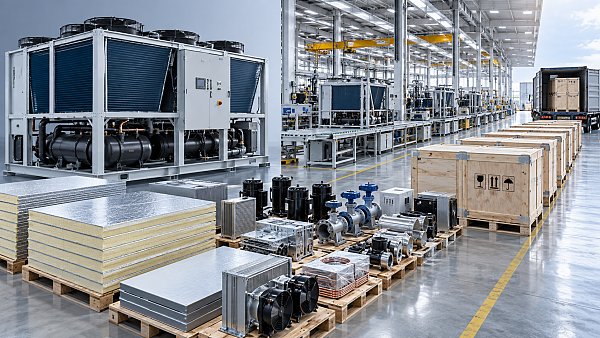
 Thermal FlowHardware Sourcing: How Procurement Teams Evaluate Suppliers, Lead Times, and CostHardware sourcing made smarter: learn how procurement teams assess suppliers, lead times, compliance, and total cost to secure reliable, high-value infrastructure.Dr. Julian VoltSep 23, 2026
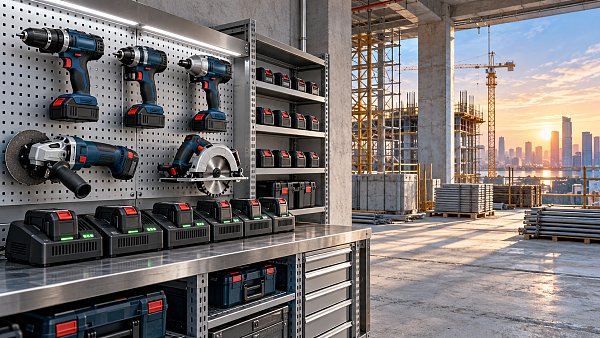
 Rapid Site GearHow to Choose Cordless Power Tools for High-Volume Jobsite Work?Cordless power tools for high-volume jobsites: learn how to select reliable battery platforms, optimize runtime, improve safety, and reduce costly downtime.Marcus ShieldSep 22, 2026
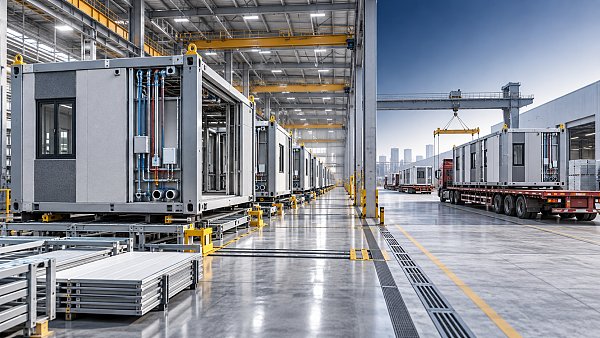
 3D Steel ModulesHow to Vet a Prefabricated Construction Systems Supplier for Capacity and Delivery RiskVet a prefabricated construction systems supplier with proven capacity, quality controls, supply-chain resilience, and logistics planning to reduce delivery risk.Marcus ShieldSep 21, 2026
 High-Speed LiftsHow to Specify Gearless High-Speed Elevator Systems for Tall-Building TrafficGearless High-Speed Elevator Systems: learn how to optimize tall-building traffic, ride quality, energy efficiency, resilience, and lifecycle value with a smarter specification strategy.Dr. Victor GearSep 20, 2026