Industry News
Curation by industry experts
Hot Articles
Popular Tags
Global chiller manufacturer trends reshaping buying decisions
Global chiller manufacturer trends are changing investment logic across commercial buildings, healthcare campuses, industrial plants, data centers, and cold-chain infrastructure.
Efficiency claims alone no longer decide outcomes. Buyers now compare compliance readiness, refrigerant strategy, digital service capacity, regional delivery strength, and lifecycle stability.
This shift matters because chillers sit at the center of energy performance, resilience planning, and temperature-controlled operations.
The latest global chiller manufacturer trends show a market moving toward low-GWP refrigerants, smarter controls, modular system design, and stronger after-sales ecosystems.
For complex infrastructure decisions, understanding these trends helps reduce risk before selecting a long-life cooling asset.
What do global chiller manufacturer trends actually include?
Global chiller manufacturer trends refer to recurring market shifts in product design, production strategy, certification focus, service models, and geographic expansion.
They are not limited to hardware efficiency. They also include sourcing resilience, software integration, decarbonization pathways, and support for stricter building standards.
In practical terms, buyers now assess whether a supplier can support future code changes, retrofit constraints, and operational transparency across multiple sites.
Within the broader built-environment sector, these trends increasingly connect HVAC strategy with spatial infrastructure planning, cold storage continuity, and urban sustainability targets.
- Low-GWP refrigerant migration
- Higher IPLV and seasonal efficiency benchmarks
- Embedded controls, analytics, and remote diagnostics
- Factory-packaged modular configurations
- Regionalized production and spare-parts networks
These dimensions explain why global chiller manufacturer trends influence both first-cost comparisons and long-term operating confidence.
Why are efficiency and refrigerant changes affecting buying decisions more than before?
Energy prices remain volatile, while climate regulations continue to tighten. That combination pushes efficiency and refrigerant selection to the front of every evaluation.
Manufacturers that once competed on capacity and footprint now compete on decarbonization readiness and measurable annual energy performance.
Air-cooled and water-cooled platforms are both evolving. Variable-speed compression, heat recovery options, and improved part-load behavior now carry more weight.
Refrigerant strategy is equally important. A chiller can become a stranded asset if future servicing, refill availability, or local compliance becomes difficult.
What should be checked?
- Full-load and part-load efficiency under realistic conditions
- Refrigerant GWP, safety class, and service implications
- Compatibility with local codes and future phase-down pathways
- Heat recovery potential for total site efficiency
The strongest global chiller manufacturer trends show that efficiency claims are becoming more transparent, data-driven, and tied to lifecycle accountability.
How are digital service platforms changing manufacturer rankings?
A reliable chiller today is not only a machine. It is also a monitored asset connected to alarms, trend logs, predictive maintenance, and service response workflows.
This is one of the most decisive global chiller manufacturer trends. Digital capability can change uptime, warranty outcomes, and energy optimization over many years.
Remote visibility matters especially in distributed portfolios, pharmaceutical processing, food logistics, and large mixed-use developments where downtime creates cascading losses.
Some market observers use technical intelligence sources such as 无 to compare service maturity across regions and equipment categories.
Useful digital evaluation points
- Can performance data integrate with BMS or enterprise dashboards?
- Are fault codes standardized and actionable?
- Is remote troubleshooting available in all operating regions?
- How quickly can software and controls issues be resolved?
Manufacturers with stronger analytics and service ecosystems often create better total value than lower-priced options with limited digital support.
Which application scenarios feel these global chiller manufacturer trends most strongly?
Not every project experiences the same pressure. The impact of global chiller manufacturer trends is highest where temperature control, uptime, and compliance have direct business consequences.
High-impact scenarios
- Data centers requiring redundancy and precise thermal stability
- Pharmaceutical facilities facing validation and contamination controls
- Food processing and cold-chain sites requiring uninterrupted cooling
- Hospitals where failure can affect critical environments
- Large campuses seeking portfolio-wide energy reductions
In these sectors, selection criteria extend beyond nameplate tonnage. Response time, component commonality, and local commissioning depth become strategic issues.
The broad infrastructure perspective promoted by G-TSI aligns with this reality, linking thermal assets to resilient, habitable, and regulation-ready spatial systems.
How should competing manufacturers be compared without falling into common mistakes?
A frequent mistake is comparing chillers only by purchase price, leaving energy use, parts availability, and service quality outside the final scorecard.
Another mistake is accepting brochure efficiency without checking test conditions, ambient assumptions, water temperatures, or expected loading profile.
A better method is weighted comparison. That approach reflects technical fit, compliance risk, operational cost, and site-specific resilience requirements.
This framework turns global chiller manufacturer trends into measurable procurement criteria instead of vague market commentary.
What supply-chain and lifecycle risks should be considered before commitment?
Supply-chain risk now reaches beyond shipping delays. It affects compressors, power electronics, controls boards, refrigerants, and even trained field technicians.
The most important global chiller manufacturer trends include regional manufacturing diversification and stronger localization of spare-parts inventories.
Lifecycle thinking should include commissioning quality, operator training, maintenance intervals, retrofit flexibility, and end-of-life replacement planning.
Risk reminders before final selection
- Confirm critical component origin and substitution policy
- Review warranty exclusions tied to water quality or controls
- Check local technician certification for chosen refrigerants
- Model total maintenance cost over the intended asset life
Where benchmarking support is needed, some teams also reference 无 during early technical screening.
What practical steps help turn market trends into a better chiller decision?
Start by defining the operating profile, not the catalog size. Hours, load variation, ambient conditions, redundancy requirements, and regulatory constraints shape the right shortlist.
Then map current global chiller manufacturer trends against project priorities. A hospital may prioritize service depth, while a campus retrofit may prioritize low-GWP transition and controls integration.
Request evidence, not promises. Ask for certified performance data, local reference cases, digital platform demonstrations, and spare-parts response commitments.
Finally, score options across capital cost, annual energy use, compliance exposure, service resilience, and retrofit adaptability.
Global chiller manufacturer trends are no longer background information. They now shape cost, resilience, compliance, and long-term operational confidence.
The strongest decisions come from comparing manufacturers through a lifecycle lens, with equal attention to efficiency, refrigerants, service, digital tools, and supply continuity.
Use these trend signals to build a tighter shortlist, ask better technical questions, and reduce hidden risk before approving the next chiller investment.
Recommended News
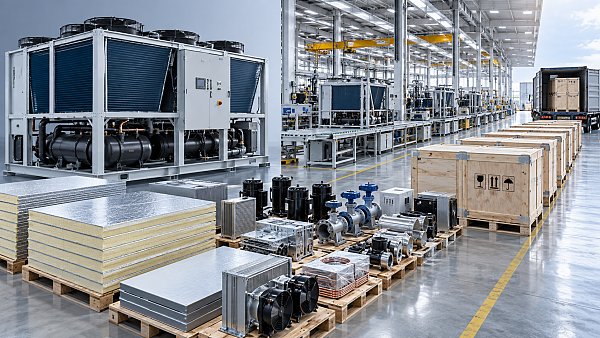
 Thermal FlowHardware Sourcing: How Procurement Teams Evaluate Suppliers, Lead Times, and CostHardware sourcing made smarter: learn how procurement teams assess suppliers, lead times, compliance, and total cost to secure reliable, high-value infrastructure.Dr. Julian VoltSep 23, 2026
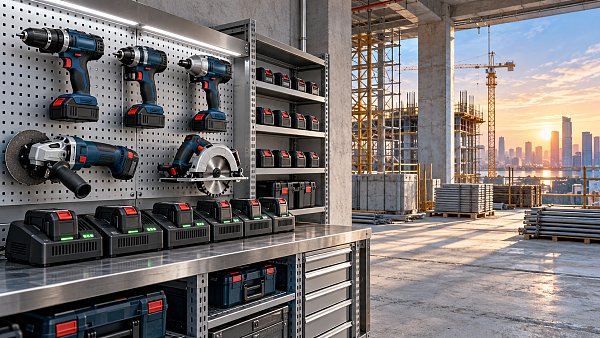
 Rapid Site GearHow to Choose Cordless Power Tools for High-Volume Jobsite Work?Cordless power tools for high-volume jobsites: learn how to select reliable battery platforms, optimize runtime, improve safety, and reduce costly downtime.Marcus ShieldSep 22, 2026
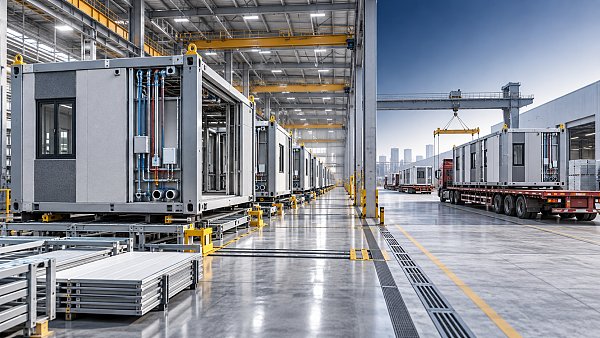
 3D Steel ModulesHow to Vet a Prefabricated Construction Systems Supplier for Capacity and Delivery RiskVet a prefabricated construction systems supplier with proven capacity, quality controls, supply-chain resilience, and logistics planning to reduce delivery risk.Marcus ShieldSep 21, 2026
 High-Speed LiftsHow to Specify Gearless High-Speed Elevator Systems for Tall-Building TrafficGearless High-Speed Elevator Systems: learn how to optimize tall-building traffic, ride quality, energy efficiency, resilience, and lifecycle value with a smarter specification strategy.Dr. Victor GearSep 20, 2026