Industry News
Curation by industry experts
Hot Articles
Popular Tags
How to compare Industrial Refrigeration equipment wisely
Choosing Industrial Refrigeration equipment is not just about upfront cost. It is a technical decision with direct impact on energy use, temperature control, compliance, uptime, and asset life.
A wise comparison should examine system architecture, operating profile, refrigerant pathway, serviceability, and total lifecycle value. In complex facilities, weak evaluation methods often create long-term operating risk.
For broad industrial environments, from food logistics to pharmaceutical storage and process cooling, benchmark-driven selection helps align performance expectations with real operating conditions.
Understanding Industrial Refrigeration equipment in practical terms
Industrial Refrigeration equipment refers to engineered cooling systems used to remove heat from products, rooms, processes, or storage environments at commercial and industrial scale.
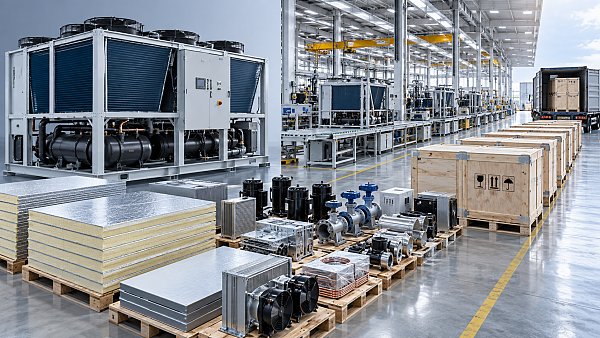
It often includes compressors, condensers, evaporators, controls, valves, piping, insulation, and monitoring systems. In many projects, the “equipment” should be assessed as a complete operating system, not as isolated hardware.
Common configurations include centralized ammonia plants, CO₂ systems, packaged condensing units, screw compressor systems, reciprocating compressor arrangements, and hybrid low-charge architectures.
The right comparison starts by defining the exact duty. A blast freezer, a process chiller, and a cold storage warehouse may all use refrigeration, yet their design priorities differ sharply.
Key technical terms worth clarifying
- Cooling capacity: heat removed under stated conditions.
- COP or efficiency: cooling output relative to energy input.
- Pull-down performance: speed of reaching target temperature.
- Part-load behavior: efficiency outside full-load operation.
- Temperature uniformity: consistency across rooms or process lines.
- Refrigerant strategy: choice shaped by safety, regulation, and sustainability.
Current comparison priorities across the broader industrial market
Today, comparison criteria for Industrial Refrigeration equipment extend far beyond rated tons or simple price. Climate pressure, energy volatility, and stricter compliance frameworks are reshaping evaluation standards.
In integrated infrastructure planning, refrigeration also affects building envelope design, electrical capacity, digital controls, and maintenance workflows. That is why system context matters as much as machine specification.
A mature review process should compare actual operating envelopes, not only brochure values. Ambient extremes, door openings, defrost cycles, product loading, and peak summer conditions change real performance significantly.
How Industrial Refrigeration equipment creates measurable business value
Well-selected Industrial Refrigeration equipment protects more than temperature. It supports inventory integrity, process continuity, energy discipline, audit readiness, and long-term infrastructure resilience.
For food and beverage operations, better comparison reduces spoilage risk and improves freezer recovery after loading. For pharmaceuticals, stable conditions help preserve compliance with strict storage windows.
In distribution hubs, efficient refrigeration lowers utility burden and supports warehouse automation. In industrial plants, reliable process cooling can stabilize production quality and reduce equipment stress.
Main value dimensions to compare
- Energy cost per operating hour
- Temperature precision under variable load
- Downtime exposure and redundancy level
- Safety and refrigerant management complexity
- Expected maintenance interval and spare parts access
- Adaptability for future expansion or retrofit
This value-based approach is especially useful in multidisciplinary infrastructure programs, where cooling, construction, controls, insulation, and power systems must perform as one coordinated environment.
Typical types of Industrial Refrigeration equipment and where comparison priorities change
Not all Industrial Refrigeration equipment should be scored with the same weighting. Application context determines which metrics deserve the highest attention.
The same cooling capacity can produce very different ownership outcomes. Therefore, equipment type should always be compared against operational complexity, site skill level, and future regulatory exposure.
A practical framework to compare Industrial Refrigeration equipment wisely
A strong comparison model for Industrial Refrigeration equipment should combine engineering data, operating assumptions, and commercial risk review.
1. Define the real load profile
Start with hourly and seasonal demand, not nominal design alone. Include ambient swings, infiltration, product pull-down, occupancy patterns, and expansion expectations.
2. Compare full-load and part-load performance
Many systems look strong at rated conditions but lose efficiency under normal operation. Ask for performance maps across realistic suction, condensing, and ambient conditions.
3. Evaluate refrigerant strategy early
Compare safety class, GWP profile, leak management, training needs, and likely compliance horizon. Short-term convenience can become a long-term retrofit burden.
4. Review controls and monitoring depth
Advanced control logic can improve compressor staging, defrost timing, alarm response, and energy optimization. Visibility through BMS or remote platforms adds practical operating value.
5. Check serviceability and redundancy
Maintenance access, spare parts availability, and modular backup capacity often separate resilient systems from fragile ones. Compare mean time to repair, not just mean time between failures.
6. Use lifecycle cost instead of purchase price alone
Estimate energy, water, maintenance, refrigerant losses, downtime risk, and retrofit probability over the equipment life. This reveals the true ranking more accurately than bid price.
Common mistakes and final decision checkpoints
Some projects compare Industrial Refrigeration equipment using incomplete assumptions. Others overvalue peak efficiency while ignoring controls, field service, or envelope quality.
- Do not compare capacities measured under different test conditions.
- Do not separate equipment review from room insulation and air management.
- Do not ignore noise, water use, heat rejection limits, or power quality.
- Do not assume future refrigerant compliance without evidence.
- Do not accept vague maintenance promises without documented scope.
Before selecting a final option, create a weighted scorecard. Include efficiency, stability, safety, maintainability, compliance outlook, capital cost, and total cost of ownership.
The wisest comparison of Industrial Refrigeration equipment is evidence-based, application-specific, and aligned with long-term infrastructure strategy. Start with real operating data, request normalized technical comparisons, and validate lifecycle assumptions before commitment.
A disciplined next step is to prepare a side-by-side benchmark sheet covering load profile, refrigerant pathway, controls, redundancy, service model, and projected operating cost over the full asset life.
Recommended News
 Thermal FlowHardware Sourcing: How Procurement Teams Evaluate Suppliers, Lead Times, and CostHardware sourcing made smarter: learn how procurement teams assess suppliers, lead times, compliance, and total cost to secure reliable, high-value infrastructure.Dr. Julian VoltSep 23, 2026
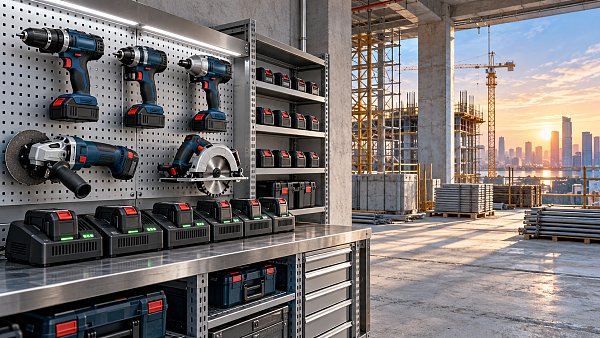
 Rapid Site GearHow to Choose Cordless Power Tools for High-Volume Jobsite Work?Cordless power tools for high-volume jobsites: learn how to select reliable battery platforms, optimize runtime, improve safety, and reduce costly downtime.Marcus ShieldSep 22, 2026
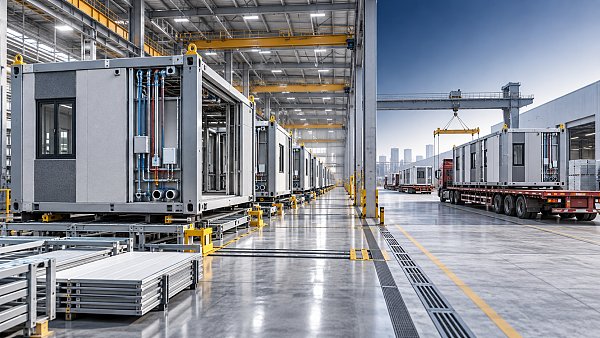
 3D Steel ModulesHow to Vet a Prefabricated Construction Systems Supplier for Capacity and Delivery RiskVet a prefabricated construction systems supplier with proven capacity, quality controls, supply-chain resilience, and logistics planning to reduce delivery risk.Marcus ShieldSep 21, 2026
 High-Speed LiftsHow to Specify Gearless High-Speed Elevator Systems for Tall-Building TrafficGearless High-Speed Elevator Systems: learn how to optimize tall-building traffic, ride quality, energy efficiency, resilience, and lifecycle value with a smarter specification strategy.Dr. Victor GearSep 20, 2026