Industry News
Curation by industry experts
Hot Articles
Popular Tags
How climate-adaptive design reduces extreme weather risk
As extreme weather events intensify, resilience can no longer remain a secondary design target.
Climate-Adaptive Design for extreme weather helps reduce disruption, protect assets, and improve lifecycle performance across complex facilities and urban systems.
For built environments, the value is practical.
It connects engineering risk control, code alignment, thermal efficiency, and business continuity within one decision framework.
From logistics hubs to healthcare campuses, adaptive design is now central to resilient infrastructure planning.
What does Climate-Adaptive Design for extreme weather actually mean?
Climate-Adaptive Design for extreme weather means shaping buildings, systems, and sites to perform under rising heat, flooding, storms, humidity, and grid instability.
It is not one product or one checklist.
It is a coordinated design approach linking architecture, HVAC, insulation, power redundancy, drainage, vertical transport, and modular construction strategy.
Traditional design often relies on historical climate averages.
Climate-adaptive design uses future weather stress, peak loads, and operational recovery requirements instead.
That shift matters for facilities requiring stable temperature ranges, controlled access, and uninterrupted occupancy.
Key features usually include
- elevated flood protection and site water management
- high-efficiency HVAC with surge capacity during heat waves
- robust insulation and air sealing for thermal stability
- modular or prefabricated systems for faster recovery
- smart controls for demand response and fault detection
- critical equipment placement above hazard zones
In short, Climate-Adaptive Design for extreme weather reduces failure points before a climate event exposes them.
How does Climate-Adaptive Design for extreme weather reduce operational risk?
The main advantage is controlled performance under abnormal conditions.
Instead of reacting after outages or damage, adaptive design anticipates where failure is most likely.
Heat waves can overload chillers, degrade indoor air quality, and shorten equipment life.
A climate-adaptive strategy counters this with efficient thermal systems, zoning, backup power planning, and continuous monitoring.
Heavy rainfall creates another risk chain.
Poor drainage can flood mechanical rooms, elevator pits, loading areas, and cold storage interfaces.
Adaptive design addresses both the site and the building envelope.
It improves runoff control, seals vulnerable penetrations, and keeps mission-critical infrastructure out of exposure zones.
Risk reduction often appears in five areas
- Lower downtime during heat, storm, or flood events
- More stable indoor conditions for people, products, and equipment
- Reduced emergency repair and replacement costs
- Better code, insurance, and disclosure readiness
- Faster post-event recovery and reoccupation
This is why Climate-Adaptive Design for extreme weather is increasingly linked to enterprise resilience, not only sustainability targets.
Which applications benefit most from climate-adaptive design?
The broad answer is any asset exposed to weather volatility and high service expectations.
However, several application types gain especially strong value.
Facilities with thermal sensitivity
Pharmaceutical sites, food logistics centers, laboratories, and data-rich environments need stable temperatures and controlled humidity.
Climate-Adaptive Design for extreme weather protects cold-chain continuity and reduces product loss risk.
Urban and high-rise environments
Dense developments face heat island effects, constrained access, stormwater overload, and elevator dependency.
Adaptive design supports façade performance, emergency circulation, and resilient vertical transportation.
Modular and fast-track projects
Prefabricated systems can embed resilience earlier because components are standardized, tested, and integrated before site deployment.
This improves quality control while shortening exposure to weather-related construction delays.
Public-serving and mixed-use assets
Hospitals, transport nodes, schools, and commercial campuses must maintain function during disruptions.
In these settings, climate-adaptive design supports life safety, continuity, and occupant trust.
How can teams judge whether a project is truly climate-adaptive?
A resilient project should be measured by performance, not by marketing language.
The best evaluation starts with exposure mapping and service priorities.
Teams should ask what weather event is most likely, what system fails first, and how quickly operations must recover.
Use this decision table for early review
If these answers are vague, the project may be efficient but not truly climate-adaptive.
What mistakes weaken Climate-Adaptive Design for extreme weather?
A common mistake is treating resilience as an add-on after the design concept is fixed.
By then, the most effective site, massing, and infrastructure decisions are already constrained.
Another error is focusing only on structural survival.
A building can remain standing yet still fail operationally if cooling, power, access, or storage conditions collapse.
Short-term capital savings also create hidden risk.
Undersized drainage, poor insulation, unprotected plant rooms, or weak controls often lead to repeated lifecycle costs.
Watch for these red flags
- resilience claims without scenario testing
- HVAC designs based only on nominal summer peaks
- critical equipment located at grade in flood-prone zones
- insulation selected for cost alone, not moisture durability
- elevator and circulation planning that ignores emergency demand
Climate-Adaptive Design for extreme weather works best when engineering disciplines share one resilience model from the start.
What are the cost and implementation considerations?
The first question is usually whether climate-adaptive design costs more.
It can increase upfront investment, but cost should be judged against avoided downtime, lower damage exposure, and better asset durability.
Some measures are low-cost when adopted early.
Examples include site grading improvements, equipment relocation, better envelope detailing, and controls integration.
Other measures need deeper planning.
These include thermal plant redundancy, modular backup capacity, advanced insulation systems, or major flood defense upgrades.
Practical implementation sequence
- Assess local hazards and future climate projections
- Identify critical functions and acceptable downtime
- Review envelope, HVAC, drainage, and power interactions
- Test design options against scenarios and standards
- Prioritize measures by risk reduction and payback
- Create maintenance and recovery protocols before handover
This process turns Climate-Adaptive Design for extreme weather into an operational strategy rather than a one-time design gesture.
FAQ summary: what should be prioritized first?
Climate-Adaptive Design for extreme weather is no longer optional for critical assets and future-ready developments.
It reduces extreme weather risk by combining site intelligence, thermal performance, material durability, and recovery planning.
The strongest results come from early coordination across building systems and infrastructure layers.
Start with hazard exposure, identify operational priorities, and test whether every major system can perform under future climate stress.
That is the most reliable path to resilient, efficient, and durable built environments.
Recommended News
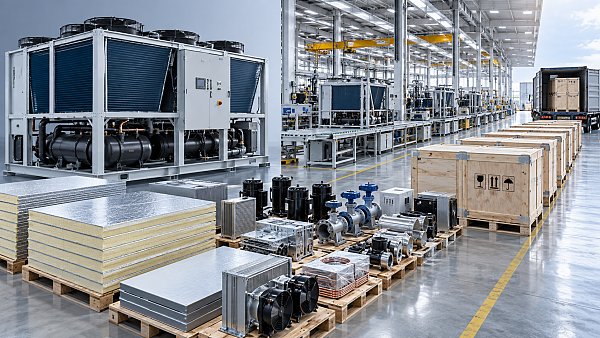
 Thermal FlowHardware Sourcing: How Procurement Teams Evaluate Suppliers, Lead Times, and CostHardware sourcing made smarter: learn how procurement teams assess suppliers, lead times, compliance, and total cost to secure reliable, high-value infrastructure.Dr. Julian VoltSep 23, 2026
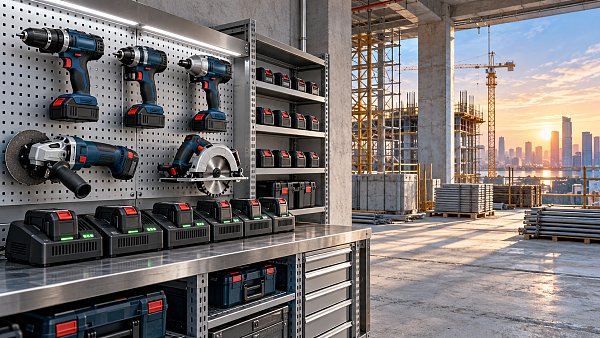
 Rapid Site GearHow to Choose Cordless Power Tools for High-Volume Jobsite Work?Cordless power tools for high-volume jobsites: learn how to select reliable battery platforms, optimize runtime, improve safety, and reduce costly downtime.Marcus ShieldSep 22, 2026
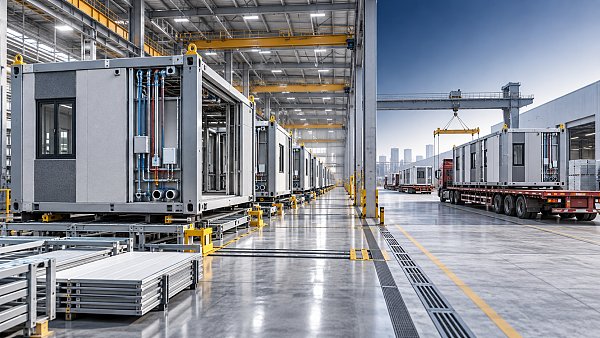
 3D Steel ModulesHow to Vet a Prefabricated Construction Systems Supplier for Capacity and Delivery RiskVet a prefabricated construction systems supplier with proven capacity, quality controls, supply-chain resilience, and logistics planning to reduce delivery risk.Marcus ShieldSep 21, 2026
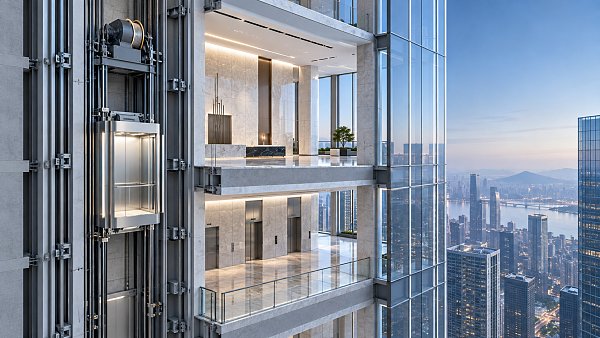
 High-Speed LiftsHow to Specify Gearless High-Speed Elevator Systems for Tall-Building TrafficGearless High-Speed Elevator Systems: learn how to optimize tall-building traffic, ride quality, energy efficiency, resilience, and lifecycle value with a smarter specification strategy.Dr. Victor GearSep 20, 2026