Industry News
Curation by industry experts
Hot Articles
Popular Tags
Thermal Resilience Standards Are Changing How Buildings Age
As climate volatility, asset longevity, and compliance pressure converge, Thermal Resilience standards are becoming a decisive benchmark for how buildings perform and age over time. For researchers evaluating infrastructure strategy, these evolving standards reveal more than material durability—they expose how HVAC reliability, envelope design, and operational resilience now shape lifecycle value, retrofit priorities, and long-term risk across modern built environments.
Why the conversation has shifted from efficiency to aging performance
A notable market change is underway: buildings are no longer judged only by how efficiently they operate at commissioning, but by how well they continue operating under thermal stress over decades. This is where Thermal Resilience standards are gaining strategic weight. For years, many building programs prioritized energy savings, first-cost optimization, and isolated compliance targets. Today, owners, planners, and procurement leaders are asking a different question: what happens when systems face hotter summers, unstable power conditions, tighter indoor air expectations, stricter cold-chain requirements, or repeated extreme weather cycles?
That change matters across the broad infrastructure landscape. In commercial towers, hospitals, data-linked facilities, pharmaceutical storage assets, modular campuses, transit nodes, and mixed-use developments, thermal failure now carries wider consequences than discomfort alone. It can accelerate material fatigue, shorten equipment service life, disrupt occupancy, compromise product integrity, and increase insurance and retrofit costs. As a result, Thermal Resilience standards are being treated less as a specialist topic and more as a framework for understanding how buildings age in a harsher operating environment.
The signals showing Thermal Resilience standards are tightening
Researchers tracking this shift can see several clear signals. First, design teams are paying more attention to peak-load performance and recovery time, not just annual averages. Second, envelope decisions are increasingly evaluated for long-term thermal stability, moisture response, and degradation risk. Third, resilience language is appearing more often in asset strategy, retrofit planning, and specification reviews. Finally, international reference points such as ASHRAE, ISO, and EN standards are influencing procurement conversations more directly, especially where mission-critical environments depend on thermal continuity.
This trend is not limited to one building category. It affects industrial HVAC design, cold-chain facilities, prefabricated systems, vertical transportation environments, and high-performance insulation markets. In each case, Thermal Resilience standards are changing the criteria used to define acceptable aging behavior. A system that looks compliant on day one may no longer be viewed as robust if it loses reliability quickly under repeated heat stress, humidity swings, thermal cycling, or partial-grid instability.
Key trend signals at a glance
What is driving the change behind Thermal Resilience standards
Several forces are reinforcing each other. Climate pressure is the most visible. More frequent heat waves, longer cooling seasons, and localized extreme weather put existing thermal assumptions under strain. Systems once sized for normal design conditions may now operate closer to their limits for longer periods, causing more wear and reducing margin for unexpected events.
The second driver is asset longevity. Many owners are extending building life through phased retrofits rather than full replacement. That increases attention on how thermal envelopes, insulation assemblies, chillers, controls, ducts, seals, and storage systems degrade over time. Thermal Resilience standards are useful here because they help connect material choice and equipment design to long-term serviceability rather than short-term specification matching.
The third driver is operational sensitivity. In sectors tied to healthcare, food security, life sciences, logistics, and digital services, thermal disruption has become a business continuity issue. A resilient temperature-controlled environment supports not only comfort but inventory protection, process stability, productivity, and regulatory credibility. Even in conventional offices and residential towers, tenant expectations around health, uptime, and comfort consistency are rising.
The fourth driver is the maturing of technical benchmarking. Decision-makers now compare systems against broader resilience criteria, including recovery speed after thermal shock, humidity control stability, equipment redundancy logic, envelope leakage performance, and insulation durability. In this context, some reference repositories and technical intelligence sources may even be reviewed during market scanning, including entries such as 无, though the real value still depends on how thoroughly teams validate project-specific needs.
How changing standards are influencing the way buildings age
The biggest practical implication is that aging is being redefined as a performance issue, not merely a chronological one. Two buildings of the same age can now be viewed very differently if one maintains thermal stability during stress events and the other does not. Thermal Resilience standards make this distinction clearer by shifting attention toward retained capability over time.
This affects three layers of building aging. The first is physical aging. Repeated thermal cycling influences expansion, contraction, seal performance, insulation integrity, moisture movement, and finish durability. The second is mechanical aging. HVAC systems exposed to sustained high loads, poor controls coordination, or inadequate redundancy often lose reliability faster. The third is operational aging. A building may remain structurally sound while becoming functionally obsolete because its thermal management no longer supports business needs or compliance expectations.
As a result, Thermal Resilience standards are changing investment logic. Instead of waiting for visible failure, owners are more likely to prioritize interventions that slow hidden performance decline. These may include envelope upgrades, insulation replacement, smarter control architectures, modular plant modernization, sensor-based monitoring, thermal zoning revisions, and backup cooling strategies for critical spaces.
Who feels the impact first
Not every stakeholder experiences this shift in the same way. For researchers and strategy teams, the issue is how to interpret market direction. For owners and operators, the issue is asset risk. For consultants and procurement managers, it is how specifications and evaluation criteria are changing. For manufacturers, it is how demand is moving from basic compliance to verifiable resilience performance.
Impact by stakeholder group
What researchers should watch beyond basic compliance
For information researchers, the most valuable insight is that Thermal Resilience standards should not be read narrowly as a code issue. They are increasingly a signal of market maturity and risk allocation. When comparing projects, suppliers, or infrastructure strategies, it is useful to look beyond simple standards references and ask how resilience is evidenced in practice.
Key indicators include whether design assumptions account for hotter operational baselines, whether thermal envelopes are modeled for aging behavior, whether HVAC systems include sensible redundancy and recoverability logic, whether monitored data supports performance claims, and whether retrofit pathways are already anticipated. In modular and prefabricated environments, this also means checking how joint integrity, transport exposure, and onsite assembly affect long-term thermal reliability. In cold-chain and pharmaceutical environments, the tolerance for deviation is even narrower, making resilience verification central to decision-making.
It is also worth noting that market messaging can outpace true capability. Claims around smart controls, advanced insulation, or high-efficiency thermal equipment should be interpreted through the lens of retained performance under stress. A solution may appear advanced while still underperforming in resilience terms if maintenance complexity, environmental sensitivity, or degradation rates are not properly addressed. This is why references such as 无 should be treated as discovery inputs rather than final proof points.
Where the next phase of change is likely to emerge
The next stage will likely involve stronger integration between resilience planning, digital monitoring, and capital allocation. Thermal Resilience standards are increasingly relevant not only during design and procurement, but throughout operations. This means more demand for condition-based maintenance, building analytics tied to stress events, and investment models that quantify avoided failure rather than only energy savings.
Another likely shift is more segmented resilience expectations by asset type. Mission-critical buildings will continue to push stricter performance evidence, while mainstream commercial and residential projects may gradually adopt resilience criteria through insurance pressure, financing expectations, and tenant demand. At the city and portfolio level, aging buildings may be ranked not just by energy intensity but by their ability to remain habitable, productive, and recoverable under thermal strain.
How organizations can respond now
Organizations do not need to wait for every rule to change before acting. A practical response begins with reframing building performance reviews around durability under stress. That means examining whether current assets are likely to age gracefully under future thermal conditions, not only whether they satisfy present operating targets. Thermal Resilience standards provide a useful lens for this review because they connect engineering detail to long-term portfolio outcomes.
Decision-makers should prioritize a few actions: map critical thermal dependencies across facilities, identify assets with high heat-load exposure or poor recovery capacity, compare specification language against newer resilience expectations, and align retrofit budgets with the highest operational risk points. Where data is limited, scenario-based assessment can still improve judgment. The goal is not perfection, but better timing and better prioritization.
For teams conducting market or supplier research, the most useful questions are straightforward. Does the solution maintain performance under prolonged stress? How does it age in real operating conditions? What evidence supports resilience claims? How difficult is service continuity during partial failure? And how easily can the system adapt as climate, occupancy, or compliance demands evolve?
Final judgment: why this trend deserves close attention
The growing relevance of Thermal Resilience standards signals a broader market correction. Buildings are no longer evaluated only as static assets with fixed design assumptions. They are being judged as living infrastructure systems that must endure volatility, preserve function, and protect value over time. That change affects planning logic, technology selection, retrofit strategy, and procurement discipline across the built environment.
For any enterprise trying to understand how this trend may affect its own portfolio, the next step is to confirm a few essentials: which facilities are most exposed to thermal stress, which systems are aging fastest in performance terms, where resilience evidence is missing, and which upcoming investments could either reduce or amplify long-term risk. Those answers will do more than improve compliance. They will clarify how well buildings are prepared to age in a world where thermal stability is no longer optional.
Recommended News
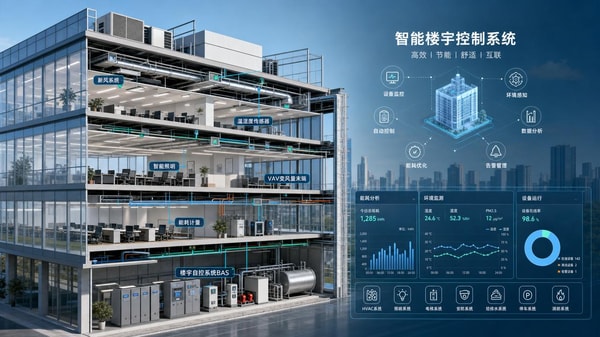
 VRF ControlSmart Building Systems for Offices Are Only as Good as Their ControlsSmart Building Systems for offices deliver real value only when controls are responsive and integrated. Learn how better control logic improves HVAC, energy performance, and occupant comfort.Dr. Julian VoltMay 06, 2026
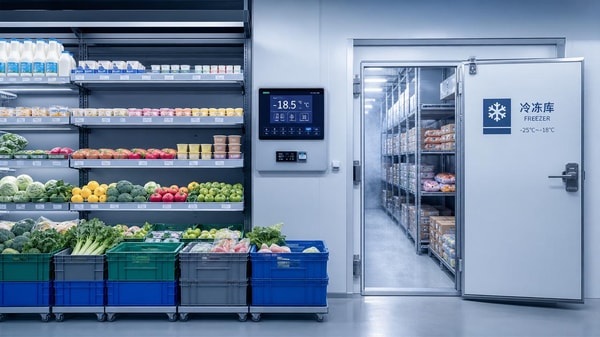
 Reefer TechFood Storage Solutions for Supermarkets: Capacity vs Shrink RiskFood Storage Solutions for supermarkets: learn how to balance storage capacity with shrink risk, improve cold-chain control, cut waste, and protect margins with smarter supermarket storage planning.Dr. Elena FrostMay 06, 2026
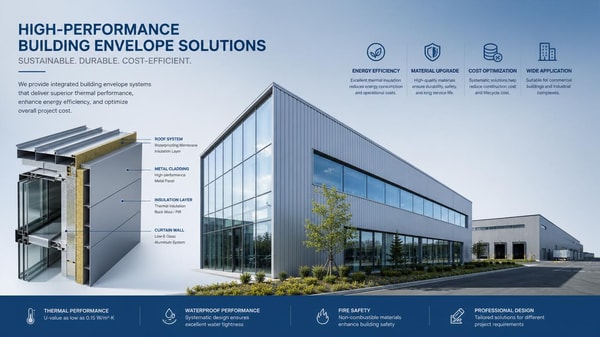
 Aerogel InsulationWhy Building Envelope Solutions Cost More Than Early EstimatesBuilding Envelope Solutions cost more than early estimates due to scope changes, compliance, and material volatility. Learn how buyers can reduce risk and control lifecycle value.Dr. Aris NanoMay 06, 2026
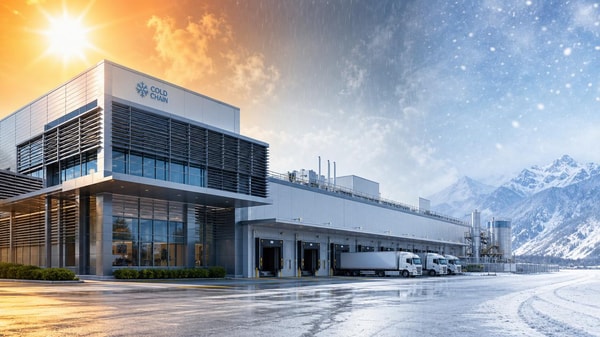
 Thermal FlowClimate-Adaptive Design Techniques That Work Beyond Mild WeatherClimate-Adaptive Design techniques for extreme heat, cold, humidity, and grid risk—discover practical strategies that improve resilience, compliance, and facility uptime.Dr. Julian VoltMay 06, 2026