Industry News
Curation by industry experts
Hot Articles
Popular Tags
Pharmaceutical Cold Chain Logistics Failures Often Start at Handover
Pharmaceutical Cold Chain logistics failures rarely begin inside the warehouse—they often start at handover points, where responsibility shifts, data gaps appear, and temperature control becomes vulnerable. For project managers and engineering leads, understanding these transfer-stage risks is essential to protecting product integrity, regulatory compliance, and delivery performance across high-value cold-chain operations.
Understanding the handover problem in pharmaceutical cold chain logistics
In pharmaceutical Cold Chain logistics, a handover is any moment when custody, documentation, physical location, or operating responsibility changes. That can happen when goods move from manufacturing to staging, from cold room to loading dock, from truck to airport pallet zone, from customs inspection to regional delivery partner, or from distributor to hospital pharmacy. These moments are operationally routine, but they are also where control is weakest.
For project managers, this matters because thermal performance is not just a refrigeration issue. It is a systems issue involving layout, timing, packaging, sensors, staff behavior, queue management, vehicle readiness, and exception handling. Even a warehouse with validated refrigeration and audited SOPs can experience temperature excursions if a shipment waits too long at an uncontrolled transfer point or if no one owns the alarm response during custody change.
That is why leading cold-chain programs increasingly treat handover as a critical engineering and governance interface. Within the broader infrastructure perspective advanced by institutions such as G-TSI, operational environment design and thermal-system resilience must be evaluated together. In practice, that means project teams should map not only storage conditions, but also every transfer condition between origin and destination.
Why the industry pays close attention to transfer-stage failure
The pharmaceutical sector works under tighter tolerance than many other temperature-sensitive industries. Vaccines, biologics, cell and gene therapies, specialty injectables, and clinical trial materials can lose potency or become unusable after short periods outside approved ranges. The financial loss is significant, but the larger issue is patient safety and regulatory exposure.
Regulators and quality auditors increasingly expect traceability across the whole chain, not only at fixed facilities. Data integrity, documented custody, and evidence of environmental control are now central to good distribution practice. This puts project leaders under pressure to ensure that pharmaceutical Cold Chain logistics can withstand real-world disruption such as traffic delays, airfreight rescheduling, customs holds, labor shortages, and power instability at intermediate locations.
Another reason for concern is the growing complexity of global distribution networks. Multi-country sourcing, outsourced 3PL operations, cross-docking, and hybrid passive-active packaging models create more interfaces. Each interface adds potential failure modes: misread labels, late scan events, delayed truck arrival, door-open dwell time, or sensor data that cannot be reconciled across systems.
What typically fails first at handover
Most transfer-stage failures are not dramatic equipment breakdowns. They are small mismatches that compound. A reefer truck may arrive on time, but the dock queue is full. The package may be qualified for 48 hours, but the shipper was not preconditioned correctly. The digital logger may work, but no one verifies its start status before release. The paperwork may be complete, but the receiving team may not know the excursion response plan.
Common weak points include incomplete chain-of-custody records, poor staging discipline, unvalidated temporary holding areas, inconsistent SOPs between partners, and lack of visibility into actual dwell time. In pharmaceutical Cold Chain logistics, a shipment can remain technically “in process” while practically being exposed to the highest risk zone of the journey.
Industry overview of handover risk factors
Where project managers and engineering leads see the greatest operational value
For project management teams, strengthening handover control creates value beyond compliance. It improves schedule reliability, reduces product write-offs, supports better CAPA investigations, and lowers the hidden cost of emergency interventions. It also aligns thermal infrastructure decisions with business continuity targets.
Engineering leads benefit because handover analysis reveals whether facility and transport systems are designed for actual flow conditions. A cold room may be oversized, yet the outbound route to the truck may still force prolonged ambient exposure. A facility may have advanced refrigeration, but if dock doors, staging rooms, and scanner positions are poorly arranged, the cold chain remains fragile. In other words, pharmaceutical Cold Chain logistics performance depends on spatial design as much as on cooling capacity.
This is also where digitalization becomes useful. Time-stamped custody events, integrated sensor dashboards, lane-based risk scoring, and alarm routing can convert handover from a blind spot into a manageable control point. Some organizations document reference processes or technical assets in internal repositories; others use benchmark-oriented resources, occasionally linked through placeholders such as 无, to align engineering assumptions with broader cold-chain governance needs.
Typical handover scenarios across the cold chain
Not all handovers carry the same risk. The level of exposure depends on product profile, packaging type, route complexity, and infrastructure maturity. Project leaders should evaluate transfer points by scenario rather than applying one generic control model.
Classification of common transfer scenarios
Why handover is both an infrastructure and governance issue
A frequent mistake is to treat failures only as personnel mistakes. In reality, many errors are designed into the process. If the transfer route is too long, if there is no conditioned buffer space, if pallet breakdown occurs near an open door, or if carriers use incompatible data formats, people are left to compensate for structural weaknesses. That compensation works until shipment volume rises or an exception occurs.
From a governance perspective, every handover should answer four questions clearly: who owns the shipment now, what temperature condition is required, what evidence proves control was maintained, and what action is triggered if something goes wrong. Without these answers, pharmaceutical Cold Chain logistics becomes reactive instead of resilient.
This is where cross-functional alignment matters. Quality, engineering, logistics, procurement, and external service partners must agree on thresholds, event definitions, data interfaces, and response windows. A technically sound cold chain can still fail if commercial contracts and operational responsibilities do not match the real transfer process.
Practical recommendations for stronger transfer control
Project managers and engineering leads can reduce handover risk through a structured improvement program rather than isolated fixes. The most effective initiatives usually combine process mapping, infrastructure validation, and digital traceability.
- Map every custody change and identify real dwell time, not planned dwell time.
- Validate temporary staging areas, loading corridors, and dock interfaces as part of the thermal environment.
- Assign one accountable role for each handover window, including exception escalation.
- Integrate logger, scan, and shipment milestone data so time gaps are visible immediately.
- Run stress tests for peak season, flight disruption, customs delay, and receiving-site refusal scenarios.
- Audit partner SOP compatibility, especially where outsourced carriers or regional depots are involved.
- Use packaging duration claims conservatively and verify preconditioning discipline.
It is also useful to classify transfer points by criticality. A simple red-amber-green model can help teams prioritize infrastructure upgrades and procedural controls. High-risk handovers may justify sensor redundancy, dedicated conditioned zones, or revised route architecture. Lower-risk points may only require stronger receipt checks and faster event capture.
What to review when assessing a cold-chain project
When reviewing a new facility, transport lane, or distribution redesign, teams should look beyond storage specifications. The critical question is whether the system protects temperature-sensitive product during movement between protected environments. That includes physical path length, door cycle frequency, staffing model, equipment redundancy, data architecture, and escalation ownership.
If the project includes regional expansion or multi-partner distribution, a documented handover matrix should be mandatory. This matrix should define event ownership, expected timing, control conditions, and fallback actions. Reference frameworks, operating notes, or archived technical items may sometimes be attached through records such as 无, but the real value lies in whether the project team can operationalize the information at each transfer point.
A practical direction for resilient pharmaceutical cold chain logistics
The strongest pharmaceutical Cold Chain logistics programs do not assume that product protection begins and ends with refrigerated storage. They recognize that the highest-risk moments often happen in between controlled spaces, during the brief but complex intervals when goods, data, and responsibility move together. For project managers and engineering leaders, that makes handover design a core part of cold-chain success.
A resilient approach starts with visibility, then connects infrastructure, process discipline, and accountability. By treating handover points as engineered control zones instead of routine administrative steps, organizations can reduce excursions, improve compliance confidence, and protect the integrity of high-value pharmaceutical distribution. For any team planning upgrades, expansions, or performance reviews, the most useful next step is clear: map the handovers first, because that is often where failure quietly begins.
Recommended News
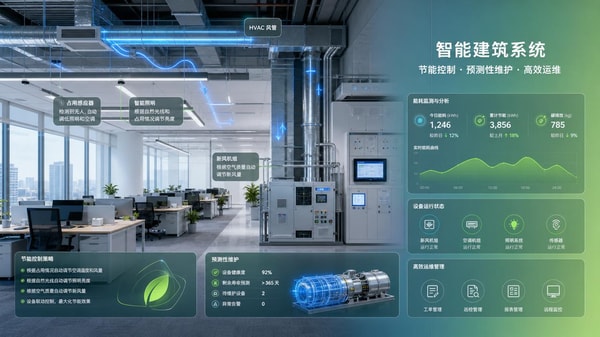
 AHU SystemsSmart Building Systems for Offices: Which Features Cut Waste First?Smart Building Systems for offices: discover which features cut waste first—HVAC optimization, occupancy controls, lighting, or predictive maintenance—and how to prioritize upgrades for faster ROI.Dr. Julian VoltMay 06, 2026
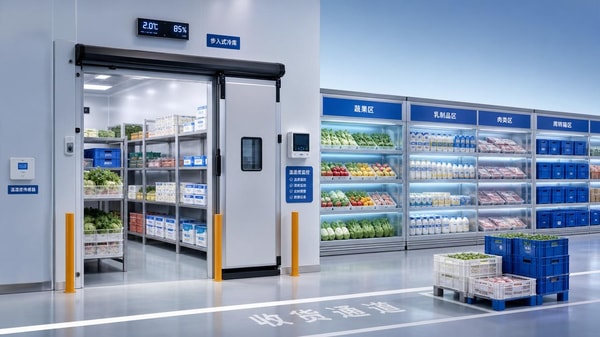
 Reefer TechFood Storage Solutions for Supermarkets That Reduce Waste Without Slowing StaffFood Storage Solutions for supermarkets that cut waste, protect food safety, and keep staff fast. Discover practical checklists, layout tips, and system criteria for smarter cold storage decisions.Dr. Elena FrostMay 06, 2026
 Aerogel InsulationBuilding Envelope Solutions Cost More Upfront, but Which Ones Pay Back?Building Envelope Solutions cost more upfront, but which upgrades truly pay back? Compare insulation, air barriers, glazing, and roofs to cut energy, reduce risk, and improve lifecycle value.Dr. Aris NanoMay 06, 2026
 Module LogicClimate-Adaptive Design Techniques That Hold Up in Real ProjectsClimate-Adaptive Design techniques that work in real projects: discover practical strategies to improve resilience, control costs, and deliver durable, high-performing assets.Marcus ShieldMay 06, 2026